Have A Case? Call Us
1 888-536-6671
60 Second Lemon Law Assessment™
60 Second Lemon Law Assessment™
by Kahn & Associates - April 15th, 2026

A Tesla that spends more time at the service center than is reasonable stops being a car you can plan around. The repairs themselves are usually covered under warranty, so the cost is rarely the problem. What wears on you is the cycle: book the appointment in the app, arrange a ride, wait on a part, pick the vehicle up, and then find the same condition back a few weeks later. Sometimes it’s also the fear of driving the vehicle. Electric vehicles are complex machines, but the law still protects you when their high-tech systems fail repeatedly.
Schedule a free professional consultation with the experienced EV lawyers at Kahn & Associates, L.L.C. today if your Tesla is experiencing repeat battery, Autopilot defects or any other issues.
Tesla lemon law protections can entitle an owner to a repurchase or a replacement vehicle when a substantial nonconformity survives a reasonable number of repair attempts. Under the lemon laws of Ohio, Florida, Michigan, North Carolina, and Pennsylvania, a Tesla may qualify based on battery conditions or Autopilot software faults. Failed over-the-air updates may also count toward your repair history, though that question is still developing in the courts. If your vehicle has spent an unreasonable amount of time out of service, or has been through repeated failed repairs, you may qualify for a refund or a new vehicle or cash compensation. Kahn & Associates handles these claims with no money upfront, and you are not required to pay us any out-of-pocket fees or costs, win or lose. Learn more about your rights at Kahn & Associates.
Many Tesla owners assume the company’s service and software model puts a traditional lemon law claim out of reach. It does not. This guide walks through the specific problems that trigger these protections and how the analysis works.
A Tesla may qualify under the state or federal lemon law if it has a recurring problem covered by the factory warranty that Tesla cannot fix after a reasonable number of repair attempts — usually three or four — or if the vehicle has been out of service at the repair shop for a total of thirty days or more.
Tesla vehicles are technically advanced, but when their components fail repeatedly, state and federal law protects you the same way it protects the owner of any other vehicle. The lemon laws do not distinguish between powertrains. You can read more about what the lemon law covers to see where your vehicle fits.
State law protects you when the service center cannot correct a condition after a fair number of tries. In most states that means three or four attempts at the same problem. Where the nonconformity is one likely to cause death or serious bodily injury, some states require only a single unsuccessful attempt. You do have to give the Tesla Service Center a genuine opportunity to make the repair before a claim can proceed. The federal Magnuson-Moss Warranty Act provides a parallel route that does not depend on a fixed number of attempts and can be less than state law requirs.
You do not need to wait until you hit a statutory threshold before asking. Our rule of thumb: if your Tesla has been in for the same issue at least twice, or has been out of service for at least 21 calendar days, that is enough to warrant a free case review.
A vehicle may also qualify if it sits at the service center for an unreasonable amount of time. For state lemon law claims the benchmark is 30 cumulative days; North Carolina uses 20 business days within any 12-month period. The days do not have to run consecutively. If your Tesla has been in repeatedly for smaller issues that add up, those days count. General guidance on handling repair disputes is available through the USA.gov car repair guides.
Used Teslas can qualify. A common misconception is that the vehicle has to be under warranty right now. It does not. There may be an implied warranty claim as well as a claim for breach of the written warranty covering repairs already performed under it. What you need is for the repairs to have made under the manufacturer’s warranty or the manufacturer’s extended warranty.
Tesla’s Basic Vehicle Limited Warranty runs 4 years or 50,000 miles, while battery and drive unit coverage extends considerably longer — 8 years and between 100,000 and 150,000 miles depending on the model. That means many used Teslas still carry powertrain coverage well after the basic warranty has lapsed, which can matter a great deal for battery claims. Keep your repair orders either way, because they establish when the condition first appeared.
The high-voltage pack is the heart of any electric vehicle. When it underperforms, the effect is not cosmetic. Owners who find themselves charging far more often than expected, or planning routes around range they no longer have, are dealing with something that impairs the use and value of the vehicle.
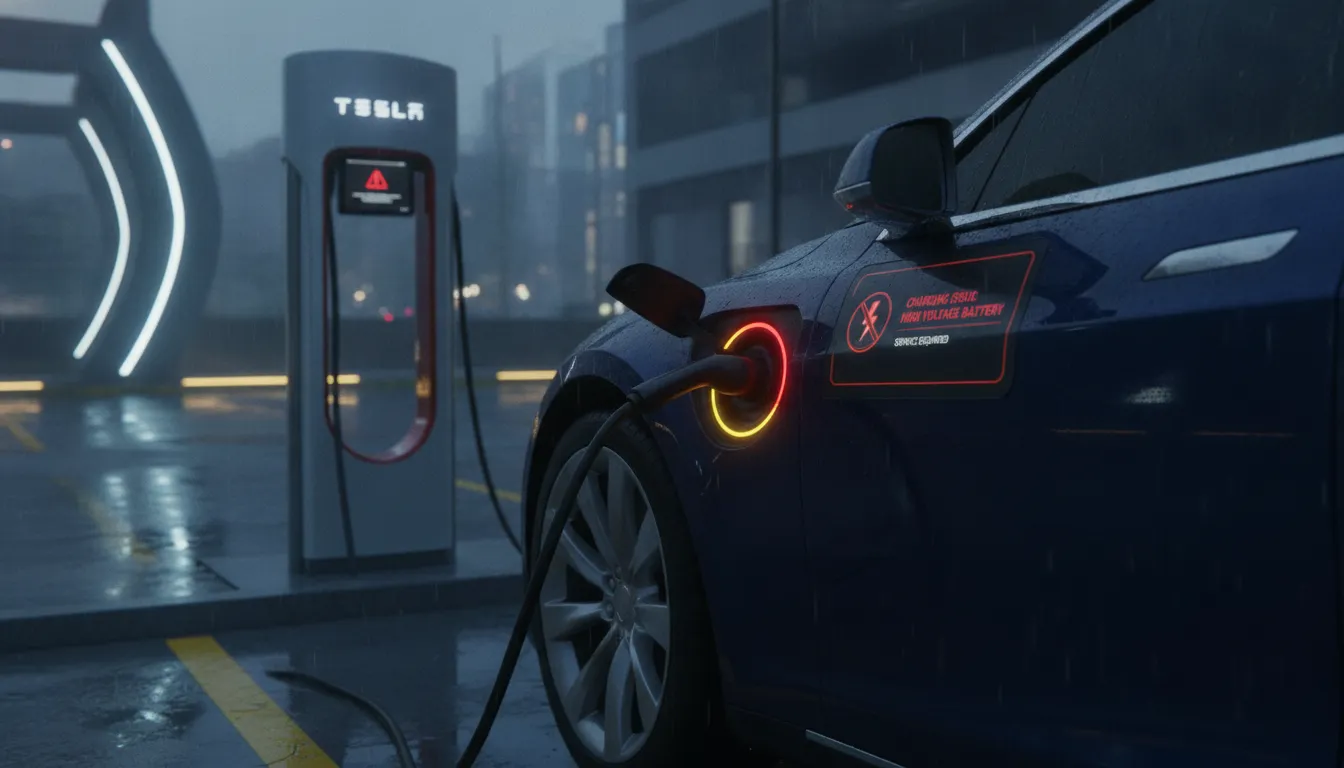
One of the more common complaints involves range loss following an over-the-air update. Tesla pushes updates remotely to improve performance and safety. Owners have reported sudden reductions in maximum usable charge after an update, a phenomenon sometimes described as battery capping. A manufacturer may use software to manage battery health conservatively, but the same mechanism can mask an underlying condition in the cells.
These reductions are often permanent rather than temporary. Owners have reported losses substantial enough to change what trips are practical, and a vehicle that no longer performs to its stated specifications has lost value. A range condition that recurs and that the manufacturer cannot correct is a strong indicator. Our guide to the lemon law for electric vehicles explains how these claims are built.
Tesla packs depend on a liquid cooling and heating loop to hold the cells within their operating range. When that system fails, the pack can run too hot under load or too cold in winter. Sustained heat is the primary enemy of cell life. A failing pump or a leak in the loop can escalate to full pack failure, and these components are labor-intensive to reach, which is why thermal repairs often mean long stays at the service center.
Warning signs include unusually slow charging, cooling fans running at high speed continuously, or reduced-power warnings on the display. If your Tesla has spent many days at the service center for thermal or cooling work, those days count toward the out-of-service threshold. Time you are deprived of the vehicle is itself part of the claim.
High-voltage systems attract regulatory attention, and Tesla has been the subject of recalls affecting battery components. In November 2025, Tesla recalled certain 2025 Model 3 and 2026 Model Y vehicles over a battery pack contactor that could open unexpectedly while the vehicle was in drive, causing a loss of propulsion and raising crash risk. Separately, a much smaller 2023 recall covered a limited number of Model 3 and Model Y vehicles built with a non-functioning pyrotechnic battery disconnect, a device meant to isolate the high-voltage battery after a crash or a fault. Recalls of both kinds are catalogued by the National Highway Traffic Safety Administration.
A recall on its own is not a lemon law claim; it is a manufacturer-initiated repair. What matters for a claim is what happens next. If your vehicle was recalled for a battery condition and the remedy did not resolve the problem, or the vehicle sat waiting on parts, the recall work becomes part of the repair history that may support a claim. Persistent loss of propulsion or an unreliable high-voltage system substantially impairs both the use and the safety of a vehicle.
Tesla vehicles rely on software for steering and braking assistance. Autopilot and Full Self-Driving use cameras and sensors to interpret the road, and when those systems misread it, the consequences are immediate. Persistent software conditions that the manufacturer cannot resolve can support EV lemon law rights in the same way a mechanical condition can.
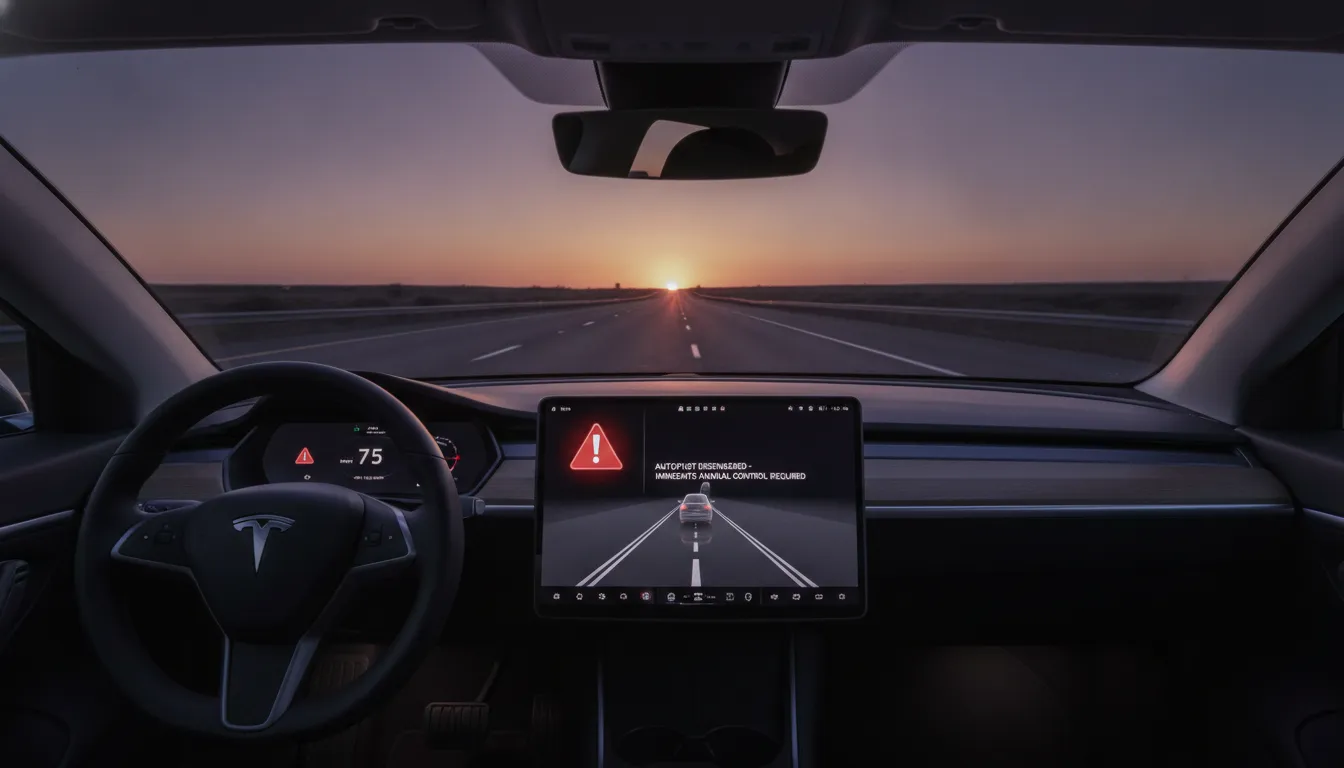
Phantom braking describes a vehicle applying the brakes hard with no obstacle present. The NHTSA opened an investigation into this issue after receiving numerous owner reports of abrupt highway stops. Sudden deceleration in traffic carries an obvious rear-end collision risk. Owners frequently describe the system reacting to shadows, overpasses, or oncoming vehicles in adjacent lanes.
The vehicle’s computer can only act on the data its sensors provide. A failed camera or an obstructed sensor can cause the system to disengage without warning or to misjudge lane position. Glare, dirt, and weather account for some of this, and cleaning resolves those. But where the fault traces to hardware rather than conditions, and repeated service visits do not correct it, a vehicle that cannot reliably use its advertised driver assistance features has lost meaningful value.
Updates intended to fix existing bugs sometimes introduce new ones. In one instance, a software release produced false forward collision warnings and unexpected automatic emergency braking, prompting a recall covering thousands of vehicles. If your Tesla requires repeated service visits for software conditions that keep returning, that history counts. Recurring software faults can impair a vehicle as thoroughly as a mechanical failure.
Whether an over-the-air update itself counts as a repair attempt is a genuinely open question, and one courts around the country are still working through. Lemon laws were written with physical repairs in mind: a service visit, a repair order, days out of service. An update installed overnight generates none of that. The better view, and the one we argue, is that an update deployed in response to a condition you reported is an attempted repair, and that a manufacturer cannot reset your repair count by pushing code that does not fix the problem. The practical takeaway is this: report every condition through a service appointment rather than relying on updates alone, because a service visit creates the record the statutes definitely recognize.
When a Tesla lemon law claim results in a repurchase, the vehicle manufacturer returns what you paid, less a mileage offset in most states, and pays off your loan. The offset accounts for the use you got out of the vehicle and each state calculates it differently.
If your Model 3 or Model Y developed a battery condition, you were almost certainly driving it in the meantime. The manufacturer subtracts the offset from the total refund. These formulas are worth understanding because on a vehicle at Tesla price points they move the final number by thousands of dollars. Our lemon law FAQ covers them in more detail.
States differ on when the mileage clock stops. Some measure at the first repair, others at the third, and others at the settlement date. The North Carolina Department of Justice publishes an overview of that state’s protections for new vehicle buyers. The table below compares the states where we practice.
| State | Calculation Method | Key Timing Factor |
| Ohio | No mileage offset permitted | Full refund on a repurchase or a replacement |
| Florida | Mileage at settlement | Date of the final settlement |
| Michigan | Miles before the first repair, plus miles over 25,000 | First repair visit |
| North Carolina | Mileage at the third repair attempt, or at the 20th cumulative business day out of service if that comes first | Third repair visit or 20th business day |
| Pennsylvania | Lesser of 10 cents per mile at first repair or 10% of the purchase price | First repair visit |
At Tesla price points the offset is a significant number. In Pennsylvania, the statute caps it: on a $50,000 vehicle, the offset cannot exceed 10 percent of the purchase price, or $5,000. In Ohio there is no offset at all, on either a repurchase or a replacement, so an Ohio owner recovers the full purchase price on identical facts. That difference alone is worth a conversation about which statute governs your vehicle.
Schedule a free professional consultation with Kahn & Associates, L.L.C. for a review of your Tesla lemon law claim. We have recovered more than $65 million for consumers (as of the date of this article), with a very high win rate, and you are not required to pay us any out-of-pocket fees or costs, win or lose. Call us at 1-216-621-6101 or use our contact form to get started.
The Florida Office of the Attorney General publishes guidance for buyers in that state, including the notice Florida requires before the statutory presumption attaches. Wherever you live, keep your repair records. They are what establish when the condition first appeared and what the mileage was at each stage.
Filing a Tesla lemon law or breach of warranty claim can feel different from filing against a traditional automaker, largely because service is routed through the app rather than a dealership service desk. The underlying legal requirements are the same. You have to show a substantial nonconformity that the manufacturer could not correct after a reasonable number of attempts.
Tesla delivers most work orders and invoices through the mobile app. Download and save them as they appear, because app records are less permanent than paper ones. These documents establish the drop-off date, the pickup date, the complaint you reported, and the work performed. That said, do not let paperwork keep you from calling. You do not need to organize your repair orders or build a chart before requesting a free case review. It helps if you have them handy, but it is not necessary.
When you book a visit in the app, be very specific about the problem. If the screen goes black or the
When you book service in the app, be specific. If the screen goes black, or the battery drains overnight, write down exactly what happened and when. Avoid general descriptions like the car feeling off. Clear, consistent descriptions across visits are what show a single condition recurring rather than a series of unrelated complaints, and that distinction often decides whether and which attempts count toward the threshold.
Owners often try to handle this alone and end up cycling through app messages and rescheduled appointments without progress. Many state lemon laws provide that a prevailing owner’s attorney fees shall be paid by the manufacturer; the Magnuson-Moss Warranty Act is permissive and provides that fees may be awarded. Where a claim resolves before a lawsuit is filed, the fee is agreed between the parties rather than awarded by a court. In every scenario, you are not required to pay us any out-of-pocket fees or costs.
When a Tesla has a serious condition, it can feel like a dispute with the dealership that sold it to you. A lemon law claim is not that. It is a claim against the manufacturer, Tesla, Inc., which is the entity that issued the written warranty and is obligated to stand behind it.
Lemon laws apply when a vehicle manufacturer fails to honor the written warranty that came with the vehicle or the warranty becomes useless. If your Tesla has a safety condition or a substantial nonconformity the manufacturer cannot timely correct, the statute provides the remedy. Our firm handles the numerous vehicle defects that a manufacturer should have resolved and did not.
One scope note: we do not handle claims against car dealers for fraud or related sales practices violations. An auto fraud attorney handles those. Our work is limited to breach of warranty claims / lemon law against manufacturers.
Craig Kahn and his team handled the landmark case Royster v. Toyota Motor Sales, U.S.A., Inc. from the trial court all the way to the Ohio Supreme Court in 2001, establishing the legal precedent that 30 or more cumulative days out of service creates a presumption of lemon law relief, regardless of whether the vehicle is ultimately repaired. That decision is now used by professors and attorneys and continues to benefit lemon owners in Ohio and beyond.
Most claims resolve without a lawsuit and resolving them quickly is the point — a typical case reaches a resolution in roughly 90 to 120 days – though complex cases and certain manufacturers and other factors may make it take longer. What makes that possible is knowing the terrain. After nearly 30 years we know the tactics manufacturers use, we know the attorneys who represent them, and we know who to reach inside each manufacturer to get a claim resolved.
Legal costs should not decide whether you pursue a valid claim. We work on a pure contingency basis. You are not required to pay us any out-of-pocket fees or costs, win or lose — not to open the file, not while the claim is pending, and not at settlement.
Schedule a free professional consultation with Kahn & Associates, L.L.C. Since 1996, our firm has recovered more than $65 million for consumers (as of the date of this article), has a very high win rate, and you are not required to pay us any out-of-pocket fees or costs, win or lose.
A Tesla may be a lemon when a substantial nonconformity impairs its use, value, or safety and the manufacturer cannot correct it after a reasonable number of attempts or amount of time. The condition has to be covered by the manufacturer’s warranty, though the vehicle need not still be under warranty today. You can read more about what the lemon law covers on our site.
Most states look for three or four attempts at the same condition. A vehicle out of service for a reasonable amount of time — commonly 30 cumulative days, or 20 business days in North Carolina — may qualify on that basis alone, and those days need not be consecutive. Safety-related conditions may require fewer attempts. You do not need to reach any of these numbers before calling: two visits for the same issue, or 21 days out of service, is reason enough to request a free case review.
You are not required to pay us any out-of-pocket fees or costs, win or lose. We work on a pure contingency basis, and when a claim resolves the manufacturer pays our fee as part of the resolution. Many state lemon laws provide that a prevailing owner’s fees are typically paid by the manufacturer.
Yes. The vehicle does not need to be under warranty at this moment, but repairs must have been performed under the manufacturer’s warranty or the manufacturer’s extended warranty. Many used Teslas still carry battery and drive unit coverage long after the basic warranty has expired, which is why battery claims on used vehicles are often viable. Check your warranty dates and your repair history.
If your Tesla has a recurring condition the manufacturer cannot timely fix, you may be entitled to a repurchase or a replacement vehicle. Our firm has spent nearly 30 years on these claims (as of the date of this article), and we represent consumers in Ohio, Florida, Michigan, North Carolina, and Pennsylvania.
We know legal costs are a concern, which is why we handle these claims on a pure contingency basis. You are not required to pay us any out-of-pocket fees or costs, win or lose. To find out whether you can file a lemon law claim, call us or reach out through our site and we will start your free consultation.
*Disclaimer: The information contained in this Website is provided for informational purposes only, and should not be construed as offering legal advice, or creating an attorney client relationship between the reader and the author. While we aim for accuracy, the law is constantly changing and we make no guarantees regarding the completeness or timeliness of the information. You should not act or refrain from acting on the basis of any content included in this Website without seeking appropriate legal advice about your individual facts and circumstances from an attorney licensed in your state.
To see if you qualify, fill out the form below or call us at 1-888-536-6671 – No Office Visit Needed!

I had a great experience with Kahn & Associates! They made the process of dealing with an extremely frustrating lemon situation painless. They have very quick response times and everyone I dealt with was very friendly and helpful. Would definitely recommend!
Kahn and Associates did an awesome job with our lemon law case! We were getting nowhere with VW Customer Service and decided to hire an attorney who specialized with lemon law cases. We couldn’t be happier with the outcome. We were able to get a full refund on our lemon VW Atlas.
What a great experience! I was on the fence about hiring an attorney for my ongoing automotive issues and continued frustration with the manufacturer. It was a very simple process and I am very grateful Kahn and Associates for helping get me a settlement!
Real Honest attorneys!!! They are the real deal! I went back and forth with them and they explained to me every step and my rights under the law! I give them 5 stars because I won!!! Yes and my check is coming to me much sooner than I thought! I was stuck ! I own a brand new car and the dealer was giving me a hard time !

This page has been written, edited, and reviewed by a team of legal writers following our comprehensive editorial guidelines. This page was approved by Attorney Craig A. Kahn, who has more than 20 years of legal experience in lemon law.
Buying a defective used vehicle does not mean you are stuck with a lemon forever. The federal lemon law pro...
There is a lot of confusing information out there about what to do when your new car has a serious, unfixab...
A collision does not automatically erase a valid lemon law claim. What matters is whether the recurring pro...

Stuck with a defective car in Ohio? State Lemon Laws protect you. Get a refund, replacement, or cash settlement. Learn your rights today!
Florida Lemon Laws cover new and used vehicles. If your car’s a lemon, you deserve compensation. Let us help you fight for justice!

Michigan’s Lemon Law protects you from faulty vehicles. Don’t settle for endless repairs—claim your refund or replacement now.

North Carolina Lemon Laws ensure defective vehicles are replaced or refunded. Know your rights and take action today!

Pennsylvania Lemon Law covers new cars with repeated issues. Get the compensation you deserve. Click to learn more!
To see if you qualify, fill out the form below or call us at 1-888-536-6671 – No Office Visit Needed!

The Truth About Attorney’s Fees in Lemon Law Cases Learn more
*Disclaimer: The information contained in this Website is provided for informational purposes only, and should not be construed as offering legal advice, or creating an attorney client relationship between the reader and the author. While we aim for accuracy, the law is constantly changing and we make no guarantees regarding the completeness or timeliness of the information. You should not act or refrain from acting on the basis of any content included in this Website without seeking appropriate legal advice about your individual facts and circumstances from an attorney licensed in your state.

 Message Us
  Call Us