
Have A Case? Call Us
1 888-536-6671
60 Second Lemon Law Assessment™
60 Second Lemon Law Assessment™
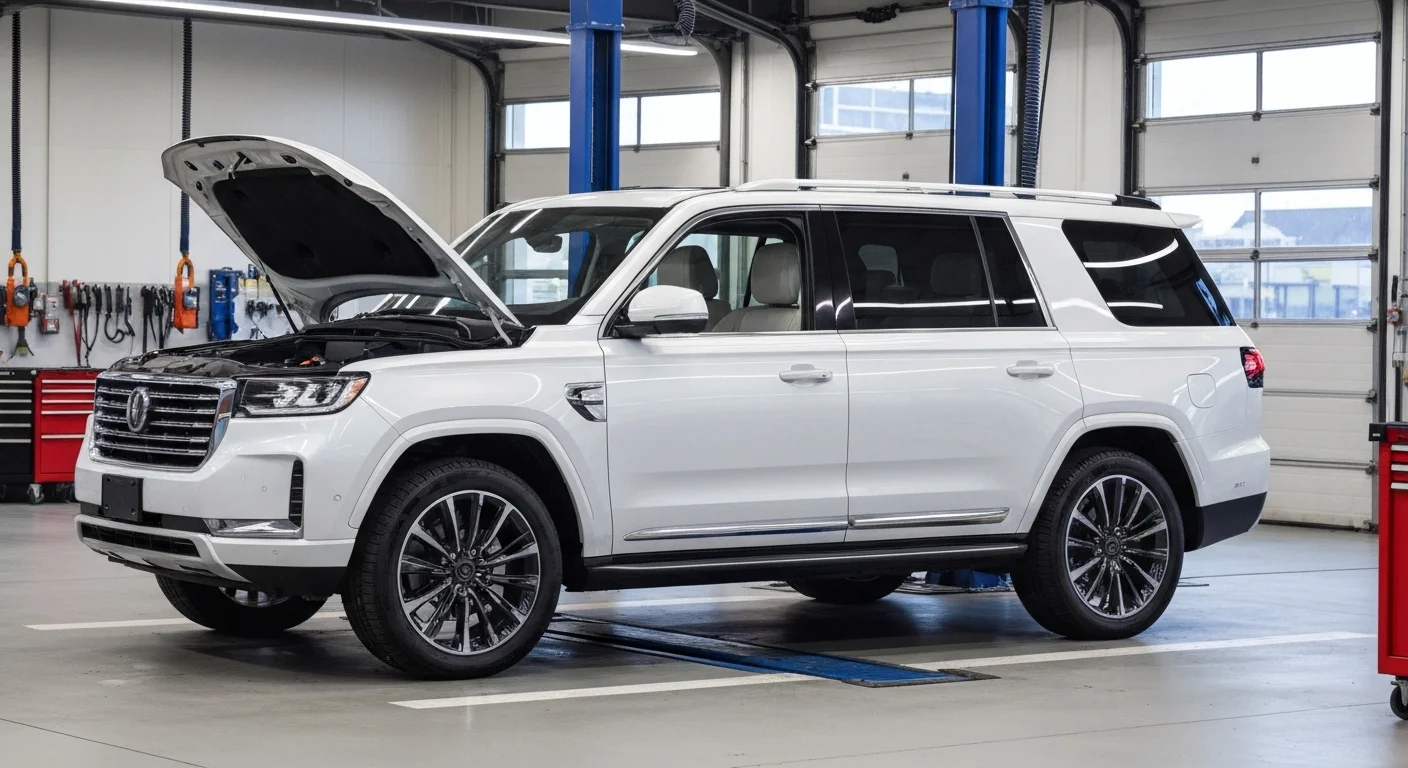
Your Kia’s 10-year/100,000-mile warranty is an excellent safety net, but it only promises repairs. What happens when those repairs don’t work? If you’re stuck in a cycle of taking your car to the dealership for the same problem over and over, the warranty isn’t solving your issue. You need a different kind of protection. The lemon law goes a step further, offering a way out when your vehicle’s defects can’t be fixed. This guide will show you how to use your Kia lemon law rights to move beyond endless repairs and toward a real resolution, like a vehicle buyback or replacement.
If your Kia keeps breaking down despite repeated trips to the dealership, you may have a lemon law claim. Whether you drive a Telluride with transmission problems or a Sorento affected by engine recalls, state and federal lemon laws protect you from being stuck with a defective vehicle. Think your Kia might be a lemon? Take our 60-Second Lemon Law Assessment to find out if you qualify for a buyback, replacement, or cash settlement at no out-of-pocket cost to you. Kia has become one of the fastest-growing automakers in the United States, but that growth has come with serious quality concerns. From the Theta II engine fire scandal that affected millions of vehicles to ongoing transmission failures in the Telluride, Kia owners across Ohio, Florida, Michigan, North Carolina, and Pennsylvania are filing lemon law claims in growing numbers. This guide covers the most common Kia defects, how the brand’s industry-leading warranty affects your legal options, and what to do if your Kia qualifies as a lemon.
Kia lemon law claims arise when a Kia vehicle has a substantial defect that the manufacturer cannot repair after a reasonable number of attempts or amount of time, entitling the owner to a buyback, replacement, or cash settlement under state or federal consumer protection statutes that hold automakers accountable for selling defective vehicles they cannot fix. For Kia owners, these laws are especially relevant because Kia and its parent company, Hyundai Motor Group, have faced some of the largest vehicle recalls and defect settlements in recent automotive history. To qualify for a lemon law claim on your Kia, your vehicle generally must meet these criteria:
Each state has slightly different requirements. Ohio, for example, provides protections under Ohio Revised Code 1345.71-1345.77, while federal protections under the Magnuson-Moss Warranty Act may apply regardless of your state.
Kia’s 10-year/100,000-mile powertrain warranty is the longest in the mainstream automotive industry, and it directly impacts lemon law claims by giving Kia owners nearly twice the time to document engine and transmission defects compared to owners of competing brands with standard 5-year warranties.
| Coverage | Duration | Key Details |
|---|---|---|
| Basic Limited Warranty | 5 years / 60,000 miles | Covers most vehicle components |
| Powertrain Warranty | 10 years / 100,000 miles | Engine, transmission, drivetrain (original owner only) |
| Anti-Perforation Warranty | 5 years / 100,000 miles | Rust-through coverage |
| Roadside Assistance | 5 years / 60,000 miles | Towing, lockout, flat tire |
Kia’s extended powertrain warranty means you have a significantly longer window to document and file a lemon law claim for engine or transmission defects compared to other manufacturers. Most automakers offer only 5-year/60,000-mile powertrain coverage, giving Kia owners nearly twice the time to build their case. However, there are important limitations to understand:
If a state lemon law claim warranty claim is unavailable, the Magnuson-Moss Warranty Act may still provide legal recourse. This federal law allows consumers to pursue claims when manufacturers fail to honor their warranty obligations, even if state lemon law timelines have passed.
The Kia Telluride became one of the most popular midsize SUVs in America since its 2020 launch. Unfortunately, it has also become one of the most commonly cited Kia models in lemon law claims due to several serious defect categories.
In June 2024, Kia issued a “park outside” recall affecting 462,869 model year 2020-2024 Tellurides. The National Highway Traffic Safety Administration (NHTSA) confirmed that the front power seat motor could overheat due to a stuck power seat slide knob, creating a fire risk while parked or driving. There was at least one fire and six melting incidents under the front seats before Kia issued the recall. Dealers repair the issue by installing a bracket for the power seat switch back covers and replacing the seat slide knobs. If your Telluride experienced fire-related damage before the recall was completed, you may have grounds for a lemon law claim beyond the standard recall remedy.
Telluride transmission issues are among the most frequently reported complaints on owner forums and NHTSA databases. Common symptoms include:
Many Telluride owners report these problems appearing within the first few thousand miles. While software updates and transmission reprogramming resolve some cases, others have required complete transmission replacements, sometimes multiple times on the same vehicle. A 2020 Telluride owner on the Telluride Forum described replacing both the engine (at 80,000 miles for oil consumption) and the transmission (at 93,000 miles), calling it “incredible” for a vehicle under 100,000 miles. Another 2022 owner reported the transmission “slipping and then disengaging/reengaging repeatedly” at just 30,000 miles.
Beyond transmission problems, Telluride owners report:

The Kia Sorento has been at the center of one of the most significant automotive safety scandals in recent history, with its Theta II engine linked to engine fires, seizures, and a class action settlement exceeding $1.3 billion that covered approximately 4 million vehicles across multiple Kia and Hyundai models.
The Theta II 2.0L and 2.4L gasoline direct injection (GDI) engines, shared between Kia and Hyundai, contained a manufacturing defect where metal debris left during production restricted oil flow and caused premature bearing wear. This led to:
The scope of the problem was enormous. A class action settlement valued at over $1.3 billion covered approximately 4 million Kia vehicles, including 2012-2019 Sorento models with Theta II engines. The settlement provided:
The consequences for Kia extended beyond the settlement. Kia and Hyundai paid a combined $210 million civil penalty to NHTSA, the largest ever assessed against an automaker, after regulators determined they failed to recall 1.6 million vehicles for engine issues in a timely manner.
Even beyond the Theta II engine, newer Sorento models continue to face recalls:
The Sorento’s track record is unfortunately marked by a long history of safety problems. Over the years, it has accumulated 55 recalls for critical issues involving its fuel systems, brakes, and engine components. This consistent pattern of defects can be a significant factor in a lemon law claim, as it helps illustrate a history of manufacturing quality issues. The most notorious of these problems was the Theta II engine scandal, which was linked to widespread engine fires and seizures. This defect led to a massive class action settlement of over $1.3 billion, covering about 4 million Kia and Hyundai vehicles. The settlement offered free engine repairs or replacements, a lifetime warranty on the new parts, and cash compensation for some owners. Even newer Sorento models continue to face recalls, such as a 2025 engine bolt defect that can cause engine knocking or sudden stalling, highlighting ongoing concerns with the vehicle’s reliability.
If you own a Kia Sorento with a Theta II engine, the settlement provided for a lifetime warranty for engine-related defects. However, a lifetime warranty repair is not the same as a lemon law remedy. If your Sorento has required multiple engine repairs, has been out of service for extended periods, or has ongoing issues that Kia cannot resolve, you may be entitled to a full buyback or replacement under your state’s lemon law. Dealing with ongoing Kia problems? Our team has handled thousands of Kia lemon law claims. Call 1-888-536-6671 for a free case evaluation, or take our 60-Second Lemon Law Assessment online.
Kia lemon law claims extend well beyond the Telluride and Sorento, with several other Kia models showing documented patterns of recurring defects that may qualify owners for buybacks, replacements, or cash settlements under state and federal warranty laws.
Like its sibling, the Sorento, the Kia Sportage has a long and troubled recall history. Kia has recalled the model 59 times for serious safety defects, including fuel pipe leaks that increase fire risk, catastrophic engine failures, and brake lights that don’t work properly. This consistent pattern of recalls points to significant quality control issues that go beyond just a few isolated incidents. For you as an owner, this history is important. It shows that the problems you’re facing might be part of a larger, documented manufacturing defect, which can be a powerful factor in building a successful lemon law claim.
Kia is owned in part by Hyundai Motor Company, and its reported the two automakers share vehicle platforms, engines, and manufacturing facilities, which means defects discovered in Kia vehicles frequently appear in Hyundai models as well, and vice versa, making this corporate connection critical context for any lemon law claim. The Theta II engine crisis is the clearest example. The same defective engines that powered the Kia Sorento, Optima, and Sportage also powered the Hyundai Sonata, Santa Fe, and Tucson. The class action settlements and NHTSA penalties covered both brands jointly. If you own both Kia and Hyundai vehicles, or are considering purchasing from either brand, understanding this shared engineering is important.
While Kia has worked hard to build a reputation for style and value, its rapid growth has been overshadowed by significant quality control issues. The Theta II engine scandal was a major blow, but it’s part of a larger pattern. Federal regulators at NHTSA hit Kia and Hyundai with a record-breaking $210 million civil penalty for failing to recall 1.6 million vehicles with known engine defects in a timely manner. This history demonstrates a troubling trend of the manufacturer not acting quickly enough to protect its customers, which can be a critical factor when you’re trying to get them to acknowledge a defect in your own vehicle.
More recently, Kia’s image has been damaged by widespread vehicle thefts linked to a social media trend that exposed a lack of anti-theft technology in many models. This security flaw has had real-world consequences for owners, with some major insurance companies refusing to issue new policies for certain Kia vehicles or raising premiums significantly. When you’re dealing with repeated mechanical failures on top of insurance headaches, the frustration can be overwhelming. It’s in these situations that many owners decide they’ve had enough and seek legal help, as you can see from our client reviews.
Kia lemon law protections vary significantly by state, with each jurisdiction setting its own requirements for repair attempts, out-of-service days, and filing deadlines that determine whether your defective Kia qualifies for a buyback, replacement, or cash settlement.
If your state’s lemon law does not cover your situation, the federal Magnuson-Moss Warranty Act may provide additional protections with no mileage or age restrictions, as long as the warranty was active when the defect was first reported. Not sure if your Kia qualifies? Take our free 60-Second Lemon Law Assessment or call 1-888-536-6671 for a no-cost case review.

It’s important to know that you don’t have forever to act on a potential lemon law claim. Every state has a deadline, called a statute of limitations, that sets a firm time limit for filing your case. These deadlines can vary quite a bit depending on where you live; for instance, some states might give you up to four years from the date you first noticed the defect. Because these time limits are strict, waiting too long could mean losing your right to seek compensation entirely. If you suspect your Kia is a lemon, it’s best to understand your rights and the specific timeline for your state as soon as possible. You can find more answers to common questions on our Lemon Law FAQs page.
Many people wonder if lemon laws apply only to brand-new cars, and the answer is often no. Protections can extend to used Kias, especially if the vehicle is still covered by the original manufacturer’s warranty when the problems start. In these cases, the federal Magnuson-Moss Warranty Act can provide a path for a claim. Some state laws also offer coverage for used vehicles, particularly if you received a warranty from the dealership. The key exception is for cars sold “as is,” which typically don’t qualify for lemon law protection because the sale comes with no guarantees. If you bought a certified pre-owned or used Kia with a remaining warranty, it’s worth looking into your options.
Documenting Kia vehicle defects properly is the foundation of any successful lemon law claim, because your repair orders, service records, and communication history with the dealership are the evidence that proves the manufacturer had reasonable opportunities to fix your vehicle and failed.
Once you have your documentation in order, it’s time to start the official process of filing a claim. This involves communicating directly with Kia’s corporate offices and using specific language to ensure your case is taken seriously. The path can feel complicated, but understanding the key steps will help you move forward with confidence. Remember, you don’t have to go through this alone; an experienced attorney can handle the entire process for you, ensuring every step is taken correctly and efficiently, all at no out-of-pocket cost to you.
When you realize your Kia might be a lemon, your first instinct might be to hash it out with the dealership where you bought it. But for a lemon law claim, you need to aim higher. Your case is actually with the manufacturer, Kia USA, not the local dealer. Think of it this way: the dealership is authorized to perform repairs, but they don’t have the authority to approve a full vehicle buyback or replacement. That decision comes from the corporate level. Directing your claim to the right place from the start saves you time and prevents you from getting incorrect information from dealership staff who may not be trained in lemon law procedures.
When you contact Kia’s corporate customer service, the words you use matter—a lot. Simply complaining about another repair won’t get you very far. You need to state clearly that you are pursuing a claim under your state’s “Lemon Law.” Using this specific phrase often triggers an official internal process designed to handle these cases. Before you mention it, you might find yourself stuck in a loop of standard customer service scripts. After you use it, your complaint gets escalated. Always ask for a case number once you’ve made your lemon law declaration. This ensures your claim is officially logged and tracked within their system, creating a paper trail you can reference in all future communications.
It’s important to set realistic expectations: filing a lemon law claim can be a long and sometimes frustrating journey. It’s not uncommon for the process to take several months from your initial call to a final resolution. Many owners have reported that Kia’s internal systems can seem disorganized, leading to delays and requiring a lot of follow-up. You will likely need to be persistent, checking in on your case status and asking to speak with a decision-maker if things stall. This is where having an experienced lemon law attorney can make a huge difference. They can handle the persistent follow-up and escalations for you, letting you focus on your life while they work toward one of our many successful outcomes.
Before a claim goes to court, there are often other ways to resolve the dispute. One common path manufacturers like Kia offer is third-party arbitration, which is an informal process intended to settle disagreements without a formal lawsuit.
Kia participates in the BBB AUTO LINE program, a free and informal arbitration service designed to resolve warranty disputes. While “free” and “informal” sound appealing, it’s crucial to understand the limitations. The decisions made through this program are not always binding on you, the consumer. This means if you don’t like the outcome, you can often still pursue a legal claim. An attorney can help you decide if this is the right first step for your situation or if you would be better served by proceeding directly with a legal claim. Understanding all your options is key to achieving the best possible outcome, and we’re here to help you contact us today for a free consultation.
Kia lemon law compensation typically includes a full vehicle buyback, a replacement vehicle, or a cash settlement, with the specific remedy depending on your state’s lemon law provisions and the severity of the defect, plus manufacturer-paid attorney fees in successful cases.
This means there is no out-of-pocket cost to you for pursuing a lemon law claim.
The goal of a lemon law settlement is to make you financially whole, as if you never bought the defective car in the first place. This means going beyond just the sticker price. A successful claim can cover your down payment, all the monthly payments you’ve made, and the remaining balance on your auto loan. But it doesn’t stop there. The law recognizes that a lemon car creates a ripple effect of costs. You can also be reimbursed for related expenses like towing fees when your Kia left you stranded, the cost of a rental car you needed to get to work, or even ride-sharing charges. Think of any money you had to spend directly because your car was unreliable—that could potentially be part of your compensation.
When you get a buyback, the manufacturer is entitled to a “reasonable use allowance,” which is a deduction for the miles you drove the car before the first repair attempt for the lemon-causing defect. The logic is that you received some value from the vehicle during its trouble-free period. However, the formula for calculating this deduction varies significantly by state and can be a point of contention. An automaker might try to calculate it in a way that minimizes your refund. This is one area where having an experienced attorney is invaluable. They can ensure the mileage offset is calculated correctly according to your state’s specific laws, protecting you from an unfair deduction and maximizing your final settlement amount.
It’s common practice that when you reach a settlement with Kia, you’ll be asked to sign a Non-Disclosure Agreement, or NDA. This is a standard legal document in many types of settlements, not just lemon law cases. The main purpose of an NDA is to keep the specific financial details of your agreement confidential. This means you generally can’t post on social media about how much money you received or discuss the exact terms with others. While it might seem restrictive, it’s a routine part of finalizing a case. Your attorney will carefully review the NDA with you to ensure you understand exactly what you’re agreeing to before you sign anything.
A common point of confusion for car owners is figuring out who is responsible for their lemon vehicle—the dealership that sold it or the manufacturer that built it. While your frustration might be directed at the local dealer where you’ve had frustrating service appointments, lemon law claims are almost always filed against the manufacturer, in this case, Kia. The manufacturer is responsible for the warranty and for producing a defect-free vehicle. However, that doesn’t mean the dealership is always off the hook. In certain situations involving deception or fraud during the sale, you may have a separate legal case directly against the dealership.
Legal action against a dealership is reserved for situations that go beyond warranty issues and into the realm of fraud or intentional misrepresentation. A lemon law claim addresses a car’s defects; a fraud claim addresses the dealer’s dishonest actions during the sale. You should consider this path if you have evidence that the dealer knowingly lied to you about a critical aspect of the vehicle to close the deal. This isn’t about a mechanic failing to fix a transmission; it’s about the sales team actively deceiving you. If you suspect this happened, it’s best to discuss the specifics with an attorney, as proving intentional deception requires a different legal approach and standard of proof than a lemon law case.
Dealership fraud can manifest in several ways, all of which involve deliberate dishonesty. One of the most serious examples is “lemon laundering,” where a dealership fails to disclose that the vehicle you’re buying was a prior lemon law buyback from another consumer. Other clear-cut examples include not telling you about significant prior accident damage or a salvage title, or illegally rolling back the odometer to show lower mileage. Fraud can also be more subtle, such as misrepresenting a car’s features or history, advertising a price that isn’t honored (bait-and-switch), or packing your financing agreement with hidden fees and add-ons you never agreed to. These actions are illegal and can be grounds for a lawsuit against the dealership.
At Kahn & Associates, we have spent more than 29 years focused exclusively on lemon law cases. Our founder, Craig A. Kahn, successfully handled the landmark case Royster v. Toyota Motor Sales before the Ohio Supreme Court, establishing precedent that is now referenced nationwide. Here is what sets us apart for Kia owners:
We handle Kia claims involving every model, from Tellurides with transmission failures to Sorentos with engine defects. After you tell us your story, we can evaluate your case in 60 seconds and tell you if you have a claim. Ready to find out if your Kia qualifies? Call us at 1-888-536-6671 or take our free 60-Second Lemon Law Assessment today. There is no cost and no obligation.
Considering a lemon law claim for a different vehicle? Our attorneys handle cases for all major manufacturers:
No matter what vehicle you drive, the process starts with a free 60-Second Lemon Law Assessment.
Kia’s 10-year/100,000-mile powertrain warranty gives original owners a longer window to document defects and file claims for engine and transmission problems. However, the warranty alone does not make a vehicle a lemon. You still need to show a substantial defect, reasonable repair attempts, and a failure by Kia to fix the problem.
Maybe. A recall means the manufacturer acknowledged a defect, but the recall repair may not fully resolve the problem. If your Kia continues to have issues after the recall repair is completed you may still have a valid lemon law claim.
The class action settlement and lemon law claims are separate legal processes. If you received compensation through the Theta II engine settlement, you may have waived your individual lemon law claim. Contact us for more information.
Used Kias may be covered under the federal Magnuson-Moss Warranty Act if the vehicle had an active manufacturer’s warranty when the defect was first reported. Some states also extend lemon law protections to used vehicles with warranties.
A denied warranty claim does not mean you have no options. If Kia wrongly denied coverage, you may have a breach of warranty claim under state or federal law. An experienced lemon law attorney can evaluate whether the denial was justified.
Many cases Kahn & Associates handles resolve within 60 to 120 days. Cases in some areas and with some manufacturers may take 2 to 6 months or more if filed in court. The majority settle without going to court.
*Disclaimer: The information contained in this Website is provided for informational purposes only, and should not be construed as offering legal advice, or creating an attorney client relationship between the reader and the author. While we aim for accuracy, the law is constantly changing and we make no guarantees regarding the completeness or timeliness of the information. You should not act or refrain from acting on the basis of any content included in this Website without seeking appropriate legal advice about your individual facts and circumstances from an attorney licensed in your state.
To see if you qualify, fill out the form below or call us at 1-888-536-6671 – No Office Visit Needed!

I had a great experience with Kahn & Associates! They made the process of dealing with an extremely frustrating lemon situation painless. They have very quick response times and everyone I dealt with was very friendly and helpful. Would definitely recommend!
Kahn and Associates did an awesome job with our lemon law case! We were getting nowhere with VW Customer Service and decided to hire an attorney who specialized with lemon law cases. We couldn’t be happier with the outcome. We were able to get a full refund on our lemon VW Atlas.
What a great experience! I was on the fence about hiring an attorney for my ongoing automotive issues and continued frustration with the manufacturer. It was a very simple process and I am very grateful Kahn and Associates for helping get me a settlement!
Real Honest attorneys!!! They are the real deal! I went back and forth with them and they explained to me every step and my rights under the law! I give them 5 stars because I won!!! Yes and my check is coming to me much sooner than I thought! I was stuck ! I own a brand new car and the dealer was giving me a hard time !

This page has been written, edited, and reviewed by a team of legal writers following our comprehensive editorial guidelines. This page was approved by Attorney Craig A. Kahn, who has more than 20 years of legal experience in lemon law.
It’s easy to feel like the odds are stacked against you when dealing with a massive car manufacturer. Man...
A vehicle that spends more time at the dealership than is reasonable is a big costly burden. The North Caro...
Receiving a recall notice can feel like a solution to a frustrating vehicle defect. However, a recall is a ...

Stuck with a defective car in Ohio? State Lemon Laws protect you. Get a refund, replacement, or cash settlement. Learn your rights today!

Florida Lemon Laws cover new and used vehicles. If your car’s a lemon, you deserve compensation. Let us help you fight for justice!

Michigan’s Lemon Law protects you from faulty vehicles. Don’t settle for endless repairs—claim your refund or replacement now.

North Carolina Lemon Laws ensure defective vehicles are replaced or refunded. Know your rights and take action today!

Pennsylvania Lemon Law covers new cars with repeated issues. Get the compensation you deserve. Click to learn more!
To see if you qualify, fill out the form below or call us at 1-888-536-6671 – No Office Visit Needed!

The Truth About Attorney’s Fees in Lemon Law Cases Learn more
*Disclaimer: The information contained in this Website is provided for informational purposes only, and should not be construed as offering legal advice, or creating an attorney client relationship between the reader and the author. While we aim for accuracy, the law is constantly changing and we make no guarantees regarding the completeness or timeliness of the information. You should not act or refrain from acting on the basis of any content included in this Website without seeking appropriate legal advice about your individual facts and circumstances from an attorney licensed in your state.

 Message Us
  Call Us