
Have A Case? Call Us
1 888-536-6671
60 Second Lemon Law Assessment™
60 Second Lemon Law Assessment™
by Kahn & Associates - April 1st, 2026
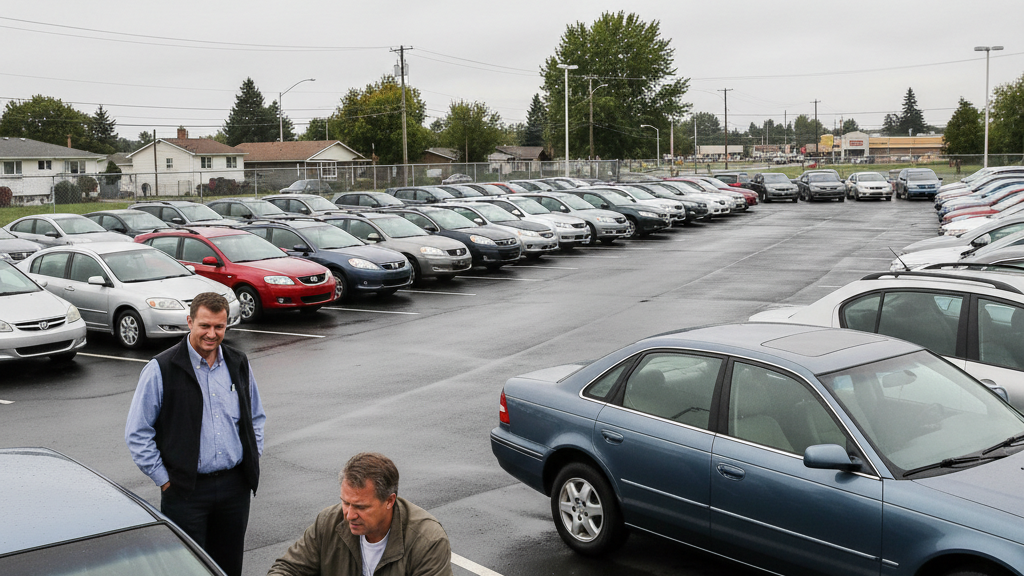
If you recently purchased a used car in Ohio and it has been in and out of the repair shop with no end in sight, you are not alone. Thousands of Ohio consumers find themselves stuck with defective used vehicles every year, wondering whether the law can help them.
The short answer: Ohio’s state lemon law does not directly cover used cars. But that does not mean you are out of options. In fact, you may have more legal rights than you realize.
Take our free 60-Second Lemon Law Assessment™ to find out if your vehicle qualifies.
We have spent nearly three decades representing Ohio consumers with defective vehicles, including our landmark case Royster v. Toyota Motor Sales reaching the Ohio Supreme Court in 2001. That case established important protections for vehicle owners across our state. In our experience, many used car owners walk away from valid claims simply because they believe the lemon law does not apply to them. Let me explain what the law actually says and where your protections lie.
Ohio’s Lemon Law, codified under Ohio Revised Code Sections 1345.71 through 1345.77, was written specifically to protect buyers of new motor vehicles. The law covers defects that substantially impair a vehicle’s use, value, or safety during the first 12 months or first 18,000 miles of ownership, whichever comes first.
Here is what that means in plain terms:
So if you bought a three-year-old sedan from a dealership and the transmission is failing, you cannot file a claim under Ohio’s state lemon law. But keep reading, because this is where many people get the wrong information and give up too soon.
While Ohio’s state law stops at new vehicles, the federal Magnuson-Moss Warranty Act (15 U.S.C. Section 2301 et seq.) picks up where the state law leaves off. This federal statute is often called the “federal lemon law,” and it is one of the most powerful tools available to Ohio used car buyers.
The Magnuson-Moss Act protects any consumer who purchases a vehicle, new or used, that comes with a written warranty. Here is how it works:
If your used vehicle qualifies under the Magnuson-Moss Act, you may be entitled to:
This is a critical point that many Ohio consumers miss: federal law provides for manufacturer to pay your attorney’s fees if your case is successful. That means pursuing a claim costs you nothing out of pocket, just like our state lemon law cases.
Certified pre-owned vehicles occupy an especially favorable position under the law. When a manufacturer certifies a used vehicle, they are issuing a new warranty backed by their own name. This manufacturer-backed CPO warranty gives you clear protection under the Magnuson-Moss Act.
If you bought a CPO vehicle in Ohio and it has been back to the dealer multiple times for the same problem, or has spent weeks out of service for warranty repairs, you likely have a valid federal warranty claim. The manufacturer cannot hide behind the “it is a used car” excuse when they voluntarily issued a warranty on that vehicle.
At Kahn & Associates, we have represented many CPO vehicle owners across Ohio and consistently secured compensation, even when the state lemon law did not apply.
Sometimes the problem with a used car is not just mechanical failure. Sometimes the problem is that the dealer was not honest with you about what you were buying. Ohio law provides separate protections for these situations.
We handle cases involving:
These are not just shady practices. They are violations of Ohio’s Consumer Sales Practices Act and other laws. Dealers who knowingly conceal a vehicle’s history can be held liable for damages, and you may be entitled to a full refund plus additional compensation.
If you suspect you were sold a vehicle with a hidden past, check the title for any branded designations and review the vehicle history report. Then contact our team for a free case evaluation.
Understanding where you stand can save time and frustration. Here is a straightforward breakdown:
When the line between qualifying and not qualifying is unclear, that is exactly when you need an experienced lemon law attorney to evaluate your case. We review thousands of cases every year and can tell you where you stand quickly.
If you are dealing with a used car that will not stop breaking down, here is what I recommend:
Keep every repair order, invoice, and communication with the dealership or manufacturer. Note the dates, mileage, and a description of each problem. Good records are the foundation of a strong case.
Have warranty repairs performed at the manufacturer’s authorized dealerships, not independent shops. This preserves your warranty claim and creates a clear record of the manufacturer’s failure to fix the defect.
Check whether your vehicle came with a manufacturer’s warranty, extended warranty, or CPO certification. Also review the purchase agreement for any “as-is” language. Understanding what was promised to you at the time of sale is essential.
Run a vehicle history report to look for prior lemon buybacks, salvage titles, accident damage, or odometer discrepancies. The Ohio Bureau of Motor Vehicles, Carfax and the National Motor Vehicle Title Information System (vehiclehistory.gov) are good starting points.
The fastest way to know if you have a case is to speak with a lemon law attorney who handles these cases every day. At Kahn & Associates, our 60-Second Lemon Law Assessment™ can tell you in about a minute whether your vehicle qualifies under state or federal law.
Call us at 1-888-536-6671 or complete the assessment online. There is no charge and no obligation. If we take your case, the manufacturer pays our legal fees, not you.
Kahn & Associates also represents consumers with defective vehicles in states beyond Ohio. If you purchased your used vehicle in another state, learn about your protections:
We have been fighting for Ohio consumers since 1996, and our track record speaks for itself:
Although we represent consumers in other states, Ohio is our home market. We know Ohio consumer protection law inside and out, and we know how to hold manufacturers accountable when they fail our neighbors.
For more answers to common questions, visit our frequently asked lemon law questions page.
—
*Disclaimer: The information contained in this Website is provided for informational purposes only, and should not be construed as offering legal advice, or creating an attorney client relationship between the reader and the author. While we aim for accuracy, the law is constantly changing and we make no guarantees regarding the completeness or timeliness of the information. You should not act or refrain from acting on the basis of any content included in this Website without seeking appropriate legal advice about your individual facts and circumstances from an attorney licensed in your state.
To see if you qualify, fill out the form below or call us at 1-888-536-6671 – No Office Visit Needed!

I had a great experience with Kahn & Associates! They made the process of dealing with an extremely frustrating lemon situation painless. They have very quick response times and everyone I dealt with was very friendly and helpful. Would definitely recommend!
Kahn and Associates did an awesome job with our lemon law case! We were getting nowhere with VW Customer Service and decided to hire an attorney who specialized with lemon law cases. We couldn’t be happier with the outcome. We were able to get a full refund on our lemon VW Atlas.
What a great experience! I was on the fence about hiring an attorney for my ongoing automotive issues and continued frustration with the manufacturer. It was a very simple process and I am very grateful Kahn and Associates for helping get me a settlement!
Real Honest attorneys!!! They are the real deal! I went back and forth with them and they explained to me every step and my rights under the law! I give them 5 stars because I won!!! Yes and my check is coming to me much sooner than I thought! I was stuck ! I own a brand new car and the dealer was giving me a hard time !

This page has been written, edited, and reviewed by a team of legal writers following our comprehensive editorial guidelines. This page was approved by Attorney Craig A. Kahn, who has more than 20 years of legal experience in lemon law.
You bought a vehicle that keeps breaking down, and the dealer can't seem to fix it. You know something call...
You’ve been back to the dealership so many times for the same issue that the service team knows your orde...
A reasonable number of repair attempts is the basic legal rule used to decide when a car maker must replace...

Stuck with a defective car in Ohio? State Lemon Laws protect you. Get a refund, replacement, or cash settlement. Learn your rights today!

Florida Lemon Laws cover new and used vehicles. If your car’s a lemon, you deserve compensation. Let us help you fight for justice!

Michigan’s Lemon Law protects you from faulty vehicles. Don’t settle for endless repairs—claim your refund or replacement now.

North Carolina Lemon Laws ensure defective vehicles are replaced or refunded. Know your rights and take action today!

Pennsylvania Lemon Law covers new cars with repeated issues. Get the compensation you deserve. Click to learn more!
To see if you qualify, fill out the form below or call us at 1-888-536-6671 – No Office Visit Needed!

The Truth About Attorney’s Fees in Lemon Law Cases Learn more
*Disclaimer: The information contained in this Website is provided for informational purposes only, and should not be construed as offering legal advice, or creating an attorney client relationship between the reader and the author. While we aim for accuracy, the law is constantly changing and we make no guarantees regarding the completeness or timeliness of the information. You should not act or refrain from acting on the basis of any content included in this Website without seeking appropriate legal advice about your individual facts and circumstances from an attorney licensed in your state.

 Message Us
  Call Us