
Have A Case? Call Us
1 888-536-6671
60 Second Lemon Law Assessment™
60 Second Lemon Law Assessment™
by Kahn & Associates - October 29th, 2026
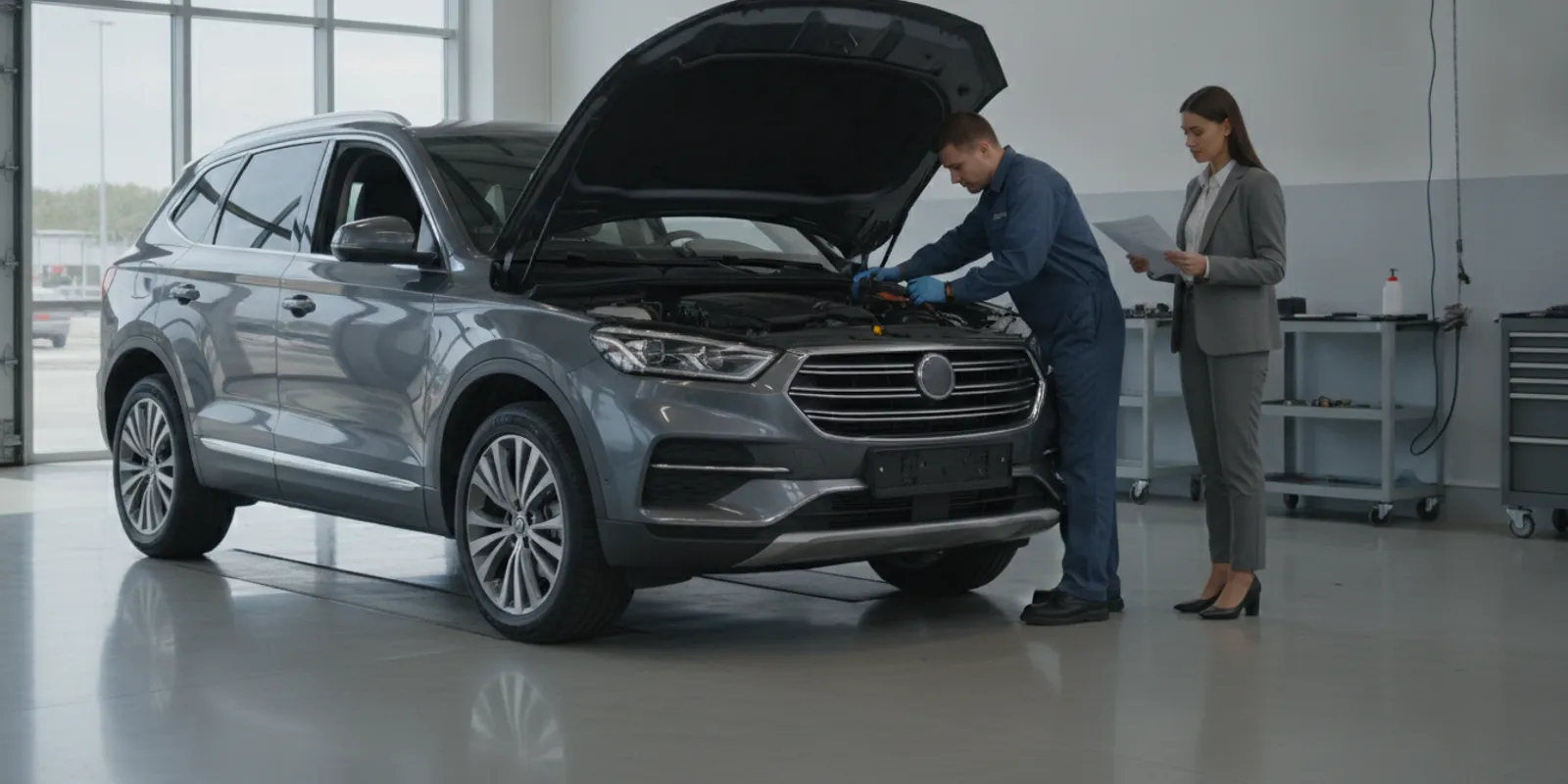
If repeated SUV problems have sent you back to the dealership, you may be wondering whether a lemon law SUV buy back is possible. A buyback may be one outcome when a manufacturer cannot fix a covered defect after a reasonable number of repair attempts, or after the vehicle has been out of service for an unreasonable amount of time. If that describes your SUV, you may have a Lemon Law or breach of warranty case.
If your SUV has been in for the same issue at least twice, or has been or will be out of service for at least 21 calendar days, that is enough to ask. Call 1-888-536-6671 or send us your repair history for a free case review. We have focused exclusively on Lemon Law since 1996, and as of the beginning of 2026 we have represented more than 13,000 consumers.
A buyback is a resolution in which the manufacturer takes the vehicle back and provides compensation under the applicable law or a negotiated agreement. The exact calculation and process vary. Depending on the claim, a resolution may instead involve a replacement vehicle, monetary compensation while the owner keeps the SUV, or another agreed remedy.
A lemon law claim is generally directed at the vehicle manufacturer over a defect covered by warranty, not at the dealership simply because it performed repairs. The dealership’s repair orders can be important evidence of the manufacturer-warranty problem. If your concern is a dealer’s sales conduct or alleged fraud, that is a different type of dispute and not the kind of claim we handle.
Not every frustrating repair issue qualifies. A recurring rattle, infotainment glitch, engine problem, transmission issue, braking fault, or electrical failure needs to be assessed in context. The central questions are whether the defect substantially affects use, value, or safety, whether it arose within the relevant legal and warranty periods, and whether the manufacturer had a reasonable opportunity to repair it.
You may have a lemon when a significant defect continues after a reasonable number of repair attempts, or when the vehicle has spent an unreasonable amount of time out of service or at the repair shop. The phrase “reasonable number” does not create one universal repair-attempt count for every state, vehicle, or defect. Safety-related problems may be evaluated differently from an inconvenience, but no single symptom or number by itself decides the claim.
Keep the defect description specific. “SUV has a problem” tells little. “Engine stalls when turning left, warning light returns two days after repair, and the vehicle was towed back to the dealership” gives a clearer picture. If the same issue has been described in different ways on different visits, collect the records so the full pattern can be reviewed.
Time out of service can matter even if the dealership has not attempted the same repair many times. Track each date the SUV was dropped off and returned, whether it could be driven safely, and whether parts delays kept it at the shop. The legal question is whether the period is reasonable under the applicable rules.
There is also a cost to waiting. Every month you keep driving the SUV and adding miles gives the manufacturer an argument that the defect is not substantially impairing its use, value, or safety. A vehicle driven for a long stretch after the repairs looks, to a manufacturer’s lawyer, like a vehicle that works.
Coverage is another key issue, and used SUVs are where the most confusion arises. A common misconception is that the vehicle has to be under warranty right now. It does not. There may be an implied warranty claim as well as a claim for breach of the written warranty covering repairs already performed under it. What matters is that repairs were made under the manufacturer’s warranty or the manufacturer’s extended warranty. For an overview of the relevant state frameworks, see our Lemon Law information and frequently asked questions.
Several facts can shift the analysis. First, identify the vehicle’s purchase or lease date, mileage, and warranty status. Then note when the defect first appeared and when the first repair attempt occurred. Some laws have deadlines or coverage windows, so waiting may create avoidable problems.
Next, consider what the defect does. A recurring safety problem may have a different practical impact from a cosmetic concern. A defect can also affect the SUV’s value or ordinary use even when it does not leave the vehicle completely undrivable. Document what happened, how often, and whether it affected driving, carrying passengers, or using the vehicle as intended.
Finally, review the complete repair history. A repair visit may count differently depending on the diagnosed problem and state law. Multiple visits for unrelated complaints do not necessarily establish repeated unsuccessful attempts to fix the same defect. At the same time, a dealer or manufacturer may describe one recurring condition in different technical terms. The underlying symptoms and repair records should be considered together.
Lemon Law rights are state-specific by statute or case law, although there is a lot of overlap or similarity from one place to another. Kahn & Associates represents consumers in Ohio, Florida, Michigan, North Carolina, and Pennsylvania, and the legal details are not interchangeable. A vehicle’s location, warranty, timing, repair attempts, and time out of service all matter. See our Ohio, Florida, Michigan, North Carolina, and Pennsylvania Lemon Law pages for state-specific considerations.
For one example of why location matters, North Carolina’s Department of Justice describes its Lemon Law as requiring manufacturers to repair defects affecting a vehicle’s use, value, or safety within the first 24 months or 24,000 miles, whichever comes first. That is a North Carolina-specific description, not a rule to apply to an SUV registered or purchased in another state. Review the North Carolina Department of Justice Lemon Law information alongside advice based on your own facts.
There can also be state differences in how a repurchase amount is calculated. Mileage offsets are not uniform. Ohio applies no mileage offset in a repurchase or replacement. Florida uses miles at settlement. Michigan counts miles before the first repair plus miles over 25,000. North Carolina uses mileage at the third repair attempt, or at the twentieth business day out of service if that comes first. Pennsylvania applies the lesser of 10 cents per mile at the first repair or 10% of the purchase price. These rules are not a substitute for reviewing the specific claim, and a final calculation may involve other components.
For Michigan claims, for example, the statutory eligibility framework includes four or more repair attempts for the same defect or at least 30 cumulative days out of service. Do not use this Michigan standard to assess a claim in another state.
State law is also not the only route. The federal Magnuson-Moss Warranty Act turns on the existence of a written manufacturer warranty rather than the vehicle’s age or mileage, so it often reaches SUVs that fall outside a state statute’s window. We evaluate every claim under both state and federal law rather than testing one and stopping there.
None of this has to be done before you call. If you have the records, these make them easier to work with; if you do not, we can try request them.
Ask for a complete copy of the repair order before leaving the service department, and check that it accurately describes the concern you reported. If a document says “no problem found” but the issue happened again, write down when it recurred and make sure the next service visit describes the symptoms clearly. Accurate details are more useful than generalize descriptions.
A buyback is one possible resolution. A replacement vehicle may be considered in some circumstances, while a cash settlement may allow an owner to keep the SUV and receive compensation. A manufacturer may also offer repairs or extended warranty coverage as part of a negotiated resolution.
Which of those is available is usually not the consumer’s choice. It normally depends on whether the claim qualifies under the state statute at all. Where it does not, cash is typically the only offer, with the matter resolving under federal law as a breach of warranty. Occasionally a manufacturer prefers cash because the buyback numbers do not work for it, or an owner who does qualify passes on a buyback because replacement vehicles have become too expensive.
If a claim resolves for cash, keeping the SUV is not the same as being stuck with it. You remain free to trade it in or sell it afterward, the money can go toward negative equity on the loan or a down payment on a replacement, or you can simply keep it and keep driving.
In a buyback the outstanding loan is paid off as part of the remedy: the lienholder is paid directly, and you are separately returned what you have put into the vehicle, so the financing is retired rather than carried into your next SUV. Before accepting any offer, read the written terms carefully. Identify what happens to the vehicle, loan, taxes, fees, and any remaining warranty rights. Ask how a mileage deduction was calculated and which dates or mileage figures were used.
On fees: many state Lemon Laws say attorney fees shall be paid if a consumer wins, while the federal Magnuson-Moss Warranty Act says they may be paid. When a settlement is negotiated, especially before a lawsuit is filed, manufacturer-paid attorney fees are typically agreed by the parties rather than awarded by a court as though there had been a trial verdict. We work on a contingency basis, and you are not required to pay us any out-of-pocket fees or costs, win or lose. Our fee comes from the recovery, not from any money in your pocket before the case resolves. To learn more about our approach, visit our firm overview and examples of resolved Lemon Law cases.
A safety recall and a Lemon Law claim are related in subject but not the same process. A recall generally concerns a manufacturer’s remedy for a safety or compliance issue affecting a group of vehicles. A Lemon Law claim focuses on whether a particular vehicle has a covered defect that remains unresolved after a reasonable opportunity to repair it, or has been out of service for an unreasonable amount of time. A recall does not automatically establish a buyback claim, and the absence of a recall does not prove a persistent defect is harmless.
If a recall or service campaign applies to your SUV, keep the notice and records of the repair or attempted repair. If the same symptom continues afterward, report it promptly and ask the service department to record what happened before and after the recall work. If the service center says a part is unavailable, note when you were told, whether the SUV remained at the dealership, and any instructions about whether it was safe to drive.
Avoid relying only on verbal assurances. After a call with the manufacturer or dealership, make a dated note of who you spoke with, the subject, and any promised next steps. If you receive a written offer, preserve the full document and any attachments. These habits help clarify what the manufacturer knew, what repairs were attempted, and whether the condition persisted.
If you are in Ohio, Florida, Michigan, North Carolina, or Pennsylvania, you can contact us for a free, confidential review. We handle matters remotely, so an office visit is not required. You can also review answers to common questions in our Lemon Law FAQ.
Two repair visits for the same issue, or 21 calendar days out of service, is enough to find out where you stand. Request a free review of your SUV’s defect and repair history or call 1-888-536-6671.
An SUV may qualify if it meets the requirements of the applicable state law and the manufacturer warranty, or if a federal warranty claim fits. The defect, repair attempts, days out of service, timing, and vehicle history all matter.
Not necessarily. A set count may apply in some legal circumstances when a presumption is met, but there is no single repair-attempt number that determines every claim in every state. The issue is generally whether the manufacturer had a reasonable opportunity to repair a covered defect and whether the applicable legal requirements are met. You do not need to reach a particular number before asking: two visits for the same issue, or 21 calendar days out of service, is enough.
Possibly. The vehicle does not need to be under warranty today, so long as repairs were performed under the manufacturer’s warranty or the manufacturer’s extended warranty. How far a state statute reaches a used vehicle varies, which is why the federal route often fits better for a used purchase. A used SUV is not automatically covered, and an expired warranty does not end the matter.
A loan or lease does not by itself answer whether a claim may exist. It affects the financial steps in a buyback or settlement, including payment to a lender or leasing company and any balance that remains. In a buyback the lienholder is paid directly. Compare any written offer with the payoff information before agreeing to terms.
No. Depending on the facts, possible resolutions include a buyback, a replacement vehicle, cash compensation, or another negotiated outcome. A claim review can identify what may be available without promising a particular result.
If you are in Ohio, Florida, Michigan, North Carolina, or Pennsylvania, you can contact us for a free, confidential review. We handle matters remotely, so an office visit is not required. You can also review answers to common questions in our Lemon Law FAQ.
Two repair visits for the same issue, or 21 calendar days out of service, is enough to find out where you stand. Request a free review of your SUV’s defect and repair history or call 1-888-536-6671.
*Disclaimer: The information contained in this Website is provided for informational purposes only, and should not be construed as offering legal advice, or creating an attorney client relationship between the reader and the author. While we aim for accuracy, the law is constantly changing and we make no guarantees regarding the completeness or timeliness of the information. You should not act or refrain from acting on the basis of any content included in this Website without seeking appropriate legal advice about your individual facts and circumstances from an attorney licensed in your state.
To see if you qualify, fill out the form below or call us at 1-888-536-6671 – No Office Visit Needed!

I had a great experience with Kahn & Associates! They made the process of dealing with an extremely frustrating lemon situation painless. They have very quick response times and everyone I dealt with was very friendly and helpful. Would definitely recommend!
Kahn and Associates did an awesome job with our lemon law case! We were getting nowhere with VW Customer Service and decided to hire an attorney who specialized with lemon law cases. We couldn’t be happier with the outcome. We were able to get a full refund on our lemon VW Atlas.
What a great experience! I was on the fence about hiring an attorney for my ongoing automotive issues and continued frustration with the manufacturer. It was a very simple process and I am very grateful Kahn and Associates for helping get me a settlement!
Real Honest attorneys!!! They are the real deal! I went back and forth with them and they explained to me every step and my rights under the law! I give them 5 stars because I won!!! Yes and my check is coming to me much sooner than I thought! I was stuck ! I own a brand new car and the dealer was giving me a hard time !

This page has been written, edited, and reviewed by a team of legal writers following our comprehensive editorial guidelines. This page was approved by Attorney Craig A. Kahn, who has more than 20 years of legal experience in lemon law.
Honda Lemon Law Help for Repeat Warranty Repairs The second or third repair visit is often when frustratio...
Receiving a recall notice can feel like a solution to a frustrating vehicle defect. However, a recall is a ...
Negative Equity in a Lemon Law Buyback Negative equity from a trade-in does not simply vanish because a ca...

Stuck with a defective car in Ohio? State Lemon Laws protect you. Get a refund, replacement, or cash settlement. Learn your rights today!

Florida Lemon Laws cover new and used vehicles. If your car’s a lemon, you deserve compensation. Let us help you fight for justice!

Michigan’s Lemon Law protects you from faulty vehicles. Don’t settle for endless repairs—claim your refund or replacement now.

North Carolina Lemon Laws ensure defective vehicles are replaced or refunded. Know your rights and take action today!

Pennsylvania Lemon Law covers new cars with repeated issues. Get the compensation you deserve. Click to learn more!
To see if you qualify, fill out the form below or call us at 1-888-536-6671 – No Office Visit Needed!

The Truth About Attorney’s Fees in Lemon Law Cases Learn more
*Disclaimer: The information contained in this Website is provided for informational purposes only, and should not be construed as offering legal advice, or creating an attorney client relationship between the reader and the author. While we aim for accuracy, the law is constantly changing and we make no guarantees regarding the completeness or timeliness of the information. You should not act or refrain from acting on the basis of any content included in this Website without seeking appropriate legal advice about your individual facts and circumstances from an attorney licensed in your state.

 Message Us
 Call Us