
Have A Case? Call Us
1 888-536-6671
60 Second Lemon Law Assessment™
60 Second Lemon Law Assessment™
by Kahn & Associates - June 22nd, 2026
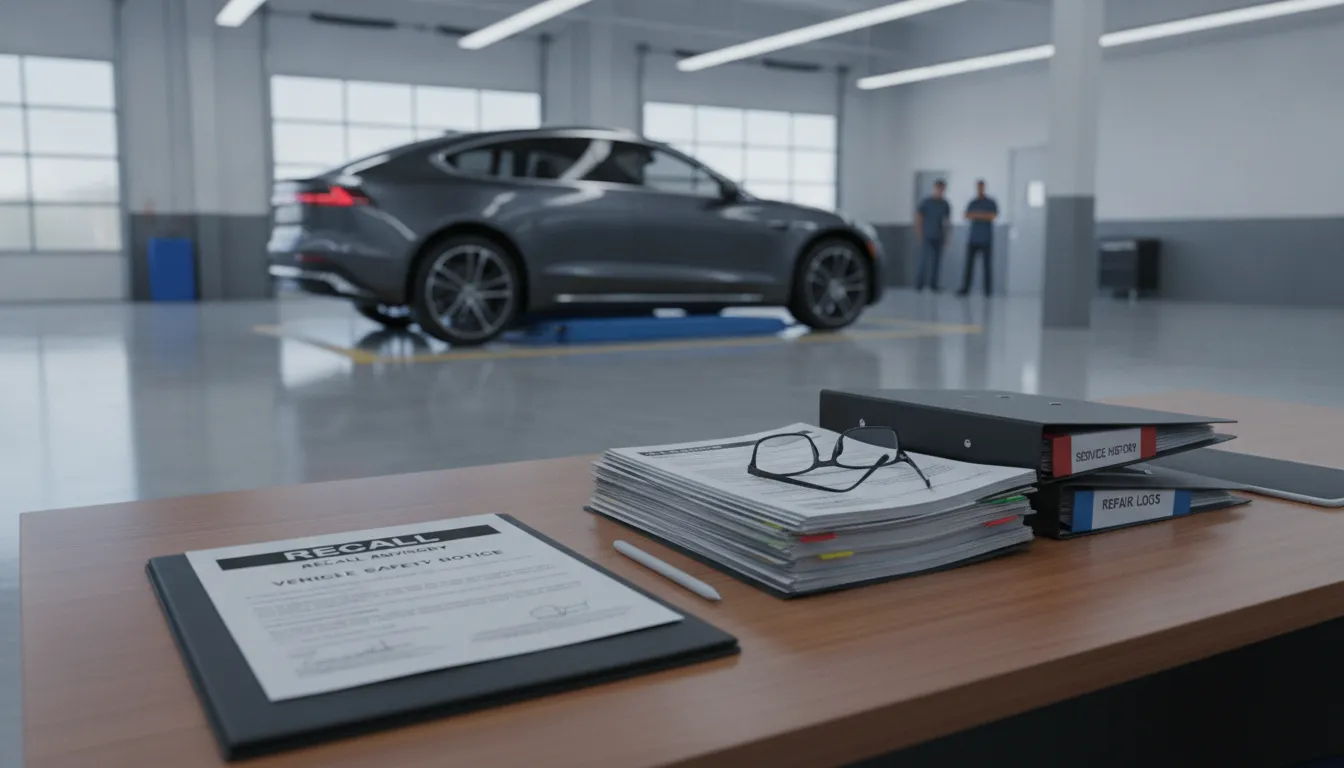
Receiving a recall notice can feel like a solution to a frustrating vehicle defect. However, a recall is a safety fix, while a lemon law claim is a potential legal remedy when a manufacturer cannot resolve a recurring warranty defect after reasonable repair attempts or time out of service.
If a recalled defect keeps returning, request a free case review from Kahn & Associates, L.L.C. to understand your possible next steps.
Recall vs lemon law claims differ mostly in their core purpose and final outcome. A manufacturer recall is a safety measure meant to fix a specific defect at no cost to the owner. According to the National Highway Traffic Safety Administration or NHTSA, a recall happens when a car fails to meet safety standards. In contrast, a lemon law claim is a legal tool for owners whose cars have persistent defects that the dealer cannot fix after many tries. While a recall results in a free repair, a successful lemon law claim can lead to a full refund or a new car. A recall does not mean your car is a lemon, but failing to fix a recalled part after several attempts may give you a legal case.
Some car owners think a safety recall is the same as a lemon law claim. While both deal with vehicle defects, they are different legal tools. A recall is a safety action from the National Highway Traffic Safety Administration (NHTSA) or a car maker. It is meant to fix a specific danger in every vehicle of that model. A lemon law claim is for one specific car that has not been fixed after many tries.
A recall starts when a manufacturer or NHTSA finds a safety flaw in a vehicle or its parts. The law says the manufacturer must fix these flaws at no cost to you. This might involve a software update or a new part. But a recall does not mean your car is a lemon. It only means the maker found a risk and must try to fix it. If the fix works the first time, you do not have a lemon law case.
A car may become a lemon if a recall fix fails more than once. Lemon laws focus on cars with a “nonconformity” that the maker cannot fix after a fair number of attempts. This is one of the main lemon law vs manufacturer recalls differences. If you take your car in for a recall repair and the problem stays, you might have a claim. You could get a refund or a new car if the maker fails to fix the issue after a reasonable time.
This table shows how these two paths differ for car owners. Use it to find which path fits your current car trouble.
| Feature | Manufacturer Recall | Lemon Law Claim |
|---|---|---|
| Primary Goal | Public safety fix | Consumer relief |
| Trigger | Group safety risk | One car’s failure |
| Cost to Owner | Free repair | No out-of-pocket fees at most firms |
| Best Outcome | Safe vehicle | Refund or replacement |
| Legal Basis | Federal safety laws | State & federal lemon laws |
Knowing the differences between recalls and lemon law claims is vital. If a maker cannot fix a safety recall after multiple tries, the law gives you rights. You do not have to keep a car that is not safe to drive.
A car maker recall and a lemon law claim are two ways to deal with a car problem. A recall is a safety repair initiated by a car maker or the government. A lemon law claim is a legal step you take when a car maker fails to fix your car after many tries. Sometimes these two paths meet. This happens when a recall fix does not work or takes too long to finish. Knowing the recall vs lemon law rules helps you get a fair result.
A recall starts when a maker finds a safety flaw in a car model. The National Highway Traffic Safety Administration (NHTSA) makes sure the maker fixes the flaw for free. But a free fix is only helpful if it works. If your car goes in for a recall fix and the same flaw returns, the repair failed. Most states say you must give the maker a fair chance to fix the car.
If the recall fix does not stop the problem, your car might be a lemon. A recall is about safety, but lemon law is about your rights as a buyer. You may have a claim if the maker cannot fix the flaw after a few tries.
Time is a big part of lemon law cases. Your car does not have to go back to the shop many times to fit the law. It can also be a lemon if it stays in the shop for a long time for one fix. Many states use a 30-day rule to decide if a car is a lemon. This could include time spent waiting for recall parts to arrive. Common signs that a car has spent too much time in the shop include:
Makers often have parts on backorder for months. This delay can make your car useless for a long time. You might feel stuck while you wait for a recall fix. But you have rights if the wait is too long. Those days in the shop count toward a lemon law claim. If your car is out of service for weeks, a recall may not be enough to qualify for your money back or a new car.
To win a lemon law case, the flaw must be substantial. It must hurt the use, value, or safety of your car. Since recalls are for safety flaws, they mostly fit this part of the test. A car with a bad engine or broken brakes is clearly unsafe.
Both state and federal laws protect you in these cases. The Magnuson-Moss Warranty Act is a federal law that helps people with car flaws. It works with state laws to hold car makers accountable. You may get back some or all of your money or get a new car. The maker may also have to pay for your lawyer fees if you win.
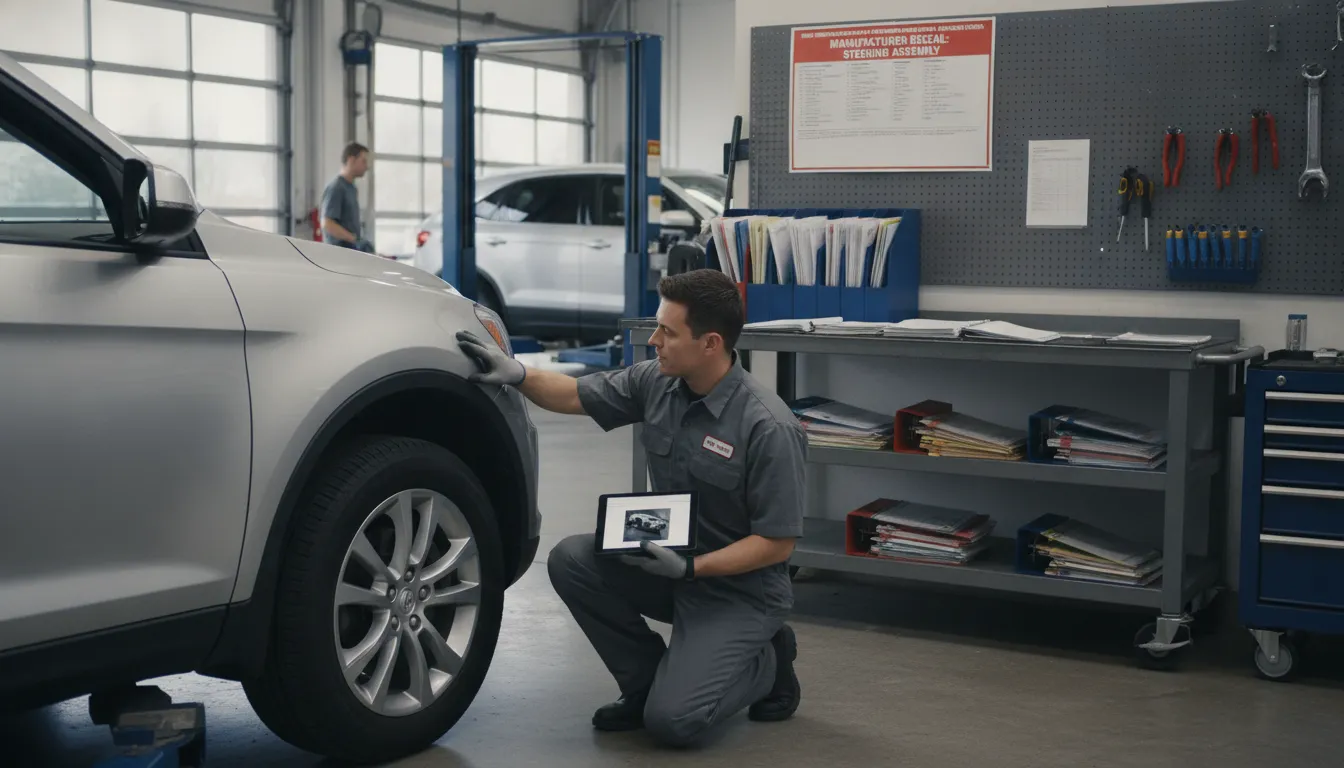
Repair records matter because they document the defect, each attempted fix, mileage, and time the vehicle spent out of service. Together, those details can help show whether the manufacturer was afforded a reasonable opportunity to repair the problem.
If you face a lemon law claim due to manufacturer recalls, your records are your best tool. A manufacturer recall is a safety fix defined by the National Highway Traffic Safety Administration (NHTSA). If the same problem persists after several tries, you may have a lemon law claim.
You need a paper trail for every shop visit. Each repair order must show the date you dropped off the car and the date you picked it up. It should list the mileage and the exact symptoms you told the service writer. These dates help prove how many days your car was out of service, which is key for a legal claim. Many states require a car to be in the shop for at least 30 days to qualify for a repurchase or replacement vehicle.
Save all mail from the manufacturer about safety recalls. These notices prove the maker knew about the defect. If you take your car in for a recall fix and the problem stays, note the date of that attempt. A recall fix counts as a repair try. If the dealer cannot fix a safety issue after a few tries, you may need to know when a recall isn’t enough to protect your rights.
Keep a log of all calls and emails with the dealer or manufacturer. Write down who you talked to and what they said about the fix. If they tell you a part is on backorder, get it in writing. This proof shows you did your part to get the car fixed. Clear records help your team show that the car has a persistent defect that the maker failed to repair in a fair amount of time.
If a recall repair fails, promptly report the recurring symptom, return to an authorized repair facility, and obtain a complete repair order. Keep the recall notice and all communications, then consider a case review before applicable deadlines expire.
If the car is still broken after a recall fix, you may feel stuck. You might think you have to wait for a new recall or a different fix. This is not true. If the car maker cannot fix a safety or use issue in a fair amount of time, you may have other paths. You might be able to seek a refund or a new car through a lemon law claim.
You do not need to prove that the dealer did something wrong. Lemon law claims focus on the fact that the car has a defect the maker cannot timely fix. Whether it is a safety risk or a major part failure, the result is the same. You have a car that you cannot use as you should. Taking the right steps now can help you get a better outcome later.
State and federal laws, like the Magnuson-Moss Warranty Act, are there to help you. If you win your case, the car maker may have to pay for your legal fees. This means you can get help without paying out of pocket. These rules give you a way to fight back when a recall repair fails to solve the problem.
Location matters because lemon law requirements and potential remedies differ by state. Consumers in Ohio, Florida, Michigan, North Carolina, and Pennsylvania should evaluate their repair attempts, time out of service, warranty coverage, and state-specific rules.
Your legal rights depend on the state where you bought or leased your car. While many drivers think about lemon laws as one set of rules, each state has its own way of defining a lemon. These differences can change whether you qualify for relief.
Most state laws look at how many times a dealer tries to fix a problem. Many states follow a rule of three or four tries for the same defect. Some laws also count the total days your car sits in the repair shop.
The time you have to file a claim also varies by state. You must often report the flaw within a set time or mileage limit. If you wait too long after a manufacturer recall, you might lose your right to seek a lemon law solution. Our guide on what’s covered under the lemon law can help you understand these timing rules.
If you win a case, the manufacturer may pay you back for the car. But most states let them keep some money for the miles you drove. This is called a mileage offset. Each state finds this number in its own way. Ohio does not use an offset for a full buyback. In Florida, the offset is based on the miles driven when you reach a settlement.
Other states use different math. Michigan looks at the miles driven before the first repair plus any miles over 25,000. North Carolina uses the miles on the car at the time of the third repair. Pennsylvania may take the lesser of 10 cents per mile at the first repair or 10% of the price. Knowing these differences between recalls and lemon law claims helps you set the right goals for your case.
You are not just limited to state laws. The Magnuson-Moss Warranty Act is a federal law that helps people in every state. It says that if you win, the manufacturer may have to pay your lawyer fees. This federal rule works with state laws to give you more power. These laws may help you get out of a bad car or provide cash compensation.
When you file a claim against a car maker, several paths can lead to a fix. These options aim to help you after you deal with a car that has constant issues. While every case is different, the law gives clear ways for people to get help. This applies when a car fails to meet the promises in its warranty.
A common result of a successful claim is a vehicle buyback. In this case, the car maker pays you back for the car. This often includes the price you paid, taxes, and fees. The maker may also pay off your car loan. This path helps you walk away from a bad car so you can get a new one. If you are seeking compensation through lemon law, this is a common outcome.
Many consumers choose a cash settlement when their case does not meet the state lemon law requirements or if they want to keep the vehicle, but receive compensation for the problems (However, you can still trade in or sell the vehicle once the settlement is complete).
If you win, you may choose a new car from the maker instead of a refund. This car should be the same as your current model or very close to it. The goal is to give you what you thought you were buying at the start. This path helps if you like the car but simply got one with too many flaws.
Picking between a refund and a new car depends on your goals. Some want a fresh start with a new brand. Others want the car they chose but need it to work.
A big plus of a warranty claim is that you do not have to pay out of pocket with our firm. Under many state laws and the federal Magnuson-Moss Warranty Act, the maker may pay legal fees if you win. This means you can get help without worrying about high costs. At Kahn & Associates, you are required to pay nothing out-of-pocket for our work on your case. Getting help should not add to your stress.
A recall does not necessarily mean your car is a lemon. Recalls are for safety issues found by the car maker or NHTSA. Lemon laws focus on flaws that affect use, value, or safety after several failed repair tries. If a dealer cannot fix a recall issue after many tries, it might lead to a lemon law claim.
There is no set number of recalls that makes a car a lemon. Lemon laws look at how many times a dealer tries to fix a specific flaw. The law expects the manufacturer to be given a fair chance to fix your car. But that chance isn’t endless. This is where the “reasonable number of repair attempts” rule comes in. If the dealership has tried and failed to fix the same substantial problem multiple times, your car may qualify as a lemon.
So, what’s a “reasonable” number? Typically, under the law this means 3 or more attempts to repair the same issue, however in negotiations we can often resolve matters with only 2 repair attempts. However, if the defect is a serious safety concern, that number could be less. If you’re stuck in a cycle of repeated repairs and the problem persists, it is definitely time to stop dealing with the dealership and start exploring your legal options.
If a recall repair does not fix the problem, you should take the car back to the dealer. Car makers must provide a way to fix safety recalls at no cost. If the same issue recurs after multiple tries, you may have a lemon law case. This is true if the flaw greatly impacts the car’s use or safety and remains unfixed after multiple repair attempts.
No, repairs for safety recalls must be done at no cost to the car owner. NHTSA requires car makers to fix safety issues for free. If a dealer tries to charge you for a recall repair, you should tell the car maker or the NHTSA.
If you are not sure if your car is a lemon, you do not have to guess. You can take a 60-Second Lemon Law Assessment to see if we can help. Our law firm will look at your repair records and tell you what to do next. Or Contact our office today to request a free case review and find out if you qualify.
Kahn & Associates, L.L.C. helps people in Ohio, Florida, Michigan, North Carolina, and Pennsylvania. Our firm has very high success rate since our founding in 1996. We work on a contingency fee basis, so you do not have to pay us out of your own pocket. If we win your case, the car maker usually pays legal fees under the law.
*Disclaimer: The information contained in this Website is provided for informational purposes only, and should not be construed as offering legal advice, or creating an attorney client relationship between the reader and the author. While we aim for accuracy, the law is constantly changing and we make no guarantees regarding the completeness or timeliness of the information. You should not act or refrain from acting on the basis of any content included in this Website without seeking appropriate legal advice about your individual facts and circumstances from an attorney licensed in your state.
To see if you qualify, fill out the form below or call us at 1-888-536-6671 – No Office Visit Needed!

I had a great experience with Kahn & Associates! They made the process of dealing with an extremely frustrating lemon situation painless. They have very quick response times and everyone I dealt with was very friendly and helpful. Would definitely recommend!
Kahn and Associates did an awesome job with our lemon law case! We were getting nowhere with VW Customer Service and decided to hire an attorney who specialized with lemon law cases. We couldn’t be happier with the outcome. We were able to get a full refund on our lemon VW Atlas.
What a great experience! I was on the fence about hiring an attorney for my ongoing automotive issues and continued frustration with the manufacturer. It was a very simple process and I am very grateful Kahn and Associates for helping get me a settlement!
Real Honest attorneys!!! They are the real deal! I went back and forth with them and they explained to me every step and my rights under the law! I give them 5 stars because I won!!! Yes and my check is coming to me much sooner than I thought! I was stuck ! I own a brand new car and the dealer was giving me a hard time !

This page has been written, edited, and reviewed by a team of legal writers following our comprehensive editorial guidelines. This page was approved by Attorney Craig A. Kahn, who has more than 20 years of legal experience in lemon law.
Purchased a new vehicle in North Carolina that spends more time at the dealership than is reasonable? The N...
Think your car might be a lemon? Take our free 60-Second Lemon Law Assessment or call 1-888-536-6671 to fin...
Buying a new vehicle should be exciting, not exhausting. But if your new car, truck, or SUV keeps breaking ...

Stuck with a defective car in Ohio? State Lemon Laws protect you. Get a refund, replacement, or cash settlement. Learn your rights today!

Florida Lemon Laws cover new and used vehicles. If your car’s a lemon, you deserve compensation. Let us help you fight for justice!

Michigan’s Lemon Law protects you from faulty vehicles. Don’t settle for endless repairs—claim your refund or replacement now.

North Carolina Lemon Laws ensure defective vehicles are replaced or refunded. Know your rights and take action today!

Pennsylvania Lemon Law covers new cars with repeated issues. Get the compensation you deserve. Click to learn more!
To see if you qualify, fill out the form below or call us at 1-888-536-6671 – No Office Visit Needed!

The Truth About Attorney’s Fees in Lemon Law Cases Learn more
*Disclaimer: The information contained in this Website is provided for informational purposes only, and should not be construed as offering legal advice, or creating an attorney client relationship between the reader and the author. While we aim for accuracy, the law is constantly changing and we make no guarantees regarding the completeness or timeliness of the information. You should not act or refrain from acting on the basis of any content included in this Website without seeking appropriate legal advice about your individual facts and circumstances from an attorney licensed in your state.

 Message Us
  Call Us