
Have A Case? Call Us
1 888-536-6671
60 Second Lemon Law Assessment™
60 Second Lemon Law Assessment™

Buying a new vehicle should be exciting, not exhausting. But if your new car, truck, or SUV keeps breaking down despite multiple dealer visits, frustration turns to a single burning question: what are my rights?
Think your vehicle might be a lemon? Get your free 60-Second Lemon Law Assessment →
Michigan’s Lemon Law, officially the New Motor Vehicle Warranty Act (MCL 257.1401–257.1410), gives vehicle owners powerful legal protections when manufacturers sell defective vehicles and fail to fix them. Understanding your Michigan lemon law rights is the first step toward getting the refund, replacement, or compensation you deserve.
In this guide, we break down each right the statute grants you, the requirements you need to meet, and the practical steps to enforce those rights, drawing on nearly 30 years of lemon law experience representing Michigan consumers.
Michigan’s lemon law was enacted in 1986 as Act 87 to protect consumers from the financial harm of purchasing a defective new vehicle. At its core, the law says this: if a manufacturer cannot fix a substantial defect after a reasonable number of repair attempts, you are entitled to a full refund or a comparable replacement vehicle.
That is not a vague promise. It is a legally enforceable right backed by specific statutory thresholds and procedures. The law places the burden on the manufacturer, not on you, to resolve defects in a timely manner.
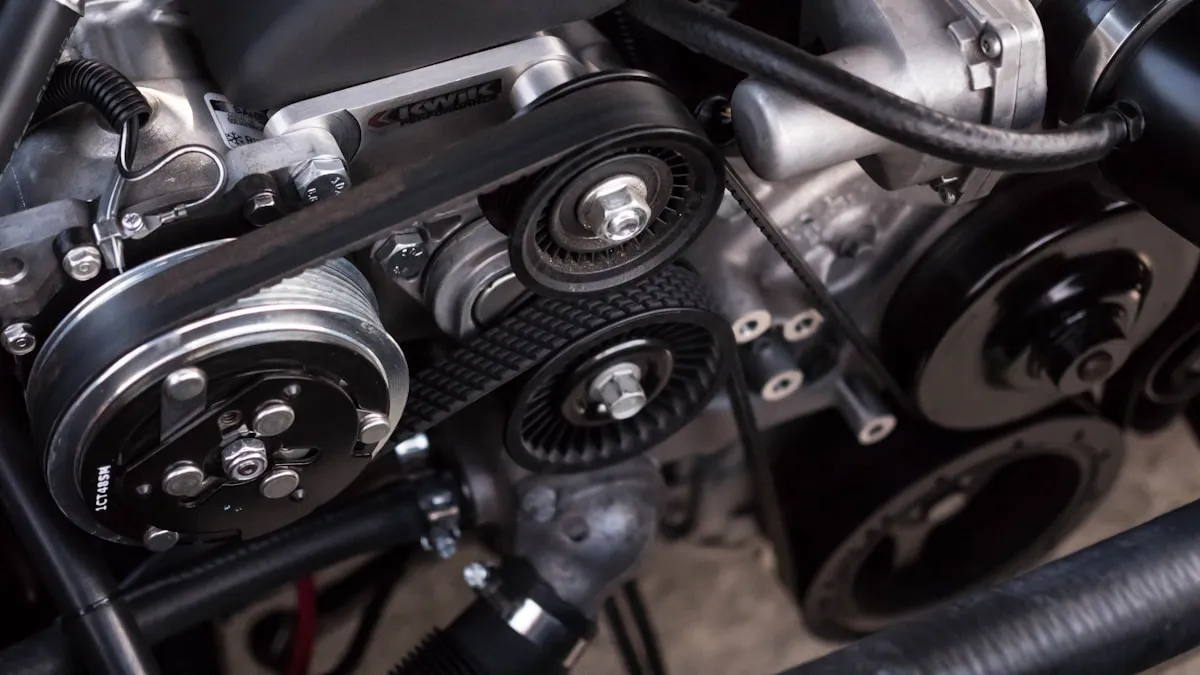
Michigan lemon law rights begin with the most fundamental protection: your right to receive a vehicle that works as promised. Under MCL 257.1402, manufacturers must repair or correct any defect or condition that does not conform to the express warranty and that substantially impairs the use or value of the vehicle.
The word “substantially” is critical here. Not every rattle, squeak, or cosmetic blemish qualifies. The law targets defects that meaningfully affect how you use your vehicle or diminish its value. Examples of qualifying defects include:
If your vehicle has a defect like these that persists after multiple repair attempts, the Michigan lemon law gives you the right to demand action from the manufacturer.
Not every vehicle qualifies for protection under the Michigan lemon law. Understanding which vehicles are covered is essential to knowing whether your rights apply.
Under MCL 257.1401, the law covers new motor vehicles that meet all of the following criteria:
Leased vehicles qualify just as purchased vehicles do. Demonstrator vehicles with an active manufacturer warranty also fall under the law’s protection.
Michigan’s lemon law specifically excludes:
If your vehicle falls into one of these excluded categories, you may still have rights under the federal Magnuson-Moss Warranty Act, which applies to a broader range of products and warranty situations.
Once you report a defect to the manufacturer or an authorized dealer, they are obligated to attempt a repair. This is not optional on their part. Under MCL 257.1402, the manufacturer must repair or correct any nonconformity that is covered by the express warranty.
There is an important deadline: you must report the defect during the warranty period or within one year of the original delivery date, whichever comes first. Missing this window can jeopardize your Michigan lemon law rights, so it is critical to document every problem as early as possible.
Key points about your repair rights:
Michigan law does not require you to give the manufacturer unlimited chances to fix your vehicle. Under MCL 257.1403, the law creates a presumption that the manufacturer has had a reasonable number of repair attempts when either of these conditions is met:
| Threshold | Requirement | When It Applies |
|---|---|---|
| Repair Attempt Threshold | 4 or more repair attempts for the same defect or condition | Within the warranty term or 1 year from delivery, whichever is earlier |
| Out-of-Service Threshold | 30 or more cumulative business days out of service for repairs | Within the warranty term or 1 year from delivery, whichever is earlier |
You only need to meet one of these thresholds, not both. The days-out-of-service threshold counts cumulative time across all repair visits, not just visits for the same problem.
Once you meet either threshold, the legal presumption shifts in your favor. The manufacturer must then prove that the defect does not substantially impair the vehicle or that they have not had a reasonable number of attempts. This burden-shifting provision is one of the most powerful aspects of your Michigan lemon law rights.
Before you can demand a refund or replacement, Michigan law requires one more step: written notice to the manufacturer. This is mandatory under MCL 257.1403 and cannot be skipped.
The timing of this notice depends on which threshold you have met:
Your notice must be sent via certified mail with return receipt requested (“return receipt service” under the statute). The notice should include:
After receiving your notice, the manufacturer must direct you to a reasonably accessible repair facility. Once you deliver the vehicle, the manufacturer has 5 business days to complete a final repair attempt. If the defect persists after this final opportunity, your right to a refund or replacement is triggered.
When your vehicle qualifies as a lemon, Michigan law gives you, the consumer, the power to choose your remedy. Under MCL 257.1404, the manufacturer must either:
This is an important distinction. The manufacturer cannot force you to accept a replacement if you want a refund. Michigan law explicitly states that “a consumer shall have the right to demand a refund.”

A Michigan lemon law refund is comprehensive. The manufacturer must return:
The manufacturer is permitted to deduct a reasonable use allowance, calculated based on the number of miles you drove before first reporting the defect. The formula is straightforward: (purchase price) × (miles driven before first defect report) ÷ (120,000). This means if you reported the problem early, the deduction is minimal.
If you choose a replacement, the manufacturer must provide a comparable new motor vehicle that is acceptable to you. The replacement must be of similar value and features. Any remaining loan or lease obligations transfer to the new vehicle.
One of the most significant Michigan lemon law rights, and one that many consumers do not realize they have, is the right to have your attorney fees paid by the manufacturer.
Under both Michigan’s lemon law and the federal Magnuson-Moss Warranty Act, if you prevail in your claim, the manufacturer is responsible for paying your reasonable attorney fees and costs. This statutory fee-shifting provision means:
This fee-shifting provision levels the playing field between individual consumers and large automotive manufacturers, ensuring that the cost of hiring an attorney never prevents you from enforcing your rights.
Not sure if your vehicle qualifies? Take our free 60-Second Lemon Law Assessment to find out.
Michigan’s state lemon law is powerful, but it is not the only protection available. The Magnuson-Moss Warranty Act, a federal law, provides additional rights that can fill gaps in state coverage:
Having both state and federal protections means that even if your situation does not fit neatly into Michigan’s lemon law, you may still have a valid claim. An experienced Michigan lemon law attorney can evaluate which law provides the strongest path to recovery.
Knowing your rights is only half the equation. Avoiding these common mistakes can mean the difference between a successful claim and a lost opportunity:
The one-year-from-delivery deadline is strict. If you notice a problem, take it to the dealer immediately and ensure the visit is documented on a repair order, even if the dealer cannot replicate the issue that day.
Your repair orders are the foundation of your lemon law claim. Keep copies of every work order, invoice, and written communication with the dealer and manufacturer. These documents prove how many repair attempts were made and how long your vehicle was out of service.
Many consumers do not realize that Michigan law requires certified written notice to the manufacturer before pursuing remedies. Failing to send this notice, or sending it improperly, can delay or invalidate your claim.
Manufacturers sometimes offer goodwill gestures, extended warranties, or modest cash settlements to make the problem go away. These offers are almost always far less than what you are entitled to under the law. Before accepting any offer, consult with an attorney who can evaluate whether the offer reflects the full value of your claim.
Lemon law claims have time limits. While the statute of limitations gives you up to four years to file a lawsuit, the strongest claims are built on fresh evidence and timely documentation. The sooner you involve an experienced attorney, the better positioned you are.
If you believe your vehicle qualifies as a lemon, here is the process for enforcing your rights:
For nearly 30 years, Kahn & Associates has focused exclusively on lemon law cases, recovering over $65 million for more than 13,000 clients across five states, including Michigan. Our firm offers Michigan vehicle owners several distinct advantages:
Generally, no. Michigan’s state lemon law covers new vehicles under the manufacturer’s express warranty. However, used vehicles that are still within the manufacturer’s warranty period at the time of purchase may qualify. Additionally, the federal Magnuson-Moss Warranty Act can provide protections for used and certified pre-owned vehicles with active warranties.
You must report defects to the manufacturer or dealer within the warranty period or one year from delivery, whichever comes first. The statute of limitations to file a lawsuit is generally four years from when the defect was or should have been discovered. Acting quickly strengthens your claim.
Yes. Michigan’s lemon law applies equally to leased and purchased vehicles, as long as the vehicle meets the other qualifying criteria (new vehicle, manufacturer’s warranty, personal use).
A dealer’s inability to replicate a defect does not eliminate your rights. What matters is that you reported the problem and the vehicle was presented for repair. Keep the repair order showing the visit, even if the dealer writes “could not duplicate.” These visits still count toward your repair attempt threshold.
You are not legally required to have an attorney, but lemon law claims involve manufacturer legal teams, statutory deadlines, and complex evidence requirements. An experienced lemon law attorney significantly increases your chances of a successful outcome, and because the manufacturer pays your attorney fees if you win, there is no financial downside to having legal representation.
Before accepting any settlement, have it reviewed by an attorney. Manufacturer offers are frequently below what the law entitles you to. Once you accept a settlement and sign a release, you typically cannot pursue additional compensation. An attorney can evaluate whether the offer is fair or whether you should pursue a full refund or replacement.
Michigan’s lemon law exists to protect you, but those protections only work if you exercise them. If your vehicle has been in the shop repeatedly for the same problem, or if you have lost weeks of use waiting for repairs, you likely have more legal options than you realize.
Start with a free assessment of your situation. Contact Kahn & Associates for a no-obligation case review. Our 60-Second Lemon Law Assessment™ can quickly determine whether your vehicle qualifies, and if it does, we will guide you through every step of the process at no cost to you.
Get Your Free 60-Second Lemon Law Assessment →
*Disclaimer: The information contained in this Website is provided for informational purposes only, and should not be construed as offering legal advice, or creating an attorney client relationship between the reader and the author. While we aim for accuracy, the law is constantly changing and we make no guarantees regarding the completeness or timeliness of the information. You should not act or refrain from acting on the basis of any content included in this Website without seeking appropriate legal advice about your individual facts and circumstances from an attorney licensed in your state.
To see if you qualify, fill out the form below or call us at 1-888-536-6671 – No Office Visit Needed!

I had a great experience with Kahn & Associates! They made the process of dealing with an extremely frustrating lemon situation painless. They have very quick response times and everyone I dealt with was very friendly and helpful. Would definitely recommend!
Kahn and Associates did an awesome job with our lemon law case! We were getting nowhere with VW Customer Service and decided to hire an attorney who specialized with lemon law cases. We couldn’t be happier with the outcome. We were able to get a full refund on our lemon VW Atlas.
What a great experience! I was on the fence about hiring an attorney for my ongoing automotive issues and continued frustration with the manufacturer. It was a very simple process and I am very grateful Kahn and Associates for helping get me a settlement!
Real Honest attorneys!!! They are the real deal! I went back and forth with them and they explained to me every step and my rights under the law! I give them 5 stars because I won!!! Yes and my check is coming to me much sooner than I thought! I was stuck ! I own a brand new car and the dealer was giving me a hard time !

This page has been written, edited, and reviewed by a team of legal writers following our comprehensive editorial guidelines. This page was approved by Attorney Craig A. Kahn, who has more than 20 years of legal experience in lemon law.
There is a lot of confusing information out there about what to do when your new car has a serious, unfixab...
When you realize your new car is a lemon, it’s easy to feel overwhelmed by a massive auto manufacturer. B...
Your odometer reading at a third repair attempt or the 20th business day out of service can become a critic...

Stuck with a defective car in Ohio? State Lemon Laws protect you. Get a refund, replacement, or cash settlement. Learn your rights today!

Florida Lemon Laws cover new and used vehicles. If your car’s a lemon, you deserve compensation. Let us help you fight for justice!

Michigan’s Lemon Law protects you from faulty vehicles. Don’t settle for endless repairs—claim your refund or replacement now.

North Carolina Lemon Laws ensure defective vehicles are replaced or refunded. Know your rights and take action today!

Pennsylvania Lemon Law covers new cars with repeated issues. Get the compensation you deserve. Click to learn more!
To see if you qualify, fill out the form below or call us at 1-888-536-6671 – No Office Visit Needed!

The Truth About Attorney’s Fees in Lemon Law Cases Learn more
*Disclaimer: The information contained in this Website is provided for informational purposes only, and should not be construed as offering legal advice, or creating an attorney client relationship between the reader and the author. While we aim for accuracy, the law is constantly changing and we make no guarantees regarding the completeness or timeliness of the information. You should not act or refrain from acting on the basis of any content included in this Website without seeking appropriate legal advice about your individual facts and circumstances from an attorney licensed in your state.

 Message Us
  Call Us