
Have A Case? Call Us
1 888-536-6671
60 Second Lemon Law Assessment™
60 Second Lemon Law Assessment™
by Kahn & Associates - April 4th, 2026

Buying a new vehicle is a major investment, and you expect it to work properly. But when your car, truck, or SUV develops serious, recurring problems the dealer can’t fix, it’s incredibly frustrating. This is exactly why lemon laws exist to protect you. If you’re asking, “what does the lemon law cover?” you’re not alone. Many myths stop people from getting help—like thinking it only applies to new cars or that a lawyer is too expensive. Let’s clear up the confusion so you can understand your rights and get the compensation you deserve.
Think your vehicle might be a lemon? Take our free 60-Second Lemon Law Assessment or call 1-888-536-6671 for a no-cost, no-obligation case review.
Lemon laws are state and federal consumer protection statutes designed to protect buyers of defective vehicles. When a manufacturer sells a vehicle with a substantial defect that cannot be repaired after a reasonable number of attempts or amount of time, the buyer may be entitled to a refund, replacement vehicle, or cash settlement.
Every state has its own lemon law with specific rules about what qualifies. At the federal level, the Magnuson-Moss Warranty Act provides additional protections for any product sold with a written warranty, including vehicles.
Lemon laws cover more vehicle types than most people realize:
The common thread is that the vehicle must have a warranty in effect at the time the defect first appears. If your vehicle is still under its original manufacturer warranty, a certified pre-owned warranty, or a manufacturer’s extended warranty, you likely have lemon law protection.
This is a common question, and the answer can be a bit tricky. Generally, state lemon laws are designed to cover new vehicles purchased or leased from an authorized dealership. This means that if you bought your car directly from a private individual—say, from a neighbor or an online marketplace—the transaction itself usually isn’t covered by your state’s lemon law. These sales are often considered “as-is,” which means you accept the vehicle in its current condition, and you have little to no recourse against the person who sold it to you if problems arise later.
However, that doesn’t mean you’re automatically out of luck. The most important factor isn’t who you bought the car from, but whether it is still protected by the manufacturer’s original warranty. If a defect appears while the car is still under its factory warranty, you may have a valid claim. This is where the federal Magnuson-Moss Warranty Act becomes your best friend. This law protects consumers with a written warranty, allowing you to pursue a claim against the manufacturer for failing to honor it, regardless of whether you are the first owner or bought the car privately.
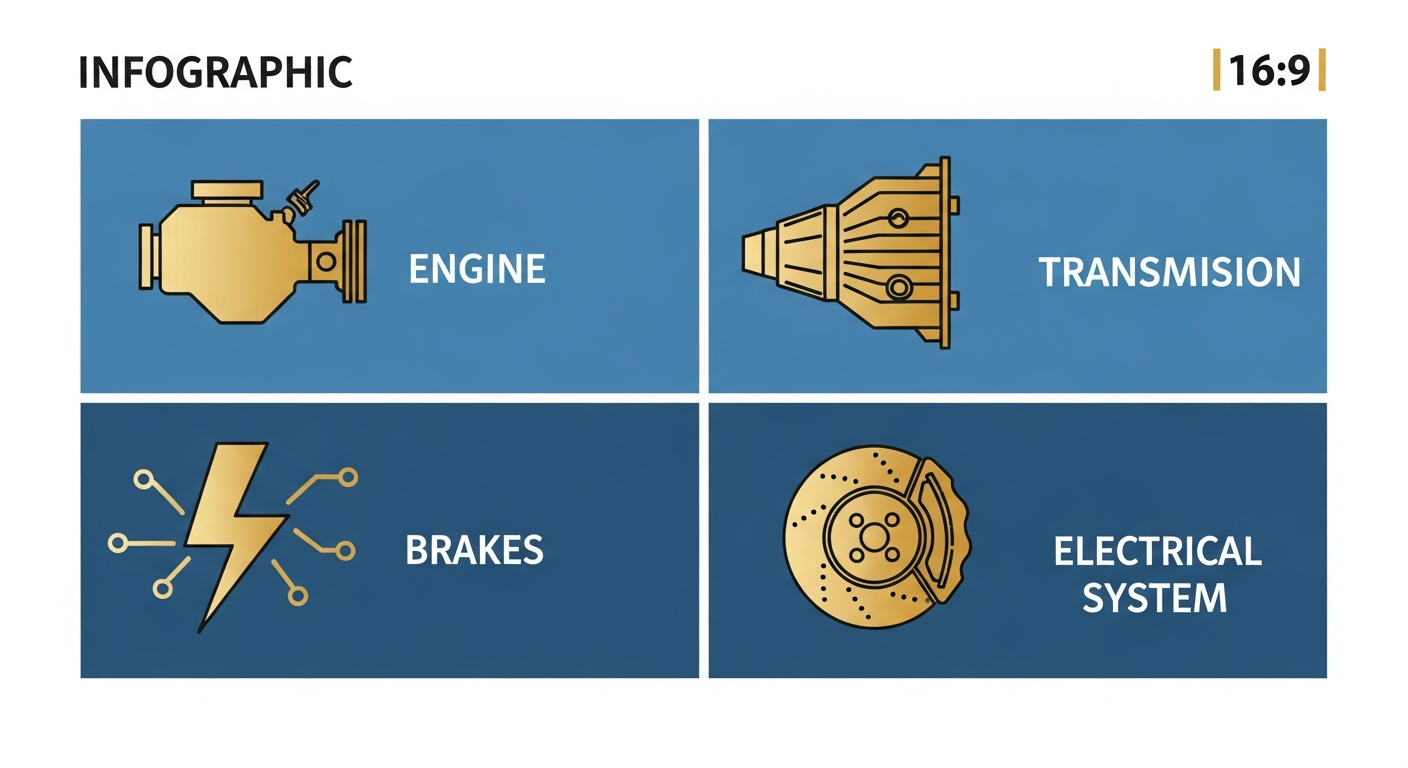
Not every problem qualifies under the lemon law. The defect must be “substantial,” meaning it significantly affects the vehicle’s use, value, or safety. Common qualifying defects include:
Each state defines a “reasonable number of repair attempts” differently. Here is how the five states served by Kahn and Associates compare:
| State | Repair Attempts | Days Out of Service | Coverage Period | Key Statute |
|---|---|---|---|---|
| Ohio | 3+ for same defect OR 1 safety defect | 30+ cumulative days | First 12 months or 18,000 miles | ORC 1345.71-78 |
| Florida | 3+ for same defect | 30+ cumulative days | First 24 months or 24k miles | FL 681.10-118 |
| Michigan | 4+ for same defect | 30+ cumulative days | Depends on Presumption | MCL 257.1401-1410 |
| North Carolina | 4+ for same defect | 20+ business days | Depends on Presumption | NCGS 20-351 |
| Pennsylvania | 3+ for same defect | 30+ cumulative days | 12k miles or warranty period | 73 P.S. 1951-1963 |
Even if you do not meet your state’s specific thresholds, the federal Magnuson-Moss Warranty Act may still protect you. This federal law has no mileage limit and applies as long as the vehicle is under warranty.
Not sure if your situation qualifies? Call 1-888-536-6671 for a free case evaluation. Our attorneys can review your repair records and tell you where you stand in about 60 seconds.
“Reasonable” is one of those legal terms that can feel a bit vague, but in the world of lemon law, it has a specific focus. You may have a lemon after a reasonable number of repair attempts or after a reasonable amount of time the vehicle is out of service at the repair shop. While the exact numbers can vary by state, the core principle is that the manufacturer was given a fair opportunity to fix the problem and failed to do so. The key is that the issue wasn’t resolved within a “reasonable time.” Keeping detailed records of every visit to the dealership is crucial, as having more documented repair attempts can make your case much stronger. Because each state has its own definition, understanding your specific rights under your state’s lemon laws is the first step.
The seriousness of the problem plays a huge role in what’s considered “reasonable.” For a lemon law claim to be valid, the defect must be “substantial,” which means it significantly harms the vehicle’s use, value, or safety. Think of major issues like recurring engine stalling, brake system malfunctions, or a transmission that constantly slips. These aren’t minor annoyances; they are fundamental flaws that compromise the car’s core function and your safety on the road. A problem this severe might require fewer repair attempts to be deemed unreasonable compared to a less critical issue. If you’re wondering whether your car’s problem qualifies, our Lemon Law FAQs page answers many common questions about what is and isn’t covered.
Beyond the number of repair visits, courts often consider a more personal factor: whether the persistent defect has caused you to lose trust in your vehicle’s safety and reliability. This is evaluated from the perspective of what a reasonable person would think in your situation. If you’re constantly worried the engine will stall on the highway or the brakes will fail in traffic, you’ve lost the peace of mind that should come with a new car. This loss of confidence is a real and valid part of a lemon law claim. It acknowledges the stress and anxiety that come from owning an unreliable vehicle, something many of our past clients have expressed. You can read about their experiences and how we helped them on our client reviews page.
This is one of the most common questions we hear. The short answer: it depends on your warranty status.
Most state lemon laws only cover new vehicles. However, the federal Magnuson-Moss Warranty Act protects buyers of used vehicles that are still under the original manufacturer warranty or a certified pre-owned warranty. If you bought a used car with remaining warranty coverage and it developed a substantial defect, you may have a valid claim.
Kahn & Associates has successfully represented thousands of consumers with used vehicle warranty claims under federal law. The key is whether a warranty was in effect when the problem started.
If your vehicle qualifies as a lemon, you are typically entitled to one of three outcomes:
In most successful lemon law cases, the manufacturer also pays all attorney fees. This is why Kahn & Associates operates on a No Recovery, No Fee basis. You pay nothing unless we win your case.
When a manufacturer agrees to a buyback as part of a lemon law settlement, you get your money back, but what happens to the car? It doesn’t just disappear. Often, the manufacturer will make the necessary repairs and put the vehicle back on the market for resale. However, to protect future consumers, the car’s title is permanently branded. This “lemon title” serves as a public record of its troubled past, creating significant and lasting consequences for anyone who owns it down the line. Understanding this process helps clarify why a formal lemon law claim is so important for achieving a clean break from a defective vehicle.
A “lemon title” is an official brand on a vehicle’s title history, indicating it was repurchased by the manufacturer due to substantial defects that couldn’t be fixed. These aren’t minor annoyances; they are problems that seriously impact the car’s safety, value, or usability. State laws often require this branded title to protect future buyers from unknowingly purchasing a vehicle with a history of significant issues. While the manufacturer may have repaired the original problem, the lemon title serves as a permanent red flag. This is why pursuing a claim under state and federal lemon laws is so critical—it ensures you get a proper resolution instead of passing a problematic vehicle on to someone else.
The financial fallout from a lemon title is significant. First, the vehicle’s resale value plummets. A car with a branded title is worth considerably less than an identical one with a clean history, making it difficult to sell or trade-in for a fair price. Second, insuring a lemon-branded car can be more expensive. Insurance companies view these vehicles as a higher risk due to their history of serious mechanical or safety issues, which often translates to higher premiums for the owner. These lasting financial penalties underscore why it’s so important to understand your rights and options from the start. If you have more questions about the process, our lemon law FAQs can provide additional clarity.
Yes. In all five states where Kahn & Associates practices, leased vehicles receive the same lemon law protections as purchased vehicles.
Yes. Electric and hybrid vehicles are covered by the same lemon laws as gas-powered vehicles. Battery degradation, charging system failures, and EV-specific software issues can all qualify as substantial defects.
Statutes of limitations vary by state, typically ranging from 4 to 5 years from the date of purchase. Do not wait. The sooner you contact an attorney, the stronger your case.
Many states require written notification to the manufacturer (not just the dealership) before filing suit. Your lemon law attorney will handle this notification correctly.
Every state has some form of lemon law, but the specific protections, coverage periods, and requirements vary significantly. Kahn & Associates serves consumers as of this date in Ohio, Florida, Michigan, North Carolina, and Pennsylvania.
Not with Kahn & Associates. We work on a No Recovery, No Fee basis. The manufacturer pays attorney fees in successful cases, so you pay nothing out of pocket.
One of the biggest hurdles for many people is the potential cost of hiring a lawyer. Fortunately, lemon laws were designed to remove this barrier. They include “fee-shifting” provisions, which means that if your claim is successful, the law requires the vehicle manufacturer to pay your reasonable attorney’s fees and legal costs. This is precisely why Kahn & Associates can represent you at no out-of-pocket cost. We operate on a No Recovery, No Fee basis, so our payment comes directly from the manufacturer, not from your settlement or your pocket. This provision levels the playing field, empowering you to pursue justice against a large corporation without taking on a financial risk.
Think of the Magnuson-Moss Warranty Act as a powerful federal safety net. Often called the federal lemon law, this act applies to any consumer product sold with a written warranty, including new and used vehicles. Its real strength is in covering situations that might fall outside the strict time or mileage limits of a state law. The most important factor is that your vehicle was under a manufacturer’s warranty when the defect first appeared. This act ensures manufacturers honor their promises and provides a path to recover damages and, in successful cases, attorney’s fees, making it a critical tool for holding them accountable.
For nearly three decades, Kahn and Associates has focused exclusively on lemon law. Our founder, Craig A. Kahn, handled the landmark Royster v. Toyota Motor Sales case before the Ohio Supreme Court in 2001, establishing consumer-favorable precedent cited nationwide.
The numbers speak for themselves, as of today’s date:
– Over $65 million recovered for consumers and counting
– Thousands of clients represented across five states and counting
– 4.9 Google rating based on 500+ client reviews and counting
– A+ BBB rating maintained for over 25 years and counting
While the basic idea of a lemon law is consistent across the country, the specific rules can change dramatically when you cross state lines. The number of required repair attempts, the types of vehicles covered, and the time you have to file a claim are all details that vary. While our team at Kahn & Associates focuses our expertise on the laws in Ohio, Florida, Michigan, North Carolina, and Pennsylvania, looking at a couple of other states can show just how different the protections can be. Let’s examine the rules in New Jersey and Louisiana as examples of this variety.
New Jersey’s Lemon Law offers a strong but specific window of protection for new car buyers. It applies if your vehicle has serious, recurring issues during the first two years of ownership or the first 24,000 miles, whichever comes first. A vehicle is considered a ‘lemon’ if it has substantial problems that the manufacturer can’t fix, which significantly impair its use, value, or safety. This protection covers passenger cars and motorcycles purchased or registered in the state. However, it’s important to note that some vehicles, like mobile homes, are not covered under these specific rules.
Down in Louisiana, the lemon law has its own unique flavor. It protects consumers who buy or lease vehicles in the state that turn out to have major defects. This includes a wide range of vehicles, from cars and trucks to personal watercraft and ATVs. For a vehicle to be deemed a lemon, the manufacturer or dealer must have tried to fix the same significant problem four or more times without success. If your vehicle meets this threshold, the law states the manufacturer must either buy back the vehicle or provide you with a replacement.
If you suspect your vehicle may be a lemon, taking the right steps now can make a significant difference in the outcome of your case:
Beyond your personal record-keeping, many state lemon laws require you to formally notify the manufacturer in writing. This isn’t the same as complaining to your local dealer; this official notice must go to the vehicle’s corporate manufacturer. It serves as their final chance to fix the defect before you can legally pursue a claim for a buyback or replacement. This step is a critical legal prerequisite, and how you word the notification can significantly impact your case. While you can send this notice yourself, having an experienced attorney handle this communication ensures it meets all legal standards and is sent to the correct party, strengthening your position from the start.
Understanding what NOT to do is just as important as knowing what to do:
It’s a question we hear constantly: “My car is a lemon, so can I just stop making the payments?” While the frustration is completely valid, the answer is a firm no. It is crucial to continue making your car payments on time throughout your entire lemon law claim. If you stop, the finance company can repossess your vehicle, which creates a whole new set of problems, including damage to your credit score. More importantly, defaulting on your loan can seriously harm your legal case. To successfully protect your Lemon Law rights, you must uphold your end of the financing agreement. Don’t give the manufacturer an easy way to argue against your claim; keep your payment history clean until your case is fully resolved.
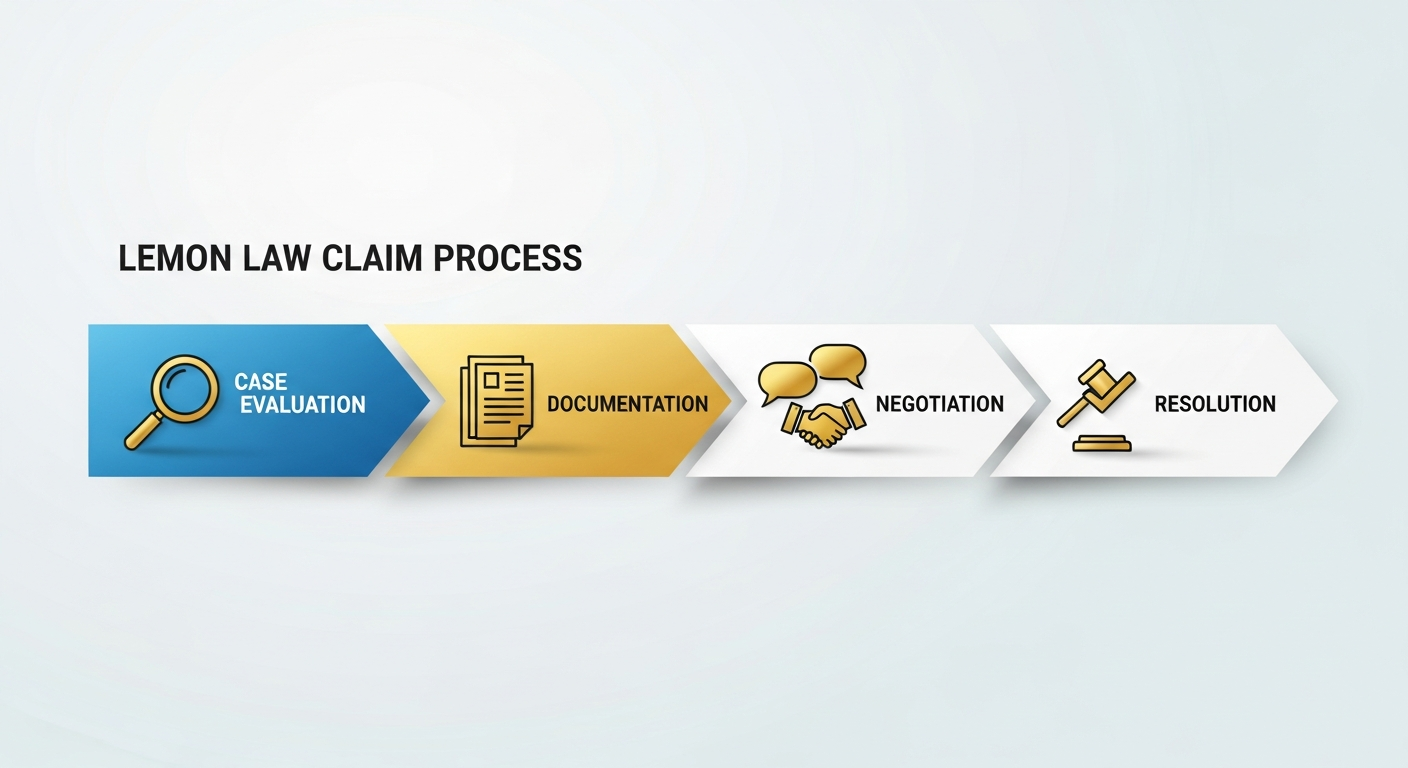
Filing a lemon law claim does not have to be complicated. Here is how the lemon law process typically works with Kahn & Associates:
The entire process can many times take approximately 90 days from demand to resolution, though complex cases and certain manufacturers and other factors may make it take longer.
Ready to find out if your vehicle qualifies? Call 1-888-536-6671 today for your free 60-Second Lemon Law Assessment. No cost. No obligation. No fee unless we win.
Sometimes, your vehicle’s warranty might require you to go through arbitration before filing a lawsuit. Think of it as a mini-trial, but less formal and much faster than going to court. In this process, you and the manufacturer present your cases to a neutral third-party, called an arbitrator, who then makes a decision. The great part is that this process is often free for you, the consumer. Many state-run or manufacturer-sponsored arbitration programs are designed to resolve disputes efficiently, often within 45 to 60 days. A key advantage is that if the arbitrator rules in your favor, the decision is typically binding on the manufacturer. However, if you’re not satisfied with the outcome, you often retain the right to pursue your claim in court. An experienced attorney can represent you during arbitration to ensure your evidence is presented effectively, giving you the best shot at a favorable outcome from the start.
*Disclaimer: The information contained in this Website is provided for informational purposes only, and should not be construed as offering legal advice, or creating an attorney client relationship between the reader and the author. While we aim for accuracy, the law is constantly changing and we make no guarantees regarding the completeness or timeliness of the information. You should not act or refrain from acting on the basis of any content included in this Website without seeking appropriate legal advice about your individual facts and circumstances from an attorney licensed in your state.
To see if you qualify, fill out the form below or call us at 1-888-536-6671 – No Office Visit Needed!

I had a great experience with Kahn & Associates! They made the process of dealing with an extremely frustrating lemon situation painless. They have very quick response times and everyone I dealt with was very friendly and helpful. Would definitely recommend!
Kahn and Associates did an awesome job with our lemon law case! We were getting nowhere with VW Customer Service and decided to hire an attorney who specialized with lemon law cases. We couldn’t be happier with the outcome. We were able to get a full refund on our lemon VW Atlas.
What a great experience! I was on the fence about hiring an attorney for my ongoing automotive issues and continued frustration with the manufacturer. It was a very simple process and I am very grateful Kahn and Associates for helping get me a settlement!
Real Honest attorneys!!! They are the real deal! I went back and forth with them and they explained to me every step and my rights under the law! I give them 5 stars because I won!!! Yes and my check is coming to me much sooner than I thought! I was stuck ! I own a brand new car and the dealer was giving me a hard time !

This page has been written, edited, and reviewed by a team of legal writers following our comprehensive editorial guidelines. This page was approved by Attorney Craig A. Kahn, who has more than 20 years of legal experience in lemon law.
A vehicle that remains in the repair shop for an extended period often qualifies as a lemon under Florida l...
Are you stuck making monthly payments on a leased car that spends more time in the shop than is reasonable?...
Let’s clear up a common myth: hiring a lawyer is always expensive. While that can be true in some legal f...

Stuck with a defective car in Ohio? State Lemon Laws protect you. Get a refund, replacement, or cash settlement. Learn your rights today!

Florida Lemon Laws cover new and used vehicles. If your car’s a lemon, you deserve compensation. Let us help you fight for justice!

Michigan’s Lemon Law protects you from faulty vehicles. Don’t settle for endless repairs—claim your refund or replacement now.

North Carolina Lemon Laws ensure defective vehicles are replaced or refunded. Know your rights and take action today!

Pennsylvania Lemon Law covers new cars with repeated issues. Get the compensation you deserve. Click to learn more!
To see if you qualify, fill out the form below or call us at 1-888-536-6671 – No Office Visit Needed!

The Truth About Attorney’s Fees in Lemon Law Cases Learn more
*Disclaimer: The information contained in this Website is provided for informational purposes only, and should not be construed as offering legal advice, or creating an attorney client relationship between the reader and the author. While we aim for accuracy, the law is constantly changing and we make no guarantees regarding the completeness or timeliness of the information. You should not act or refrain from acting on the basis of any content included in this Website without seeking appropriate legal advice about your individual facts and circumstances from an attorney licensed in your state.

 Message Us
  Call Us