
Have A Case? Call Us
1 888-536-6671
60 Second Lemon Law Assessment™
60 Second Lemon Law Assessment™
by Kahn & Associates - September 24th, 2026
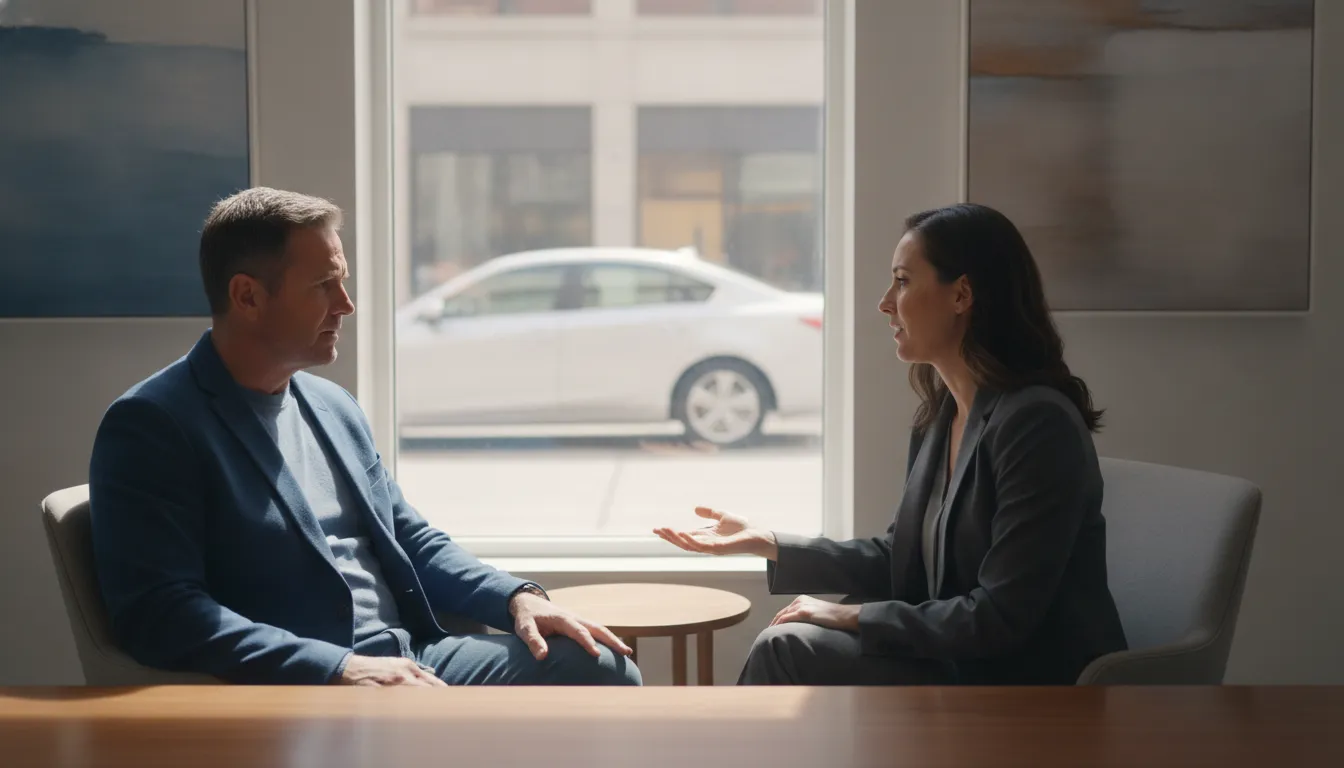
When a Michigan manufacturer warranty claim is denied, a repair you expected to be covered suddenly becomes your problem, and the first question is whether the manufacturer can refuse the work at all. The answer depends on the written warranty, the reason for the denial, and the vehicle’s condition and repair history. A refusal to cover one repair is not, by itself, proof that the manufacturer violated the warranty or that the vehicle qualifies under Michigan’s Lemon Law.
To respond when a Michigan manufacturer has denied a warranty repair, request the denial and its specific basis in writing. Compare that explanation with the warranty, and preserve repair and communication records. Whether a warranty or lemon-law claim may apply depends on the vehicle and the facts, not simply on the denial.
It helps to separate a manufacturer warranty from a service contract, then identify the defect and what the repair facility found. Those details can point toward a focused review or a request for reconsideration. If the vehicle has been in for multiple visits or remains unavailable, keep the dates and repair orders. Do not assume that a particular number of repairs, or one denial, resolves eligibility.
If your vehicle has been denied a warranty repair or in for the same issue at least twice, or has been or will be out of service for at least 21 calendar days, that is enough to ask. As of the beginning of 2026 we have recovered more than $65 million for consumers, and we maintain a very high win rate. At Kahn & Associates you are not required to pay us any out-of-pocket fees or costs, win or lose. Call 1-888-536-6671 or request a free case review through our contact form.
Start by getting the denial in writing, then pin down what the manufacturer says it will not cover and why. A conversation at the service desk can be useful, but a written explanation gives you something concrete to compare with the warranty and the repair findings.
Request a copy of the denial and ask the dealer or manufacturer to identify the exact warranty provision it relies on. Ask what diagnosis or inspection supports the decision, which component or repair is excluded, and whether the denial applies only to this repair or affects other coverage. If the explanation is that damage, a modification, or missed maintenance caused the problem, ask what evidence connects that issue to the failed part.
Read the warranty sections on the affected part, exclusions, maintenance, and claim procedures. Check that the denial addresses the same defect and repair described on your repair order. If you have an optional service contract, review it separately: it is a different agreement from the manufacturer’s warranty, with its own provider and coverage terms. The Federal Trade Commission explains the distinction between auto warranties and service contracts.
Do not assume that having routine maintenance performed at an independent shop automatically voids manufacturer warranty coverage. The FTC says a dealer cannot deny warranty coverage just because routine maintenance or repairs were done elsewhere. If the manufacturer points to a particular service or installation as the cause of the failure, ask it to explain that connection rather than treating the shop’s identity as the whole answer.
Once you understand the stated basis, send a short written request for reconsideration to the manufacturer’s customer assistance team. Identify the vehicle, repair date, denied work, and the warranty language you believe applies. Attach the denial and the relevant repair records, then ask for a written response. You can request review by a supervisor if the first response does not address your questions. This is a practical way to clarify the dispute, not a legal prerequisite to asking for help.
Keep one file with the warranty, denial, repair orders, diagnostic notes, invoices, maintenance receipts, mileage and dates, any photos or video of the problem, and messages or call notes with the dealer and manufacturer. Save copies of what you send and note when you receive replies. You do not need a complete or organized file before seeking an initial case review from our firm. A denial by itself does not establish whether a legal claim is available; the warranty language, the cause of the problem, and the repair history all matter.
A manufacturer’s refusal to cover a repair can matter, but it does not answer by itself whether Michigan’s Lemon Law applies. The key questions include what defect the vehicle has, whether it falls within the law’s coverage, when it was first reported, and whether the problem continued despite the required repair opportunities.
For a covered new motor vehicle, Michigan law addresses a defect or condition that impairs the vehicle’s use or value, or prevents it from conforming to the manufacturer’s express warranty. Note the statutory wording: Michigan speaks of use or value rather than safety, which differs from most other states. A safety problem still counts, because a vehicle you cannot safely drive is impaired in both use and value, but the test is framed around use and value. The consumer must initially report the problem to the manufacturer or an authorized new motor vehicle dealer within the earlier of the express-warranty term or one year after delivery to the original consumer. See MCL 257.1402.
A reported defect that continues may qualify for further Lemon Law protections only if the other statutory conditions are also met, including the applicable standard for a reasonable number of repairs or an unreasonable amount of time out of service. See MCL 257.1403. Meeting one of those thresholds creates a presumption, which shifts the burden to the manufacturer to show it did not have a reasonable number of opportunities. A presumption does not decide the case on its own.
That distinction matters when a repair is denied. A denial may raise a question about whether the manufacturer is honoring its written warranty, especially if the diagnosed problem appears to fall within its terms. But the denial alone does not establish that the vehicle has a qualifying defect or that the legal requirements for relief have been satisfied. Likewise, a denial does not automatically defeat a claim. The written warranty, the reason for denial, the vehicle history, and what happened after the report all need to be considered.
There is also a cost to waiting while a denial is disputed. Every month you keep driving the vehicle and adding miles gives the manufacturer an argument that the defect is not substantially impairing its use or value. A vehicle driven for a long stretch after the repairs looks, to a manufacturer’s lawyer, like a vehicle that works.
Michigan’s Lemon Law generally concerns new motor vehicles, but the definition is broader than it sounds. A vehicle described as used may qualify if it was still covered by the manufacturer’s express warranty when purchased or leased and the problem was reported within one year after delivery to the original buyer. The vehicle and claim must still satisfy the law’s definitions and requirements; a used-car purchase does not qualify automatically. Where the state statute does not reach the vehicle, the federal Magnuson-Moss Warranty Act often does. It turns on the existence of a written manufacturer warranty rather than the vehicle’s age or mileage, and it does not require the vehicle to be under warranty today so long as repairs were performed under the manufacturer’s warranty or extended warranty. We evaluate every claim under both state and federal law.
For an initial review, keep the warranty, purchase or lease records, repair orders, the written denial, and the dates of reports and repairs together. These records help clarify whether the dispute may fit Michigan Lemon Law protections or a manufacturer breach of warranty claim.
A repair denial is one part of the picture, not a final answer about your rights. We review what the manufacturer says, what the written warranty covers, and whether the stated reason for denial matches the warranty terms and the facts about the vehicle. A denial may be disputed, but it does not by itself establish that a legal claim exists.
We also look at the defect and how it affects the vehicle, the repair history, and how long the vehicle has been unavailable or at the repair shop. Dates, mileage, repair orders, diagnostic findings, warranty documents, and messages with the dealership or manufacturer all help clarify that history. You do not need to have every document organized before asking us to review your situation, and we can request records you do not have.
Experience matters once a denial is being contested. We know the attorneys who represent each manufacturer and who inside the manufacturer has authority to resolve a file, which is often the difference between a claim that moves and one that sits.
If a claim is supported, possible outcomes depend on the governing law and the evidence. They may include a vehicle repurchase, a replacement, or cash compensation. In a repurchase the outstanding loan is paid off as part of the remedy: the lienholder is paid directly, and you are separately returned what you have put into the vehicle, so the financing is retired rather than carried into your next vehicle.
Which remedy is available is usually not the consumer’s choice. It normally depends on whether the claim qualifies under the state statute at all. Where it does not, cash is typically the only offer, with the matter resolving under federal law as a breach of warranty. Occasionally a manufacturer prefers cash because the buyback numbers do not work for it, or a consumer who does qualify passes on a buyback because replacement vehicles have become too expensive. If a claim resolves for cash, you remain free to trade or sell the vehicle afterward, the money can go toward negative equity or a down payment on a replacement, or you can simply keep it.
Attorney fees are part of the picture as well. Michigan’s statute addresses recovery of attorney fees by a prevailing consumer, and in a resolution reached with the manufacturer the fee is typically agreed as part of the total recovery. You are not required to pay us any out-of-pocket fees or costs, win or lose, so pursuing the claim does not reduce what reaches you.
Yes. A manufacturer may deny coverage when the repair is outside the written warranty or an exclusion applies. The reason matters: ask for the specific warranty provision and the technical basis, then compare them with the defect and repair history. A denial alone does not determine whether the decision was lawful. The FTC’s auto warranty guidance explains that coverage applies to specified defects during the warranty period.
Ask the dealership or manufacturer to provide the denial and its reason in writing. Keep the warranty, repair orders, diagnostic findings, mileage and dates, maintenance records, and related messages. You can request that the manufacturer review the decision and explain why the repair is excluded. You can also request a free case review from our firm at the same time; the two are not alternatives, and nothing about asking us to look costs you anything.
Possibly, but one denial by itself may not establish a state Lemon Law claim, but it could establish a Federal one. Michigan’s law addresses qualifying defects or conditions in covered new motor vehicles, including issues that impair use or value or prevent conformity with the manufacturer’s express warranty. The defect generally must be reported within the earlier of the express-warranty term or one year after delivery to the original consumer. Eligibility depends on the vehicle and the facts. See MCL 257.1402.
There is no universal number that decides every case. Our rule of thumb is simpler: if the vehicle has been in for the same issue at least twice, or has been or will be out of service for at least 21 calendar days, that is enough to request a review from our firm. A denial is worth looking at sooner rather than later.
No. You do not have to use the dealership for routine maintenance to keep a warranty in effect. The FTC guidance cited above says coverage cannot be denied merely because routine maintenance or repairs were performed elsewhere. A separate issue may arise if faulty work or an incorrectly installed part caused the specific damage being claimed. Keep your maintenance receipts and records.
A repair denial can raise questions about warranty coverage, the reason given, and whether Michigan or Federal law may apply. A review of your warranty, repair history, and the manufacturer’s explanation can clarify which options fit your circumstances, and it costs you nothing to find out.
A denied warranty repair or two repair visits for the same issue, or 21 calendar days out of service, is enough to find out where you stand. Call 1-888-536-6671 or contact us through our form to request a free case review. You are not required to pay us any out-of-pocket fees or costs, win or lose.
*Disclaimer: The information contained in this Website is provided for informational purposes only, and should not be construed as offering legal advice, or creating an attorney client relationship between the reader and the author. While we aim for accuracy, the law is constantly changing and we make no guarantees regarding the completeness or timeliness of the information. You should not act or refrain from acting on the basis of any content included in this Website without seeking appropriate legal advice about your individual facts and circumstances from an attorney licensed in your state.
To see if you qualify, fill out the form below or call us at 1-888-536-6671 – No Office Visit Needed!

I had a great experience with Kahn & Associates! They made the process of dealing with an extremely frustrating lemon situation painless. They have very quick response times and everyone I dealt with was very friendly and helpful. Would definitely recommend!
Kahn and Associates did an awesome job with our lemon law case! We were getting nowhere with VW Customer Service and decided to hire an attorney who specialized with lemon law cases. We couldn’t be happier with the outcome. We were able to get a full refund on our lemon VW Atlas.
What a great experience! I was on the fence about hiring an attorney for my ongoing automotive issues and continued frustration with the manufacturer. It was a very simple process and I am very grateful Kahn and Associates for helping get me a settlement!
Real Honest attorneys!!! They are the real deal! I went back and forth with them and they explained to me every step and my rights under the law! I give them 5 stars because I won!!! Yes and my check is coming to me much sooner than I thought! I was stuck ! I own a brand new car and the dealer was giving me a hard time !

This page has been written, edited, and reviewed by a team of legal writers following our comprehensive editorial guidelines. This page was approved by Attorney Craig A. Kahn, who has more than 20 years of legal experience in lemon law.
A Tesla that spends more time at the service center than is reasonable stops being a car you can plan aroun...
Buying a defective used vehicle does not mean you are stuck with a lemon forever. The federal lemon law pro...
A new vehicle should make life easier, not turn every week into another trip to the service department. If ...

Stuck with a defective car in Ohio? State Lemon Laws protect you. Get a refund, replacement, or cash settlement. Learn your rights today!

Florida Lemon Laws cover new and used vehicles. If your car’s a lemon, you deserve compensation. Let us help you fight for justice!

Michigan’s Lemon Law protects you from faulty vehicles. Don’t settle for endless repairs—claim your refund or replacement now.

North Carolina Lemon Laws ensure defective vehicles are replaced or refunded. Know your rights and take action today!

Pennsylvania Lemon Law covers new cars with repeated issues. Get the compensation you deserve. Click to learn more!
To see if you qualify, fill out the form below or call us at 1-888-536-6671 – No Office Visit Needed!

The Truth About Attorney’s Fees in Lemon Law Cases Learn more
*Disclaimer: The information contained in this Website is provided for informational purposes only, and should not be construed as offering legal advice, or creating an attorney client relationship between the reader and the author. While we aim for accuracy, the law is constantly changing and we make no guarantees regarding the completeness or timeliness of the information. You should not act or refrain from acting on the basis of any content included in this Website without seeking appropriate legal advice about your individual facts and circumstances from an attorney licensed in your state.

 Message Us
 Call Us