
Have A Case? Call Us
1 888-536-6671
60 Second Lemon Law Assessment™
60 Second Lemon Law Assessment™
by Kahn & Associates - June 9th, 2026
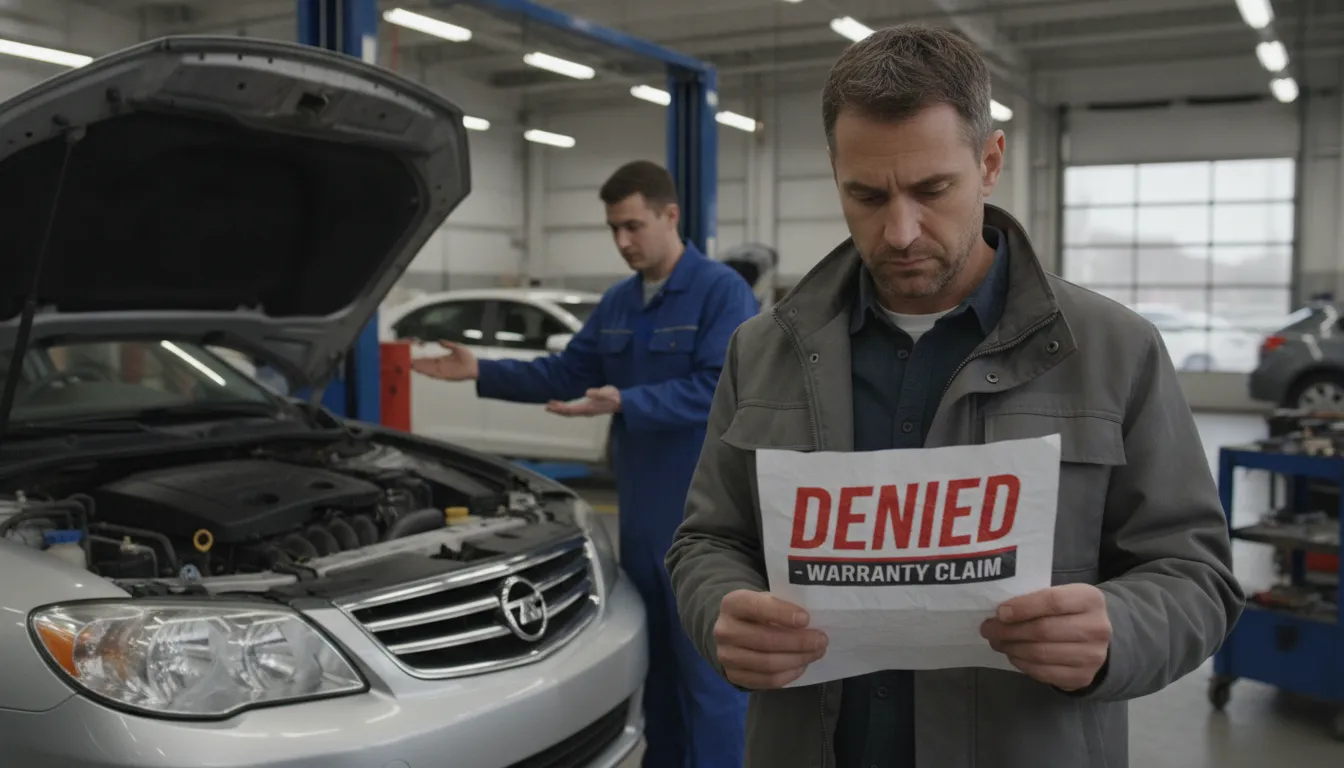
A warranty denial can leave a defective vehicle unrepaired, but it need not end your claim. The manufacturer’s “no” may create evidence that helps prove your lemon law case.
A denial by the manufacturer to cover your repair under warranty may create breach of warranty or lemon law options when a covered defect also affects the vehicle’s use, value, or safety. A manufacturer’s refusal to fix the problem does not automatically defeat a claim, so keep the written denial, repair orders, warranty booklet, maintenance records, and messages. Eligibility and remedies vary by state, but repeated failed repairs, serious safety defects, or too much time out of service can support a claim.
The key question is why the repair was denied and whether the defect, warranty, and service history support action against the manufacturer.
A manufacturer warranty claim denial means the manufacturer or its authorized repair network has refused to cover a requested repair under the written warranty. It does not always mean the defect is minor, the repair is impossible, or every legal remedy is closed. Instead, it creates a dispute about whether the defect, repair, timing, or cause falls within the warranty’s terms.
The denial should state which repair was rejected and why. Common explanations may involve an excluded part, expired coverage, missed maintenance, outside damage, or a claimed link to a vehicle change. The reason matters because a denial may apply to one repair or component rather than the entire warranty.
Keep the denial letter, warranty booklet, repair orders, inspection notes, and messages with the dealer or manufacturer. Compare the written reason with the warranty’s coverage and exclusions. Our guide to a manufacturer warranty denied repair explains how to organize that dispute.
A manufacturer’s written warranty and a service contract are not the same promise. The warranty comes from the manufacturer and states which defects or parts it will cover. A service contract is a separate agreement that may have its own provider, limits, claims process, and exclusions.
This difference can shape the rights that apply after a denial. The Federal Trade Commission explains auto warranties and service contracts and notes that federal law governs consumer product warranties.
Where lemon law rights may overlap
A denied repair can matter when a covered defect remains unresolved after the manufacturer had a fair chance to address it. Lemon law rights may also depend on the state, vehicle type, warranty status, repair history, and the defect’s effect. A denial alone does not prove or defeat eligibility.
Consumers should review their records and the law that applies before judging their lemon law options for vehicle owners. A careful review can show whether the denial conflicts with the written warranty or affects another available claim.
A denied repair often has a short explanation on a service order. The manufacturer may blame maintenance, driving, a modification, normal wear, an expired warranty, or a part outside the plan. That stated reason is the manufacturer’s position, not a final decision about your rights.
When a manufacturer denies a warranty repair notice arrives, compare its exact wording with the warranty terms and repair records. The reason should match the failed part, the reported defect, and the coverage that applied when you sought service.
| Stated reason | Manufacturer’s position | What to check |
|---|---|---|
| Missed maintenance | Skipped service caused the failure | Receipts, service dates, and required schedule |
| Misuse or abuse | Driving or handling caused damage | Inspection notes, photos, and diagnostic results |
| Aftermarket modification | A changed part caused the defect | Which part failed and whether the change relates |
| Normal wear | The item wore out rather than failed | Part condition, mileage, and warranty exclusions |
| Expired warranty | Time or mileage limit passed | Date and mileage when the defect was first reported |
| No applicable coverage | The part or repair falls outside the warranty | Basic, powertrain, emissions, and other coverage terms |
A denial does not by itself prove that the repair falls outside warranty coverage. For example, a modification may exist while having no clear link to the failed component. A maintenance dispute may also turn on whether the missed service could have caused the reported problem. Timing can matter as much as the denial date.
A coverage dispute may affect a lemon law claim, but it does not always end one. Lemon laws generally focus on covered defects and the manufacturer’s chance to repair them.
Repair orders should show the complaint, mileage, dates, diagnosis, work performed, and stated denial reason. Those details help separate a true exclusion from a disputed refusal to repair. They also show whether the same defect continued while the manufacturer had a fair chance to address it.
Treat the denial as the start of a careful record, not a reason to argue at the service counter. Complete the following steps in order, but put urgent safety concerns ahead of paperwork.
Do not keep driving merely to prove the defect. Tell the manufacturer where the vehicle is stored and why you believe it is unsafe. Keep making required loan or lease payments unless a lawyer advises otherwise.
Keep every repair order, even when the shop says it found no problem or performed no repair. For each visit, confirm that the repair order accurately lists the following details:
Ask for a written denial whenever the manufacturer or dealer refuses warranty coverage. The record should state the exact reason, such as claimed lack of maintenance, misuse, or an unrelated modification. Do not rely only on a phone call or a short service-desk explanation.
Federal warranty rights and state lemon law rights can overlap, but they have different rules. A vehicle might fall outside one state law yet still raise a federal warranty issue. The reverse may also be true.
This is why a manufacturer warranty denied repair lemon law dispute needs a fact-specific review. State, vehicle status, warranty terms, and the timing of each reported defect can all affect the available path.
Under the Magnuson-Moss Warranty Act, attorney fees may be paid if the consumer wins. The word “may” matters. Fee payment and any other remedy depend on the law, the evidence, and the outcome.
A lawyer can compare the denial letter with the written warranty and repair records. That review may show whether federal warranty protections, state lemon law, or both deserve closer study. Our guide to a manufacturer warranty denied repair explains useful steps for handling the dispute.
Yes, a manufacturer may deny a repair when it believes the problem falls outside the written warranty, but the stated reason may not necessarily be correct. If it’s wrong, it can be challenged under the law. Ask for the denial in writing, compare it with the warranty terms, and preserve the repair history for review.
This can get tricky. Sometimes a vehicle has been in for the same problem during the warranty, often near the end of it, and the problem was not properly repaired before the warranty terms expired. If you are complaining about the same problem and now the warranty has expired and they deny coverage, there may be a claim for breach of warranty. The argument being that they should continue to cover the problem because they were unable to fix it under warranty. Eligibility depends on facts such as the applicable state law, warranty status, nature of the defect, repair opportunities, and time out of service.
No. A denial alone does not establish a lemon law claim. Eligibility depends on facts such as the applicable state law, warranty status, nature of the defect, repair opportunities, and time out of service.
Keep the written denial, warranty booklet, purchase or lease agreement, every repair order, maintenance receipts, manufacturer case numbers, emails, photos, videos, tow bills, and notes from calls. Confirm that repair orders accurately state your complaint, dates, mileage, diagnosis, and result.
Possibly, but coverage varies. Kahn & Associates handles used vehicles only when they remain under the manufacturer warranty. An extended service contract is not the same as an original manufacturer warranty.
It may. The Magnuson-Moss Warranty Act and state lemon laws have different requirements, so a vehicle that does not qualify under one path may still warrant review under another. The facts and applicable law determine which options may be available.
A denied warranty repair can leave you paying for a vehicle problem the manufacturer has refused to address. Waiting can make repair records harder to organize and leave less time to understand the legal options that may apply.
A focused review can help you understand what information matters and which path fits your situation. Ready to move forward? Request a free 60-second assessment to contact Kahn & Associates and discuss your warranty denial.
*Disclaimer: The information contained in this Website is provided for informational purposes only, and should not be construed as offering legal advice, or creating an attorney client relationship between the reader and the author. While we aim for accuracy, the law is constantly changing and we make no guarantees regarding the completeness or timeliness of the information. You should not act or refrain from acting on the basis of any content included in this Website without seeking appropriate legal advice about your individual facts and circumstances from an attorney licensed in your state.
To see if you qualify, fill out the form below or call us at 1-888-536-6671 – No Office Visit Needed!

I had a great experience with Kahn & Associates! They made the process of dealing with an extremely frustrating lemon situation painless. They have very quick response times and everyone I dealt with was very friendly and helpful. Would definitely recommend!
Kahn and Associates did an awesome job with our lemon law case! We were getting nowhere with VW Customer Service and decided to hire an attorney who specialized with lemon law cases. We couldn’t be happier with the outcome. We were able to get a full refund on our lemon VW Atlas.
What a great experience! I was on the fence about hiring an attorney for my ongoing automotive issues and continued frustration with the manufacturer. It was a very simple process and I am very grateful Kahn and Associates for helping get me a settlement!
Real Honest attorneys!!! They are the real deal! I went back and forth with them and they explained to me every step and my rights under the law! I give them 5 stars because I won!!! Yes and my check is coming to me much sooner than I thought! I was stuck ! I own a brand new car and the dealer was giving me a hard time !

This page has been written, edited, and reviewed by a team of legal writers following our comprehensive editorial guidelines. This page was approved by Attorney Craig A. Kahn, who has more than 20 years of legal experience in lemon law.
One of the first questions we hear from vehicle owners dealing with a defective car or truck is, "How much ...
Electric vehicles are everywhere. Sales have surged in the past few years, and manufacturers from legacy au...
Modern cars are more complex than ever, and a single repair can easily cost thousands of dollars, disruptin...

Stuck with a defective car in Ohio? State Lemon Laws protect you. Get a refund, replacement, or cash settlement. Learn your rights today!

Florida Lemon Laws cover new and used vehicles. If your car’s a lemon, you deserve compensation. Let us help you fight for justice!

Michigan’s Lemon Law protects you from faulty vehicles. Don’t settle for endless repairs—claim your refund or replacement now.

North Carolina Lemon Laws ensure defective vehicles are replaced or refunded. Know your rights and take action today!

Pennsylvania Lemon Law covers new cars with repeated issues. Get the compensation you deserve. Click to learn more!
To see if you qualify, fill out the form below or call us at 1-888-536-6671 – No Office Visit Needed!

The Truth About Attorney’s Fees in Lemon Law Cases Learn more
*Disclaimer: The information contained in this Website is provided for informational purposes only, and should not be construed as offering legal advice, or creating an attorney client relationship between the reader and the author. While we aim for accuracy, the law is constantly changing and we make no guarantees regarding the completeness or timeliness of the information. You should not act or refrain from acting on the basis of any content included in this Website without seeking appropriate legal advice about your individual facts and circumstances from an attorney licensed in your state.

 Message Us
  Call Us