
Have A Case? Call Us
1 888-536-6671
60 Second Lemon Law Assessment™
60 Second Lemon Law Assessment™
by Kahn & Associates - May 15th, 2026
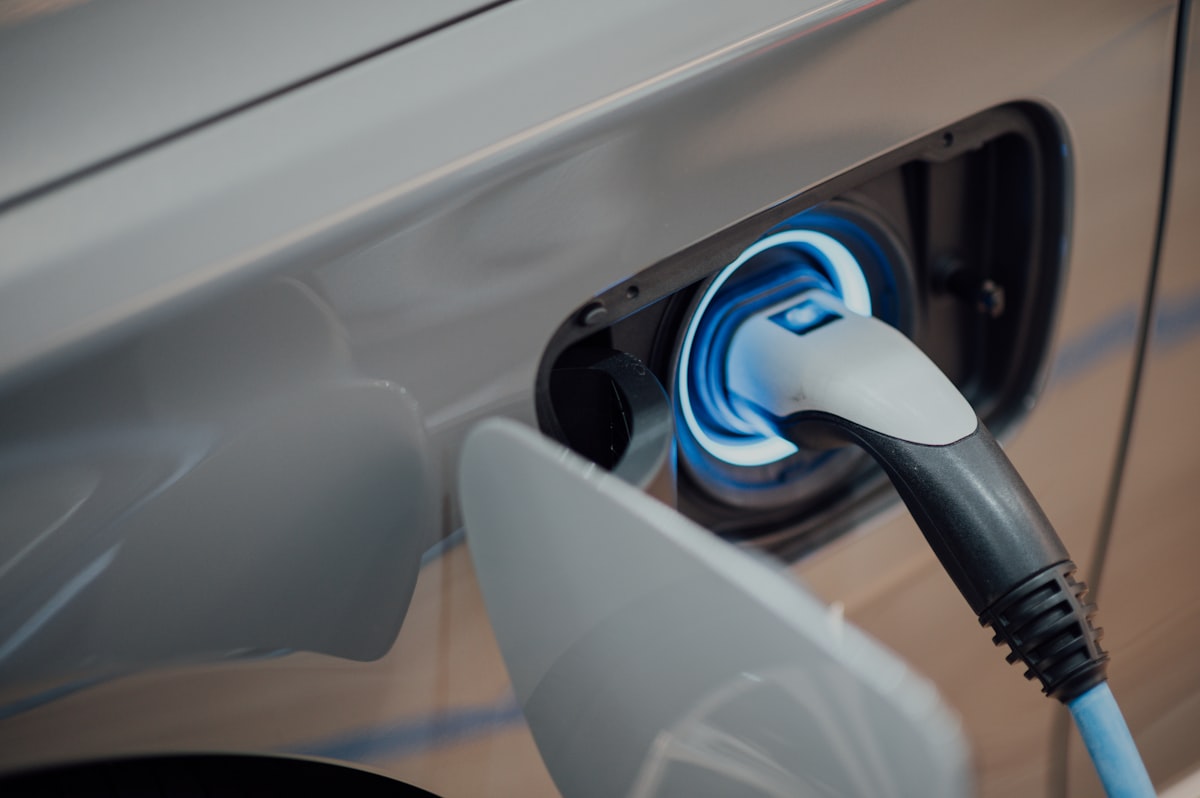
Electric vehicles are everywhere. Sales have surged in the past few years, and manufacturers from legacy automakers to startups are rushing new models to market. But with that growth has come a wave of EV-specific problems that traditional car buyers never faced: battery cells that degrade far too quickly, charging systems that fail without warning, software updates that introduce new bugs while claiming to fix old ones, and range numbers that never come close to what the sticker promised.
Think your EV might be a lemon? Take the 60-Second Lemon Law Assessment to find out if you qualify for a buyback or replacement. It is free, confidential, and there is no obligation. Or call (866) 809-5155 for an immediate case review.
If you bought or leased an electric vehicle that spends more time at the dealership than is reasonable, you are not stuck with it. Lemon laws protect EV owners just like they protect owners of gas-powered vehicles. The defects may be different, but your rights are the same.
Yes. Every state lemon law in the country covers electric vehicles. Lemon laws do not distinguish between powertrains. Whether your vehicle runs on gasoline, diesel, electricity, or a hybrid combination, the legal standard is the same: if a new vehicle has a substantial defect that affects its use, value, or safety, and the manufacturer cannot fix it within a reasonable number of repair attempts or amount of time, you may be entitled to a full buyback or replacement.
In Ohio, for example, the lemon law (ORC 1345.71-1345.77) requires that the defect be reported during the warranty period and that the manufacturer be given a reasonable opportunity to repair it. The law typically considers three or more unsuccessful repair attempts for the same issue, eight or more total repair attempts, or 30 or more cumulative days out of service as sufficient to trigger protection.
The federal Magnuson-Moss Warranty Act provides an additional layer of protection. It applies to any consumer product sold with a written warranty, including electric vehicles. This federal law can be especially valuable when a state lemon law has narrow coverage windows or when the vehicle is used or a certified pre-owned purchase.
If you are unfamiliar with how lemon law claims work, the process starts with documenting the defect and giving the dealer a chance to repair it. When repairs fail, the law gives you leverage to demand a buyback, replacement, or cash settlement.
Electric vehicles have fewer moving parts than gas-powered cars, but their technology introduces entirely new categories of defects. These are the EV-specific problems we see most often in lemon law cases.
The battery pack is the most expensive component in any electric vehicle. When it fails, the consequences are significant. Common battery issues include:
Manufacturers often argue that some battery degradation is expected. That is true for gradual, minor capacity loss over many years. But significant degradation within the warranty period, or degradation that makes the vehicle unreliable for daily use, is a defect that lemon law covers.
A vehicle that cannot charge reliably is a vehicle that cannot be used. Charging defects include:
Modern EVs rely on software for nearly everything: motor control, battery management, climate systems, driver assistance features, and the infotainment interface. When software fails, the problems can range from annoying to dangerous.
Every EV is sold with an EPA-estimated range. While real-world range always varies based on driving conditions, a vehicle that consistently delivers 30% to 40% less than its rated range under normal conditions may have a defect. This is especially true when the gap between advertised and actual range is caused by a faulty battery management system rather than driving habits.
One of the most significant legal questions in EV lemon law is the role of over-the-air (OTA) software updates. Manufacturers like Tesla push updates to vehicles remotely, sometimes without the owner’s explicit consent. These updates can change vehicle behavior, battery management parameters, and even rated range.
Here is what EV owners need to understand:
An OTA update may count as a repair attempt. If the manufacturer sends an update to fix a known defect and the problem persists, it can be argued that is another failed repair on your record, even if you never visited a dealership.
OTA updates cannot retroactively erase your claim. Some manufacturers argue that a software update “fixed” the defect, even when the underlying problem continues. The legal standard asks whether the defect has been permanently corrected. If you are still experiencing the same issue after an update, your claim remains valid.
Updates that reduce performance to mask a defect are themselves a problem. If a manufacturer pushes an update that limits your battery’s charge capacity or reduces power output to hide a hardware defect, that reduction in performance can strengthen your case rather than weaken it. You did not buy the vehicle to accept diminished capability.
Document every OTA update your vehicle receives, including the version number, date, and any changes you notice afterward. This documentation can be critical evidence in your case.
While lemon law protections are not manufacturer-specific, certain EV brands have recurring defect patterns that we see repeatedly in claims.
Tesla remains the highest-volume EV manufacturer, and its vehicles appear in lemon law claims more frequently than any other electric brand. Common Tesla defects include battery degradation in Model 3 and Model Y vehicles, phantom braking from the Autopilot system, panel gaps and build quality issues that allow water intrusion, and touchscreen failures that disable critical vehicle functions.
Tesla’s over-the-air update capability adds complexity to these claims. The company frequently pushes software updates that alter vehicle behavior, and owners must track these updates carefully to preserve their repair history. For a deeper look at Tesla-specific claims, read our Tesla Lemon Law guide.
Rivian’s R1T truck and R1S SUV have drawn attention for their technology, but early production vehicles have experienced drive unit failures, suspension problems, electrical system malfunctions, and infotainment glitches. As a newer manufacturer, Rivian’s parts supply chain is less established, meaning repairs can take significantly longer, potentially pushing vehicles past the 30-day out-of-service threshold faster.
Ford’s electric models have faced battery-related recalls and charging issues. The F-150 Lightning has experienced reduced range in cold weather beyond normal expectations, and some Mustang Mach-E owners have reported high-voltage battery failures that leave the vehicle unable to move. Ford’s dealer network, while extensive, has not always been equipped with EV-specific diagnostic tools and training.
The Chevrolet Bolt was the subject of a major battery recall due to fire risk from manufacturing defects in its LG battery cells. While General Motors addressed this with battery replacements, some owners continued to experience issues. The newer Equinox EV uses a different battery platform, but early reports include software glitches and charging inconsistencies. For more on Chevrolet-specific issues, see our Chevy Lemon Law guide.
BMW’s flagship electric SUV has had reports of software system crashes, adaptive suspension failures, and issues with the iDrive infotainment system that affect climate control and navigation. These defects fall squarely within lemon law territory when they persist after multiple repair attempts.
Lucid Motors positions itself as a luxury EV brand, but early Lucid Air models have experienced quality control issues including misaligned body panels, software instability, and range figures that fall short of the company’s ambitious claims. Given Lucid’s limited service network, getting repairs completed within a reasonable timeframe can be challenging.
Lemon law protections vary by state. Here is how EV coverage works in the five states where Kahn & Associates represents consumers.
Ohio’s lemon law (ORC 1345.71-1345.77) covers new vehicles, including EVs, purchased or leased in Ohio. The law requires that the defect be reported within one year or 18,000 miles (whichever comes first) and that the manufacturer be given a reasonable number of repair attempts. Ohio’s law is particularly consumer-friendly thanks to the Royster v. Toyota precedent. Craig Kahn and his team handled the landmark case Royster v. Toyota Motor Sales, U.S.A., Inc. from the trial court all the way to the Ohio Supreme Court in 2001, establishing the legal precedent that 30 or more cumulative days out of service creates a presumption of lemon law relief, regardless of whether the vehicle is ultimately repaired. That decision is now used by professors and attorneys nationwide and continues to benefit all vehicle consumers in Ohio and beyond.
Florida’s lemon law (Chapter 681) covers new and demonstrator motor vehicles within the first 24 months after delivery. Florida’s law includes a mandatory manufacturer notification requirement after 3 repair attempts.
Michigan’s lemon law (MCL 257.1401-1410) applies to new vehicles taken in for the first time during the warranty period or the first year, whichever is earlier.
North Carolina’s lemon law (GS 20-351 to 20-351.10) covers new vehicles within 24 months or 24,000 miles of original delivery. North Carolina’s law is notable because it provides multiplied damages in cases where the manufacturer acts in bad faith, providing additional leverage for EV owners dealing with manufacturers that stall or deny legitimate claims.
Pennsylvania’s lemon law (73 PS 1951-1963) covers new vehicles during the first year after delivery, the first 12,000 miles or the warranty period, whichever comes first.
In every state, the federal Magnuson-Moss Warranty Act provides additional protection, especially for used EVs with active manufacturer warranties or certified pre-owned vehicles.
The strongest lemon law cases are built on documentation. For EV owners, that means going beyond traditional repair records.
Every time you bring your vehicle to the dealership, get a written repair order that describes the defect, what was attempted, and whether it was resolved. Do not accept vague language like “could not duplicate concern.” Insist that the specific symptoms are documented.
Create a log of every software update your vehicle receives. Note the version number, the date, any release notes the manufacturer provides, and whether the update affected your vehicle’s behavior. Screenshots of update notifications are valuable evidence.
If range degradation is your issue, keep a log of your charging habits and real-world range. Note the starting battery percentage, ending percentage, miles driven, and weather conditions. This data can counter manufacturer arguments that your driving habits are the problem.
Save every email, text message, and letter between you and the dealer or manufacturer. Written communication that shows the manufacturer was aware of the defect and failed to fix it is powerful evidence.
Most state lemon laws have strict timing requirements. Do not wait. If your EV has been in for the same repair three or more times, or if it has been out of service for 30 or more days, talk to a lemon law attorney promptly.
Yes. State lemon laws and the federal Magnuson-Moss Warranty Act protect electric vehicle owners. The type of powertrain does not affect your eligibility. If your EV has a substantial defect that the manufacturer cannot repair within a reasonable number of attempts or amount of time, you may qualify for a buyback, replacement, or cash settlement.
No. An OTA software update that does not permanently resolve the defect is another failed repair attempt, not a cancellation of your rights. If the problem continues after the update or you have enough repairs, your claim remains valid. Updates that reduce vehicle performance to mask a defect can actually strengthen your case.
Battery issues that may qualify include rapid capacity loss beyond normal degradation, complete battery failure, cell imbalance causing reduced range, and thermal management failures. The key question is whether the battery defect substantially affects the vehicle’s use, value, or safety.
This varies by state. In general, three or more unsuccessful repair attempts for the same defect, or 30 or more cumulative days out of service, may be sufficient. Some states also have a threshold for total repair attempts across different defects. An experienced lemon law attorney can evaluate your specific situation.
No. Most lemon law attorneys work on a contingency basis, meaning they are only paid if you win or settle. Additionally, state and federal lemon laws provide a mechanism for manufacturers to pay your attorney fees and costs when a case is won or settled. If your case is not successful at our firm, you owe nothing.
State lemon laws typically cover new vehicles. However, the federal Magnuson-Moss Warranty Act can protect used EV owners if the vehicle has an active manufacturer warranty. Certified pre-owned EVs with manufacturer-backed warranties are also covered under federal law.
You bought your electric vehicle expecting reliable transportation, not endless trips to the service center. If your EV has been back to the dealer repeatedly for the same problem, if software updates have not fixed the issue, or if your battery is failing well before it should, you may have a lemon law case.
Kahn & Associates has represented more than 13,000 consumers with defective vehicles over nearly three decades and counting. We handle lemon law cases in Ohio, Florida, Michigan, North Carolina, and Pennsylvania, and we do it all remotely. You never need to visit an office.
Take the 60-Second Lemon Law Assessment to find out if your electric vehicle qualifies. The evaluation is free, confidential, and there is no obligation. If we take your case, you pay nothing out-of-pocket. The manufacturer typically pays our fees when we win. Call us at (866) 809-5155 or request your free case review online.
*Disclaimer: The information contained in this Website is provided for informational purposes only, and should not be construed as offering legal advice, or creating an attorney client relationship between the reader and the author. While we aim for accuracy, the law is constantly changing and we make no guarantees regarding the completeness or timeliness of the information. You should not act or refrain from acting on the basis of any content included in this Website without seeking appropriate legal advice about your individual facts and circumstances from an attorney licensed in your state.
To see if you qualify, fill out the form below or call us at 1-888-536-6671 – No Office Visit Needed!

I had a great experience with Kahn & Associates! They made the process of dealing with an extremely frustrating lemon situation painless. They have very quick response times and everyone I dealt with was very friendly and helpful. Would definitely recommend!
Kahn and Associates did an awesome job with our lemon law case! We were getting nowhere with VW Customer Service and decided to hire an attorney who specialized with lemon law cases. We couldn’t be happier with the outcome. We were able to get a full refund on our lemon VW Atlas.
What a great experience! I was on the fence about hiring an attorney for my ongoing automotive issues and continued frustration with the manufacturer. It was a very simple process and I am very grateful Kahn and Associates for helping get me a settlement!
Real Honest attorneys!!! They are the real deal! I went back and forth with them and they explained to me every step and my rights under the law! I give them 5 stars because I won!!! Yes and my check is coming to me much sooner than I thought! I was stuck ! I own a brand new car and the dealer was giving me a hard time !

This page has been written, edited, and reviewed by a team of legal writers following our comprehensive editorial guidelines. This page was approved by Attorney Craig A. Kahn, who has more than 20 years of legal experience in lemon law.
Repeated transmission shuddering or an engine that burns oil between services turns a car you trusted into ...
A Tesla that spends more time at the service center than is reasonable stops being a car you can plan aroun...
A missing repair date can weaken an otherwise well-documented warranty claim. A clear day-by-day record sho...

Stuck with a defective car in Ohio? State Lemon Laws protect you. Get a refund, replacement, or cash settlement. Learn your rights today!

Florida Lemon Laws cover new and used vehicles. If your car’s a lemon, you deserve compensation. Let us help you fight for justice!

Michigan’s Lemon Law protects you from faulty vehicles. Don’t settle for endless repairs—claim your refund or replacement now.

North Carolina Lemon Laws ensure defective vehicles are replaced or refunded. Know your rights and take action today!

Pennsylvania Lemon Law covers new cars with repeated issues. Get the compensation you deserve. Click to learn more!
To see if you qualify, fill out the form below or call us at 1-888-536-6671 – No Office Visit Needed!

The Truth About Attorney’s Fees in Lemon Law Cases Learn more
*Disclaimer: The information contained in this Website is provided for informational purposes only, and should not be construed as offering legal advice, or creating an attorney client relationship between the reader and the author. While we aim for accuracy, the law is constantly changing and we make no guarantees regarding the completeness or timeliness of the information. You should not act or refrain from acting on the basis of any content included in this Website without seeking appropriate legal advice about your individual facts and circumstances from an attorney licensed in your state.

 Message Us
  Call Us