
Have A Case? Call Us
1 888-536-6671
60 Second Lemon Law Assessment™
60 Second Lemon Law Assessment™
by Kahn & Associates - July 24th, 2026
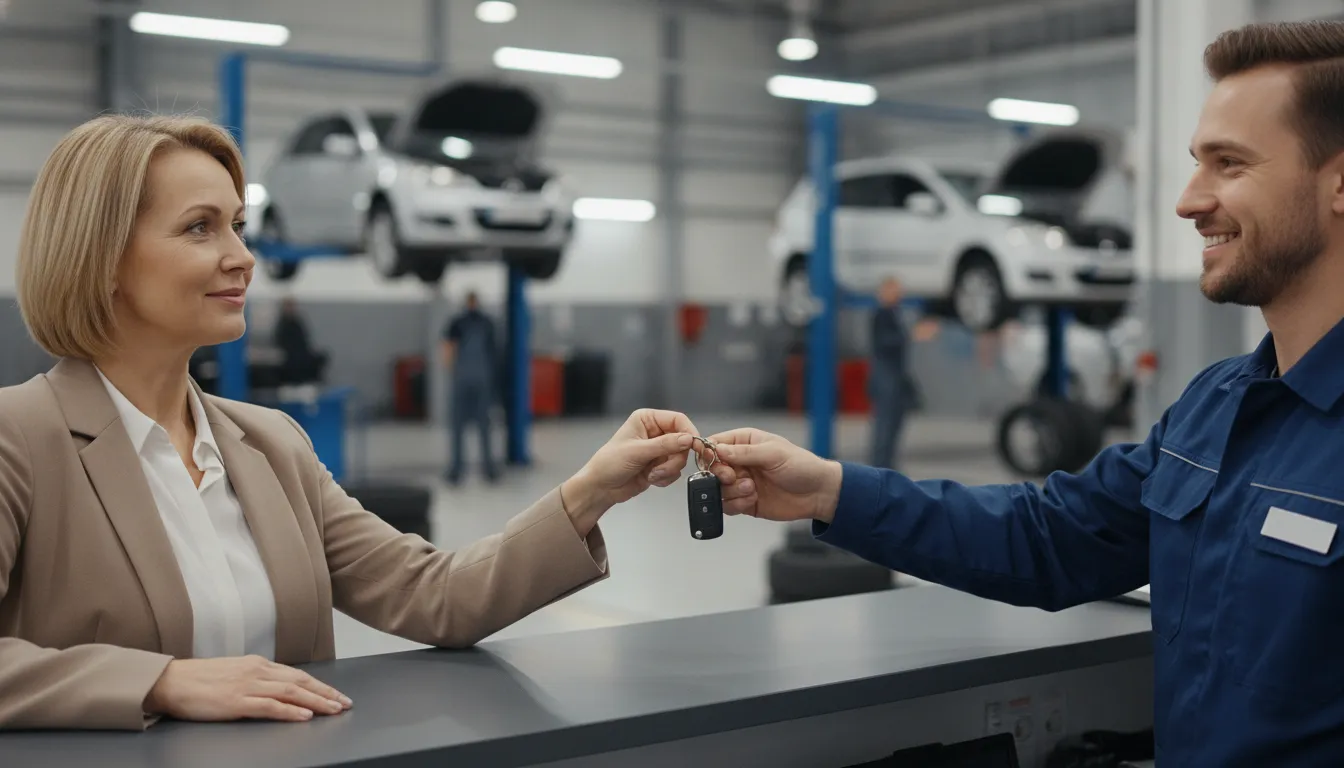
When a defective vehicle keeps returning to the repair shop, a buyback offers a way out rather than another round of repairs. The process involves more than handing over the keys. It affects your refund, your vehicle loan, the mileage calculation, and the title history that follows the vehicle for the rest of its life.
A manufacturer buyback under the lemon law generally means the manufacturer takes the defective vehicle back and provides the compensation the applicable law requires, which may include a refund, a loan payoff, or other agreed relief. The exact result depends on the vehicle’s repair history, the financing, the mileage, and the law of the state where the claim arises.
Understanding what a buyback means, how the amount is calculated, and what happens after the manufacturer reacquires the vehicle can help you judge whether a proposed resolution actually protects your interests.
If your vehicle has been in for repair for the same issue at least twice, or has been or will be out of service for at least 21 calendar days, call 1-888-536-6671 or request a free lemon law evaluation.
A manufacturer buyback, also called a repurchase, is a resolution in which the manufacturer takes back a defective vehicle and either refunds the consumer or provides a replacement vehicle. It is not a trade-in. A buyback is pursued under the lemon law after a warranty nonconformity has survived a reasonable opportunity to repair it.
Bringing your vehicle in for a covered repair is a warranty transaction, and it can go on indefinitely without ever becoming a claim. A buyback is something else: it is tied to a qualifying warranty nonconformity and to the remedies available under state or federal law. Once the repair history shows the manufacturer has had a reasonable opportunity to fix the problem and the vehicle is still defective, the consumer may be entitled to demand a repurchase rather than keep accepting unsuccessful repairs. The precise standard depends on which law governs the claim, which is why understanding your lemon law buyback rights matters.
Repeated repair visits are the most common way to show a nonconformity has not been resolved, but downtime matters just as much. Thirty or more cumulative days out of service is a common qualifier, though the exact threshold and the other requirements vary by state. Keep every repair order, invoice, diagnostic report, and communication with the dealership or the manufacturer. Those records establish what went wrong, when you reported it, and how long the vehicle was unavailable.
For an owner stuck with a defective vehicle, a repurchase is often the outcome worth pursuing. Rather than continuing to pay for something that keeps failing, you return it and recover what the law allows, which may include a refund, payment of the outstanding loan balance, attorneys fees and any adjustments the state rules require. A lemon law vehicle buyback can end a continuing warranty problem, but the claim should be evaluated from the repair records and the specific facts.
A buyback is designed to put you as close as possible to the financial position you were in before you bought or leased the vehicle. The exact figure depends on your transaction and the governing law, but the recovery generally covers considerably more than the vehicle’s current trade-in value.
The recovery may include the purchase price or other amounts paid for the vehicle, subject to any mileage offset the state requires. It may also include your down payment, the monthly payments you have made, sales tax, registration fees, and other qualifying charges tied to the transaction. Because mileage offsets are not calculated the same way in every state, the number should be checked against the law governing your claim rather than estimated from a generic formula.
If you financed the vehicle, the resolution generally includes a loan payoff. The manufacturer pays the remaining balance to the lender, and any additional amount owed to you is handled as part of the settlement.
Attorney fees are ordinarily part of the package as well. In most buyback resolutions the manufacturer agrees to pay some or all of the fees as part of the total recovery.
A repurchase is not the only possible outcome. Some consumers agree to a replacement vehicle instead, which can make sense when you want a different vehicle rather than a refund, though the terms still have to deal with the defective vehicle and the financial obligations attached to it. A cash settlement is a third path, and it usually comes into play when a vehicle does not qualify for a repurchase or replacement under the state statute and the claim is resolved under federal law as a breach of warranty.
As for timing, it varies more than most consumers expect, and the single biggest factor is the manufacturer. Some respond to a demand within weeks; others take several months on an ordinary file with the same records and the same claim. Most pre-suit claims resolve in roughly 60 to 120 days from demand to resolution, though complex cases and certain manufacturers take longer. Anyone who promises you a specific number of days is promising something they do not control.
If a claim does not resolve before suit and you choose to file a lawsuit, litigation is a substantially longer process, often a year or more depending on the court and the manufacturer. The more important timing issue is on your end: every state sets deadlines for bringing a claim, and they run whether or not you are still trying to get the vehicle fixed.
A mileage offset reduces what a consumer receives in a buyback. It is meant to account for the use you got out of the vehicle before the repurchase, but the calculation differs from state to state, and so does the point in time at which the mileage is measured. It may be the settlement date, a particular repair visit, or another event the statute defines.
The state where the claim arises therefore matters a great deal. The table below covers the rules in the five states where we practice.
| State | How the mileage offset is determined |
| Ohio | No mileage offset applies in a repurchase or a replacement |
| Florida | Based on the miles on the vehicle at the time of settlement |
| Michigan | Miles driven before the first repair, plus miles driven over 25,000 |
| North Carolina | Miles at the third repair attempt, or at the 20th business day out of service if that comes first |
| Pennsylvania | The lesser of 10 cents per mile at the first repair or 10% of the purchase price |
A small difference in the mileage date or the formula can change the proposed refund substantially. That is why the repair orders, mileage records, purchase documents, and the settlement calculation should be reviewed together. Manufacturers sometimes present an offset that does not match the rule for the consumer’s state or the facts of the claim.
Our lemon law buyback calculator is a useful starting point for understanding the numbers. It does not replace a legal review, particularly where the vehicle has multiple repair visits, financing, or disputed warranty coverage. An accurate calculation has to identify the correct state rule, the required mileage event, and which amounts belong in the buyback remedy at all.
A buyback should resolve the loan or lease along with the vehicle. When a repurchase is negotiated, the manufacturer typically works with the lienholder to pay off the remaining balance directly. The lender then releases its interest, which allows the buyback to close without leaving you responsible for a vehicle you no longer own.
The refund is calculated from the purchase and the applicable lemon law rules, not from the balance currently showing on your loan statement. That distinction matters if you owe more than the vehicle is worth. Being upside down on the loan does not automatically eliminate your buyback rights, and it does not convert the claim into a payment of your negative equity. The manufacturer typically pays the lender what is needed to satisfy the lien, and any remaining refund is paid to you, subject to the applicable deductions and offsets.
An owner can easily have a loan balance higher than the refund value because of the financing terms, rolled-in trade-in debt (which may not be covered), or depreciation. The payoff and the lemon law refund are separate parts of the resolution, which is why the purchase documents, payment history, payoff statement, and repair records should all be reviewed before the agreement is finalized.
Leases work differently on paper but toward the same end. Instead of paying off an auto loan, the manufacturer settles the lease with the leasing company. The lease account has to be properly closed, and any amount due to you under the buyback agreement should be identified separately.
Do not stop making required loan or lease payments while a claim is pending unless your attorney and your lender give you specific written guidance. A missed payment can create credit and collection problems that have nothing to do with the merits of your claim. We can handle coordinating the payoff and reviewing the refund calculation.
A buyback can leave a lasting mark on a vehicle’s history, but the rules are not uniform and the result is not automatic. Whether the title itself is branded depends on the state. Fewer than half the states carry a lemon law brand on the title at all, and among the states where we practice the requirements differ from one another.
What triggers the obligation matters as well. These rules generally attach to a repurchase made under the lemon law, so how a resolution is structured can affect whether branding follows. Where a brand does apply, it is meant to stay with the vehicle permanently, although in practice a brand does not always survive a move across state lines intact.
There is no single national rule. Each state sets its own brand language and its own resale obligations. Under Ohio Revised Code Section 1345.76, the manufacturer must obtain a buyback certificate of title stamped in black boldface: “BUYBACK: This vehicle was returned to the manufacturer because it may not have conformed to its warranty.” Every later title for that vehicle carries the same stamp.
Other states use different wording and different mechanics. Florida stamps the title “Manufacturer’s Buy Back” and requires a resale disclosure of the nonconformity, as set out in the state titling procedure. Pennsylvania requires a branded title from PennDOT along with an Attorney General-approved written disclosure and a signed receipt confirming the buyer got it. North Carolina requires disclosure on resale, and a subsequent purchaser who buys for resale has to pass the same disclosure along.
Two practical limits are worth understanding. First, these rules attach to a repurchase made under the lemon law. Florida’s titling statute, for instance, reaches vehicles repurchased pursuant to a settlement or decision under its lemon law, so resolving a claim before suit does not avoid branding there. Whether a manufacturer’s voluntary goodwill repurchase outside the statute carries the same consequences is a more fact-specific question.
Second, a brand applied in one state does not automatically follow the same rules everywhere. Manufacturers resell nationally, and state disclosure requirements vary widely enough that a brand can lose visibility as a vehicle changes hands across state lines. Some states anticipate this: Ohio and Pennsylvania both apply their resale conditions to vehicles returned under a similar statute of another state. The federal motor vehicle title information system also preserves the underlying record.
Branding a title is only part of the picture, and in some states it is the disclosure rather than the brand that does the real work. Here too the requirements are not uniform: what has to be disclosed, who has to disclose it, and in what form all vary by state.
Ohio requires a separate written disclosure naming the defects that led to the buyback. Pennsylvania requires the dealer, lessor, or transferor to provide a disclosure statement on a form the Attorney General has approved, and to obtain a signed receipt confirming the buyer received it. Florida uses its own resale disclosure of nonconformity. North Carolina requires disclosure on resale and carries the obligation forward, so a later purchaser who buys for resale has to pass the same disclosure along.
The common thread is the purpose rather than the paperwork. A buyer should not have to piece a vehicle’s history together from an incomplete sales conversation. If you are looking at a vehicle you think may have been repurchased, ask for the disclosure in writing and check a history report against what you are told.
Some states go further than disclosure and require a warranty on the resold vehicle. Ohio is one. The manufacturer must provide the same express warranty the original consumer received, and the term is whichever is longer: the remainder of the original warranty, or a fresh warranty of 12 months or 12,000 miles (whichever comes first) running from the date of resale.
Ohio is not alone in this. Pennsylvania’s Automobile Lemon Law bars resale of a returned vehicle in the Commonwealth unless the manufacturer likewise provides the same express warranty it gave the original purchaser. If you are looking at a branded vehicle, it is worth finding out which state’s rules applied to the repurchase, because the warranty that comes with it is not the same everywhere.
Ohio also draws a line that some states do not. A vehicle returned because of a nonconformity likely to cause death or serious bodily injury may not be sold, leased, or operated in Ohio at all. Failing to comply with these buyback requirements is an unfair and deceptive act or practice under Ohio law.
For the original consumer, the permanent brand is part of why a properly handled buyback is a meaningful resolution. The manufacturer takes responsibility for the defective vehicle rather than returning it to the market with its history concealed.
A buyback usually follows a documented sequence. The details vary by state and by vehicle manufacturer, but organized records and timely notice make it easier to establish what happened and what resolution is appropriate.
We can help you obtain and guide you through the manufacturer buyback process with no out-of-pocket cost to you.
In the states that require it, the title is permanently branded to disclose that the manufacturer reacquired the vehicle, and the next buyer receives written information about the reported nonconformities. The brand language and the surrounding requirements are set by state law and are not uniform. In Ohio, Section 1345.76 requires the title to be stamped “BUYBACK: This vehicle was returned to the manufacturer because it may not have conformed to its warranty,” and that stamp carries forward to every later title. Florida, Pennsylvania, and North Carolina each have their own branding or disclosure requirements.
A mileage offset reduces the amount paid in a repurchase, but the calculation depends on which state’s law applies. Ohio applies no mileage offset in a repurchase or replacement, while Florida, Michigan, North Carolina, and Pennsylvania each use different mileage points or formulas. Do not assume a formula from another state applies to your claim.
The manufacturer typically pays the remaining loan balance as part of the buyback, with any amount due to you calculated separately. The exact accounting depends on the contract, the payoff balance, the eligible payments, and any applicable mileage offset. Do not stop making scheduled payments while the claim is pending unless your lender or attorney gives you specific written guidance.
No. Taking your vehicle in for a covered repair is a warranty transaction and nothing more. A buyback is a legal resolution in which the manufacturer takes the vehicle back because the warranty nonconformities meet the applicable lemon law requirements, and then provides the compensation the law requires. Whether your vehicle qualifies depends on the nonconformities, the repair history, the time out of service, the mileage, and your state’s law.
Understanding the process, the mileage rules, the financing, and the title branding lets you evaluate a proposed resolution with some confidence rather than taking the manufacturer’s number at face value. We can help you obtain a buyback or other cash compensation and review the repair records and the calculation before you sign anything.
If your vehicle has been in for the same issue at least twice, or has been or will be out of service for at least 21 calendar days, call 1-888-536-6671 or contact Kahn & Associates for a free case evaluation.
*Disclaimer: The information contained in this Website is provided for informational purposes only, and should not be construed as offering legal advice, or creating an attorney client relationship between the reader and the author. While we aim for accuracy, the law is constantly changing and we make no guarantees regarding the completeness or timeliness of the information. You should not act or refrain from acting on the basis of any content included in this Website without seeking appropriate legal advice about your individual facts and circumstances from an attorney licensed in your state.
To see if you qualify, fill out the form below or call us at 1-888-536-6671 – No Office Visit Needed!

I had a great experience with Kahn & Associates! They made the process of dealing with an extremely frustrating lemon situation painless. They have very quick response times and everyone I dealt with was very friendly and helpful. Would definitely recommend!
Kahn and Associates did an awesome job with our lemon law case! We were getting nowhere with VW Customer Service and decided to hire an attorney who specialized with lemon law cases. We couldn’t be happier with the outcome. We were able to get a full refund on our lemon VW Atlas.
What a great experience! I was on the fence about hiring an attorney for my ongoing automotive issues and continued frustration with the manufacturer. It was a very simple process and I am very grateful Kahn and Associates for helping get me a settlement!
Real Honest attorneys!!! They are the real deal! I went back and forth with them and they explained to me every step and my rights under the law! I give them 5 stars because I won!!! Yes and my check is coming to me much sooner than I thought! I was stuck ! I own a brand new car and the dealer was giving me a hard time !

This page has been written, edited, and reviewed by a team of legal writers following our comprehensive editorial guidelines. This page was approved by Attorney Craig A. Kahn, who has more than 20 years of legal experience in lemon law.
Buying a defective used vehicle does not mean you are stuck with a lemon forever. The federal lemon law pro...
There are many myths about consumer protection laws that stop people from getting the justice they deserve....
Florida Lemon Law Guide: What Every Car Buyer Needs to Know If your new car keeps going back to the dealer...

Stuck with a defective car in Ohio? State Lemon Laws protect you. Get a refund, replacement, or cash settlement. Learn your rights today!

Florida Lemon Laws cover new and used vehicles. If your car’s a lemon, you deserve compensation. Let us help you fight for justice!

Michigan’s Lemon Law protects you from faulty vehicles. Don’t settle for endless repairs—claim your refund or replacement now.

North Carolina Lemon Laws ensure defective vehicles are replaced or refunded. Know your rights and take action today!

Pennsylvania Lemon Law covers new cars with repeated issues. Get the compensation you deserve. Click to learn more!
To see if you qualify, fill out the form below or call us at 1-888-536-6671 – No Office Visit Needed!

The Truth About Attorney’s Fees in Lemon Law Cases Learn more
*Disclaimer: The information contained in this Website is provided for informational purposes only, and should not be construed as offering legal advice, or creating an attorney client relationship between the reader and the author. While we aim for accuracy, the law is constantly changing and we make no guarantees regarding the completeness or timeliness of the information. You should not act or refrain from acting on the basis of any content included in this Website without seeking appropriate legal advice about your individual facts and circumstances from an attorney licensed in your state.

 Message Us
  Call Us