
Have A Case? Call Us
1 888-536-6671
60 Second Lemon Law Assessment™
60 Second Lemon Law Assessment™
by Kahn & Associates - June 12th, 2026

Your vehicle is at the dealership again, the repair date keeps moving, and you still need transportation. A lemon law loaner car can make that disruption easier to manage, but receiving a temporary vehicle does not decide whether your own vehicle qualifies as a lemon. Loaner availability, rental reimbursement, and a manufacturer warranty claim are related issues with different legal and contractual rules.
Request a free case evaluation from Kahn & Associates if repeated warranty repairs or unreasonable time out of service have left you without reliable transportation.
Most state lemon laws do not automatically require a dealership to provide a free loaner during every warranty repair. A warranty, service plan, or manufacturer program may provide transportation benefits. Separately, documented rental or transportation expenses may be relevant when evaluating available remedies, but reimbursement is never guaranteed.
The distinction matters. The defective vehicle is the subject of a potential claim. A dealer loaner is temporary transportation. A paid rental creates an expense that may require separate proof.
State and federal lemon laws generally focuses on whether a manufacturer received a reasonable opportunity to repair a substantial warranty defect. It may consider a reasonable number of repair attempts, an unreasonable amount of time out of service, or both. It usually does not create an unconditional right to a free loaner every time a vehicle enters the dealership.
That does not make transportation issues irrelevant. The availability of a loaner can affect a consumer’s daily life, while rental receipts and repair orders can help document the practical consequences of a prolonged repair. Whether a particular expense is recoverable depends on the applicable law, warranty terms, proof, and outcome of the claim. Kahn & Associates reviews those details rather than assuming every temporary vehicle or transportation charge is covered.
The consumer’s own vehicle, not the temporary loaner, is the vehicle evaluated under lemon law or federal warranty law. A loaner does not cure the defect, erase prior repair attempts, or necessarily stop the calculation of time that the consumer’s vehicle remains unavailable for use.
The key questions usually involve the warranty defect and the manufacturer’s opportunity to repair. Was the defect reported while the manufacturer’s warranty applied? Did authorized repair facilities receive a reasonable opportunity to correct it? Did the vehicle spend more time at the dealership than was reasonable? The answers to these questions are what’s important to the potential lemon law case.
A written manufacturer’s warranty, roadside assistance plan, service contract, or dealer courtesy program may provide loaner or rental benefits. Those benefits can have daily limits, eligibility requirements, advance-approval rules, or maximum coverage periods. Consumers should read the relevant documents and ask questions before assuming that a rental will be paid.
Dealer courtesy practices also vary. A dealership may have no available loaners even when a brand program offers transportation support.
A dealer loaner, a paid rental, and the defective vehicle each generate different records. Separating them helps a consumer understand what happened and gives an attorney a clearer basis for evaluating a potential manufacturer breach of warranty claim.
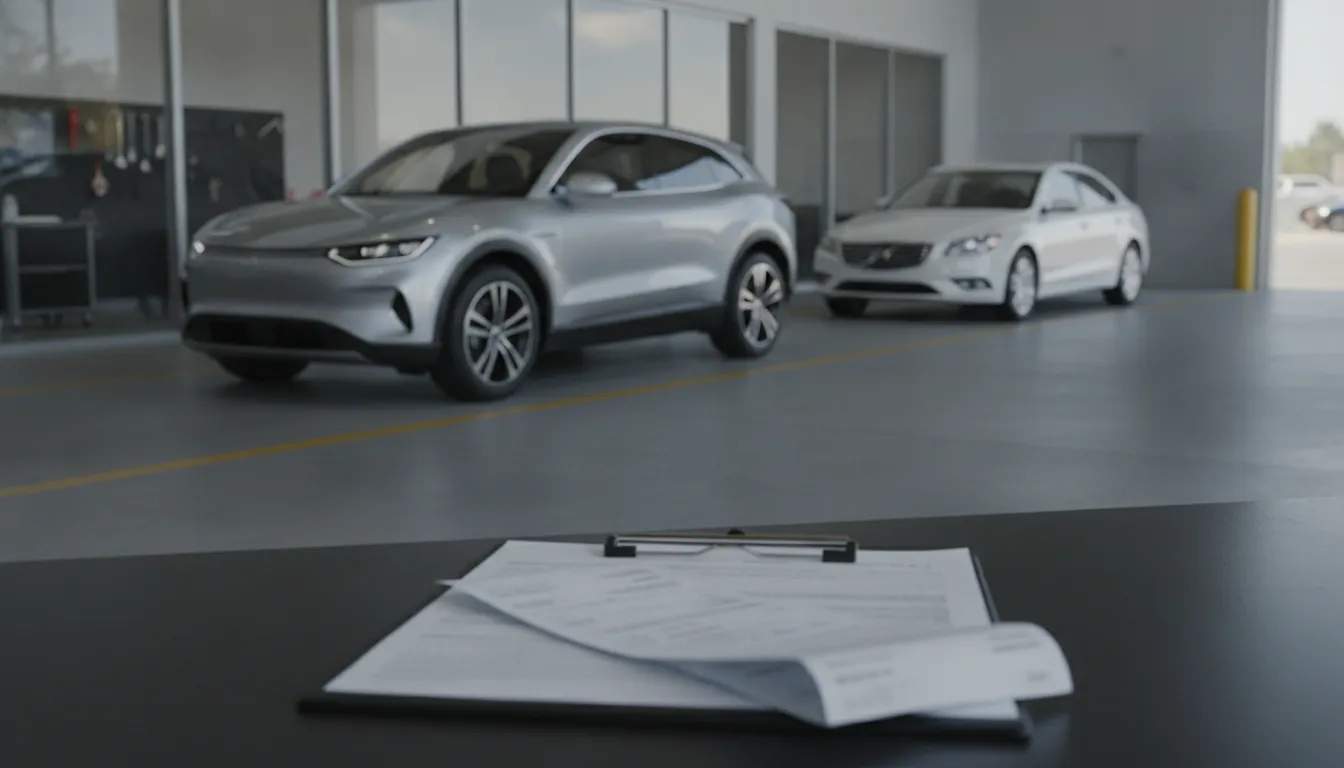
A dealer loaner is typically owned or controlled by the dealership and provided temporarily. The consumer may sign an agreement governing insurance, mileage, fuel, damage, and return deadlines. Keeping that agreement is important because its dates may independently support the period when the consumer did not have the purchased or leased vehicle.
A paid rental creates an out-of-pocket expense. Consumers should retain the rental agreement, itemized final receipt, proof of payment, and any emails about approval or reimbursement. A reservation confirmation alone may not prove the amount actually paid. Kahn & Associates can assess how documented transportation expenses fit into a potential claim.
The repair orders for the defective vehicle remain central. They should identify the reported concern, dates in and out, mileage, diagnostic work, parts ordered, and repair performed. If the dealership writes “could not duplicate” or a similar notation, the order still documents that the consumer reported the problem and presented the vehicle for service.
| Item | What it documents | Record to keep |
|---|---|---|
| Dealer loaner | Temporary transportation and dates used | Signed loaner agreement |
| Paid rental | Actual transportation expense | Final receipt and proof of payment |
| Defective vehicle | Repair history and time out of service | Every complete repair order |
For a broader explanation of qualifying defects and available legal paths, review the firm’s overview of state lemon laws and its discussion of the federal Magnuson-Moss Warranty Act.
Time out of service can be a major factor even when the dealership provides a comfortable loaner. The temporary car may reduce inconvenience, but it does not change the fact that the purchased or leased vehicle remains unavailable because of warranty repair work.
State standards differ, and a consumer should not assume that one state’s repair-day rule applies everywhere. Some claims turn primarily on repeated attempts to repair the same defect. Others may be supported by cumulative days out of service. Kahn & Associates evaluates the governing state law and the complete warranty-repair timeline for consumers in the firm’s five-state service area.
Use the dates shown on repair orders rather than relying only on memory. If the vehicle was dropped off after hours, parts were delayed, or the dealership asked the consumer to continue driving while waiting for an appointment, note those circumstances. An attorney can then assess which periods may matter under the applicable law.
A calendar can supplement the repair orders. It should identify when appointments were requested, when the vehicle was actually delivered, when the dealership said repairs were complete, and when the vehicle was returned. The calendar should not replace the original records.
Consumers sometimes worry that accepting a loaner will weaken their claim. Ordinarily, accepting reasonable temporary transportation does not change the repair history of the defective vehicle. The legal analysis still concerns the manufacturer’s opportunity to repair and the period the consumer’s vehicle remained at the dealership.
Ask Kahn & Associates to review your repair timeline if repeated attempts or extended dealership stays suggest that the manufacturer has had a reasonable opportunity to fix the defect.
Strong documentation helps distinguish a frustrating repair experience from a supportable breach of warranty claim. It also enables a more accurate evaluation of transportation expenses. Kahn & Associates asks consumers to preserve original records because small details, including dates, mileage, and the exact language used to describe a defect, can matter.
Make sure the repair order accurately describes the problem the consumer reported. A vague description can make a recurring defect look unrelated across visits. Also check the date, mileage, and stated repair result. Ask the dealership to correct objective mistakes promptly, while keeping the original document if possible.
Receipts prove that an expense occurred. They do not, by themselves, establish that a manufacturer must reimburse it. Recoverability may depend on the warranty, state law, federal law, reasonableness of the expense, and how the matter resolves.
Consumers seeking more background can review the firm’s frequently asked lemon law questions.
Rental expenses may be relevant to a manufacturer warranty claim, but the answer is fact-specific. A written warranty or service plan may provide a direct reimbursement process. In other circumstances, reasonable and documented transportation costs may be evaluated with other potential damages or settlement terms. No consumer should assume payment is automatic.
Before renting a vehicle, ask the dealership or manufacturer whether transportation benefits are available, who authorizes them, what rate is covered, and how long the benefit lasts. Request the answer by email or in another written form. If approval is denied, retain that response with the repair records.
Consider speaking with an attorney when the same defect continues after multiple warranty repair attempts, the vehicle spends more time at the dealership than is reasonable, or the manufacturer and dealership cannot provide a clear repair plan. An early review can help preserve records and identify the law that may apply before deadlines become an issue.
Kahn & Associates represents consumers with lemon-law and manufacturer-warranty claims in Ohio, Florida, Michigan, North Carolina, and Pennsylvania. The firm handles used vehicles only when the repairs were covered by a manufacturer’s warranty or manufacturer’s extended warranty. Potential outcomes can include monetary compensation, loan payoff, and/or a new vehicle, depending on the law and facts. Clients are not required to pay no out-of-pocket fees or costs, win or lose.
Gather the purchase or lease agreement, warranty, all repair orders, current registration, loaner agreements, rental receipts, and manufacturer communications. A chronological folder makes the evaluation more efficient. It also helps an attorney identify missing records that should be requested.
A manufacturer may offer a payment, extended coverage, or another resolution while repairs continue. Read every proposed release carefully. A signed agreement can affect available rights. Consumers should understand the terms and scope before accepting an offer or signing a release.
Not necessarily. Most, if not all, state lemon laws do not automatically require a dealership to provide a free loaner for every warranty repair. A manufacturer’s warranty, service plan, or dealer courtesy program may separately provide temporary transportation.
Accepting a loaner generally does not change the fact that the consumer’s defective vehicle remains at the dealership for repairs. The way repair days are counted depends on the applicable state’s law and the documented timeline.
No. A receipt proves an expense, but reimbursement depends on the applicable warranty, plan terms, law, proof, reasonableness, and outcome. Consumers should preserve receipts without assuming that every cost will be paid.
Kahn & Associates handles used-vehicle matters only when the vehicle’s repairs were covered by a manufacturer’s warranty or manufacturer’s extended warranty. Eligibility depends on the repair history, warranty, governing law, and other facts.
A temporary loaner car can keep life moving, but it does not resolve the defect in the vehicle you purchased or leased. If repeated repairs or unreasonable time at the dealership have disrupted your transportation, Kahn & Associates can review the repair orders, loaner documents, rental receipts, and warranty information.
Contact Kahn & Associates for a free case evaluation and learn whether the facts may support a lemon law or breach of warranty claim.
*Disclaimer: The information contained in this Website is provided for informational purposes only, and should not be construed as offering legal advice, or creating an attorney client relationship between the reader and the author. While we aim for accuracy, the law is constantly changing and we make no guarantees regarding the completeness or timeliness of the information. You should not act or refrain from acting on the basis of any content included in this Website without seeking appropriate legal advice about your individual facts and circumstances from an attorney licensed in your state.
To see if you qualify, fill out the form below or call us at 1-888-536-6671 – No Office Visit Needed!

I had a great experience with Kahn & Associates! They made the process of dealing with an extremely frustrating lemon situation painless. They have very quick response times and everyone I dealt with was very friendly and helpful. Would definitely recommend!
Kahn and Associates did an awesome job with our lemon law case! We were getting nowhere with VW Customer Service and decided to hire an attorney who specialized with lemon law cases. We couldn’t be happier with the outcome. We were able to get a full refund on our lemon VW Atlas.
What a great experience! I was on the fence about hiring an attorney for my ongoing automotive issues and continued frustration with the manufacturer. It was a very simple process and I am very grateful Kahn and Associates for helping get me a settlement!
Real Honest attorneys!!! They are the real deal! I went back and forth with them and they explained to me every step and my rights under the law! I give them 5 stars because I won!!! Yes and my check is coming to me much sooner than I thought! I was stuck ! I own a brand new car and the dealer was giving me a hard time !

This page has been written, edited, and reviewed by a team of legal writers following our comprehensive editorial guidelines. This page was approved by Attorney Craig A. Kahn, who has more than 20 years of legal experience in lemon law.
If you recently purchased a used car in Ohio and it has been in and out of the repair shop with no end in s...
That sinking feeling when your new car’s “check engine” light comes on again is all too familiar for ...
Your car jerks, stalls, loses power, flashes a warning light, or makes a troubling sound. Yet when you brin...

Stuck with a defective car in Ohio? State Lemon Laws protect you. Get a refund, replacement, or cash settlement. Learn your rights today!

Florida Lemon Laws cover new and used vehicles. If your car’s a lemon, you deserve compensation. Let us help you fight for justice!

Michigan’s Lemon Law protects you from faulty vehicles. Don’t settle for endless repairs—claim your refund or replacement now.

North Carolina Lemon Laws ensure defective vehicles are replaced or refunded. Know your rights and take action today!

Pennsylvania Lemon Law covers new cars with repeated issues. Get the compensation you deserve. Click to learn more!
To see if you qualify, fill out the form below or call us at 1-888-536-6671 – No Office Visit Needed!

The Truth About Attorney’s Fees in Lemon Law Cases Learn more
*Disclaimer: The information contained in this Website is provided for informational purposes only, and should not be construed as offering legal advice, or creating an attorney client relationship between the reader and the author. While we aim for accuracy, the law is constantly changing and we make no guarantees regarding the completeness or timeliness of the information. You should not act or refrain from acting on the basis of any content included in this Website without seeking appropriate legal advice about your individual facts and circumstances from an attorney licensed in your state.

 Message Us
  Call Us