
Have A Case? Call Us
1 888-536-6671
60 Second Lemon Law Assessment™
60 Second Lemon Law Assessment™
by Kahn & Associates - June 19th, 2026
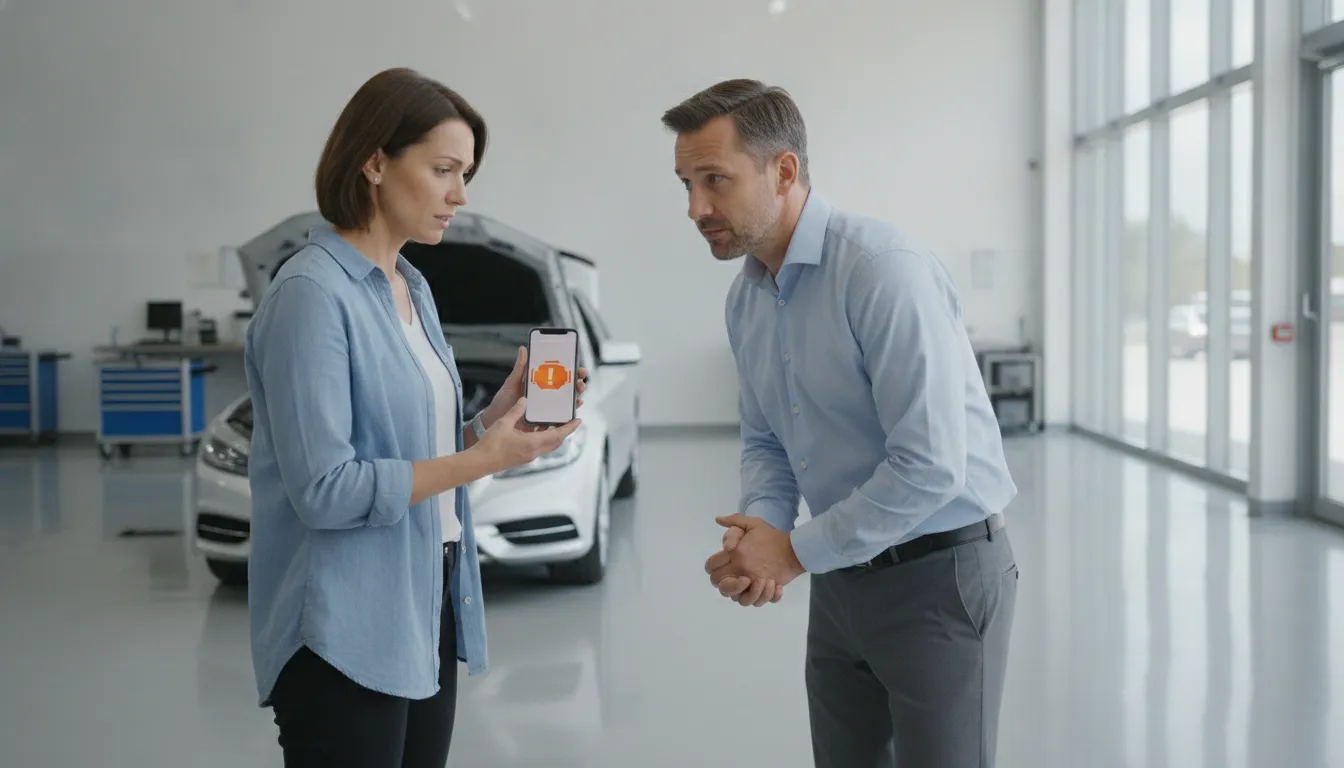
Your car jerks, stalls, loses power, flashes a warning light, or makes a troubling sound. Yet when you bring it to the dealership, the repair order says “could not duplicate” or “no problem found.” That result can be frustrating. But it does not mean the defect is imaginary or that you should stop seeking warranty repairs.
When a dealership cannot duplicate a problem, lemon law questions often turn on the written record. A clear record can show when the defect occurs, how it affects the vehicle, and how often you gave the manufacturer a chance to address it. The steps below can help you preserve useful evidence while the vehicle remains under the manufacturer’s warranty.
A consumer may have a lemon after a reasonable number of repair attempts or after a reasonable amount of time out of service or at the repair shop. The rules and available remedies depend on the state, the warranty, the defect, and the facts of the case.
A “could not duplicate” result does not erase the fact that you reported the defect and presented the vehicle for warranty service. The repair order may become important evidence of the complaint, the date, the mileage, and the dealership’s response. Whether the visit qualifies as a repair attempt under a specific law requires a fact-based legal review.
A service advisor may understand your complaint during a conversation but shorten it to “check vehicle” on the repair order. That vague entry does not show what happened. Ask the advisor to record the symptoms, when they occur, and any safety concern in plain language. Review the repair order before leaving the vehicle.
When you pick up the car, get the final repair order even if no part was replaced. The final document should show the work performed or not performed, the dealership’s findings, the mileage, and the time the vehicle was in the shop. Keep the original or a clear digital copy.
Intermittent defects may depend on heat, rain, speed, battery charge, a cold start, or another condition that was absent during a short test drive. A dealership may truthfully be unable to reproduce the issue on one visit. Your goal is to build a consistent record and give the authorized repair facility useful facts that may help it reproduce the concern later.
Do not accept a blank invoice or rely only on a verbal promise that the complaint is “in the system.” Ask for a dated repair order every time. If the wording is inaccurate, politely request a correction before you leave.
Strong documentation helps turn a brief, hard-to-repeat event into a clear pattern. You do not need to diagnose the vehicle. Record what you can directly observe, then let qualified technicians determine the cause.
Specific facts are more useful than labels. Instead of writing “bad transmission,” note that the engine speed rose but the car did not speed up while merging. Instead of “electrical issue,” state which screens went dark, which warning appeared, and how long the event lasted.
Use the same clear description when scheduling the visit and when speaking with the service advisor. Consistency makes it easier to compare repair orders and show that the same concern returned.
Keep the original photo or video file with its date and time information. Back it up somewhere other than the phone. Do not edit a clip in a way that removes context. A short written note explaining where and when it was captured can make the file easier to understand later.
A repair order is more than a receipt. It can show that you notified an authorized repair facility of a defect and gave it an opportunity to inspect or repair the vehicle. Read each document as carefully as you would read a bill.
Ask the service advisor to include your own description of the concern. Useful details include the warning message, noise, vibration, loss of function, frequency, and the conditions that trigger it. If a problem affects safety or makes the vehicle hard to use, ask that this concern be recorded accurately.
Avoid signing an intake form that describes a different issue. If the advisor writes “customer requests inspection” when you reported repeated stalling, ask for a more accurate entry. Remain calm and focused on creating a truthful record.
The final order should state what tests the dealership performed, what it observed, any diagnostic codes. And whether repairs were made. “Cannot duplicate” should not be the only useful detail when the shop also drove the car, scanned it for codes, or contacted the manufacturer.
Check the drop-off and pickup dates, mileage in and out, and any listed days out of service. If the dates or mileage are wrong, request a corrected copy. Keep related rental-car and towing papers with the order.
Arrange repair orders in date order and keep a simple summary. List the date, mileage, complaint, result, and days in the shop. This timeline can help an attorney review the history without guessing which papers relate to the same defect.
For a broader review of common eligibility issues, see the firm’s lemon law qualifications guide.
You are not required to solve the technical issue yourself. Still, clear and safe observations can help technicians recreate the conditions in which it occurs. Share the evidence without telling the technician which part must be replaced.
If the issue happens only after a cold start, ask about leaving the vehicle overnight. If it appears after a long drive, explain how long you usually drive before it begins. Tell the advisor whether temperature, rain, speed, turning, braking, fuel level, or battery charge seems connected.
Consider scheduling the appointment near the time the issue usually happens. Bring a written list of the conditions and a copy of any safe photo or video. Keep the original files for your records.
A ride-along with a technician or service advisor may help when the problem follows a certain route or action. Follow all traffic laws and do not try to force a dangerous event. If the vehicle is unsafe to drive, ask about towing instead.
After the ride-along, ask the dealership to note what occurred on the repair order.
A manufacturer breach of warranty or lemon law claim is easier to review when the records show a consistent story. The comparison below highlights practical differences between a useful record and one that leaves key facts uncertain.
| Issue | Stronger record | Weaker record |
|---|---|---|
| Defect description | Specific symptoms, conditions, and effect on the vehicle | “Car has issues” or another vague phrase |
| Repair visits | Dated final repair order from every visit | Verbal conversations with no paperwork |
| Intermittent event | Safe photo or video plus a dated written log | An edited clip with no date or context |
| Shop result | Tests, findings, codes, and result listed | Only “cannot duplicate” with no details |
| Communication | Saved emails, texts, and manufacturer case numbers | Memory of calls with no notes |
| Time out of service | Drop-off and pickup dates supported by records | An estimate made months later |
A large file of repeated screenshots is less useful than a short, organized record that shows what happened and when. Keep your documents complete and truthful. Do not exaggerate the symptoms or change a record after the fact.
A well-organized file can also help you explain your concerns to the manufacturer or an attorney. It does not guarantee that a claim qualifies, but it allows the facts to be reviewed more efficiently.
If the defect keeps returning, continue to report it promptly while the manufacturer’s warranty applies. Do not wait for a serious event if warning signs are already present. Repeated written notice may be important even when the dealership has not identified the cause.
Ask to speak with the service manager and summarize the history in a short email. Attach or list the prior repair orders. Ask what the dealership recommends for reproducing and diagnosing the concern, and save the response.
You may also open a case with the vehicle manufacturer. Save the case number and note the date, representative, and next step. The legal claim generally concerns the manufacturer’s warranty obligations, not a fraud claim against the dealer.
Lemon law requirements are not identical across states. The type of vehicle, warranty period, timing of the defect, repair history, and days out of service may all affect the analysis. Do not assume a rule from another state applies to your vehicle.
A consumer may have a lemon after a reasonable number of repair attempts or after a reasonable amount of time out of service or at the repair shop. A cannot-duplicate notation can be part of that history. But whether a visit counts under a certain law depends on the full facts and the law in that state.
Keep presenting the same recurring defect accurately. A lawyer can review whether the records show a qualifying defect or nonconformity and whether a reasonable opportunity has been given for the manufacturer to address the warranty problem.
Consider speaking with a lemon law attorney when the same issue continues after 2 or 2 repair visits, the car spends more time at the dealership than is reasonable, or the manufacturer does not provide a workable next step. You can also review the firm’s guide on how consumers may pursue a claim against a car manufacturer.
Kahn & Associates, L.L.C. represents consumers with lemon law or manufacturer-warranty claims in Ohio, Florida, Michigan, North Carolina, and Pennsylvania. The firm handles used vehicles only when they are still under the manufacturer’s warranty. It does not handle claims against car dealers for fraud or related sales practices.
No. The notation means the dealership says it did not reproduce the concern during that visit. Eligibility depends on the defect or nonconformity, the warranty, repair history, time out of service, state law, and other facts. Keep the repair order and continue documenting the recurring issue.
No. Ask the service advisor to correct it before you leave. The order should accurately state the symptoms you reported and the conditions in which they occur. Keep the final invoice even when no repair was made.
A video may help show what happened, but it is only one part of the record. Keep the original file and pair it with a dated log and repair orders.
Ask for a repair order showing that you presented the concern and what the dealership advised. If the problem returns, report it promptly.
Yes and No. Most state lemon laws typically exclude used vehicles. However, the federal lemon law provides for coverage for vehicles that have had repairs made under a manufacturer’s warranty or a manufacturers extended warranty. A free case review can help determine which laws may apply.
A recurring defect should not disappear from the written history merely because it did not occur during a short dealership visit. Preserve every repair order, keep a clear defect log, and request a review before more time passes under the manufacturer’s warranty.
Request a free lemon law consultation with Kahn & Associates, L.L.C. The firm can review your records and explain possible next steps for a lemon law or breach of warranty claim.
*Disclaimer: The information contained in this Website is provided for informational purposes only, and should not be construed as offering legal advice, or creating an attorney client relationship between the reader and the author. While we aim for accuracy, the law is constantly changing and we make no guarantees regarding the completeness or timeliness of the information. You should not act or refrain from acting on the basis of any content included in this Website without seeking appropriate legal advice about your individual facts and circumstances from an attorney licensed in your state.
To see if you qualify, fill out the form below or call us at 1-888-536-6671 – No Office Visit Needed!

I had a great experience with Kahn & Associates! They made the process of dealing with an extremely frustrating lemon situation painless. They have very quick response times and everyone I dealt with was very friendly and helpful. Would definitely recommend!
Kahn and Associates did an awesome job with our lemon law case! We were getting nowhere with VW Customer Service and decided to hire an attorney who specialized with lemon law cases. We couldn’t be happier with the outcome. We were able to get a full refund on our lemon VW Atlas.
What a great experience! I was on the fence about hiring an attorney for my ongoing automotive issues and continued frustration with the manufacturer. It was a very simple process and I am very grateful Kahn and Associates for helping get me a settlement!
Real Honest attorneys!!! They are the real deal! I went back and forth with them and they explained to me every step and my rights under the law! I give them 5 stars because I won!!! Yes and my check is coming to me much sooner than I thought! I was stuck ! I own a brand new car and the dealer was giving me a hard time !

This page has been written, edited, and reviewed by a team of legal writers following our comprehensive editorial guidelines. This page was approved by Attorney Craig A. Kahn, who has more than 20 years of legal experience in lemon law.
A vehicle that spends more time at the dealership than is reasonable is a big costly burden. The North Caro...
If you bought or leased a new car in Ohio and it keeps breaking down despite multiple repair attempts, you ...
Mazda Lemon Law: CX-5, CX-9, Mazda3, and Mazda6 Defect Claims If your Mazda has been back to the dealershi...

Stuck with a defective car in Ohio? State Lemon Laws protect you. Get a refund, replacement, or cash settlement. Learn your rights today!

Florida Lemon Laws cover new and used vehicles. If your car’s a lemon, you deserve compensation. Let us help you fight for justice!

Michigan’s Lemon Law protects you from faulty vehicles. Don’t settle for endless repairs—claim your refund or replacement now.

North Carolina Lemon Laws ensure defective vehicles are replaced or refunded. Know your rights and take action today!

Pennsylvania Lemon Law covers new cars with repeated issues. Get the compensation you deserve. Click to learn more!
To see if you qualify, fill out the form below or call us at 1-888-536-6671 – No Office Visit Needed!

The Truth About Attorney’s Fees in Lemon Law Cases Learn more
*Disclaimer: The information contained in this Website is provided for informational purposes only, and should not be construed as offering legal advice, or creating an attorney client relationship between the reader and the author. While we aim for accuracy, the law is constantly changing and we make no guarantees regarding the completeness or timeliness of the information. You should not act or refrain from acting on the basis of any content included in this Website without seeking appropriate legal advice about your individual facts and circumstances from an attorney licensed in your state.

 Message Us
  Call Us