
Have A Case? Call Us
1 888-536-6671
60 Second Lemon Law Assessment™
60 Second Lemon Law Assessment™
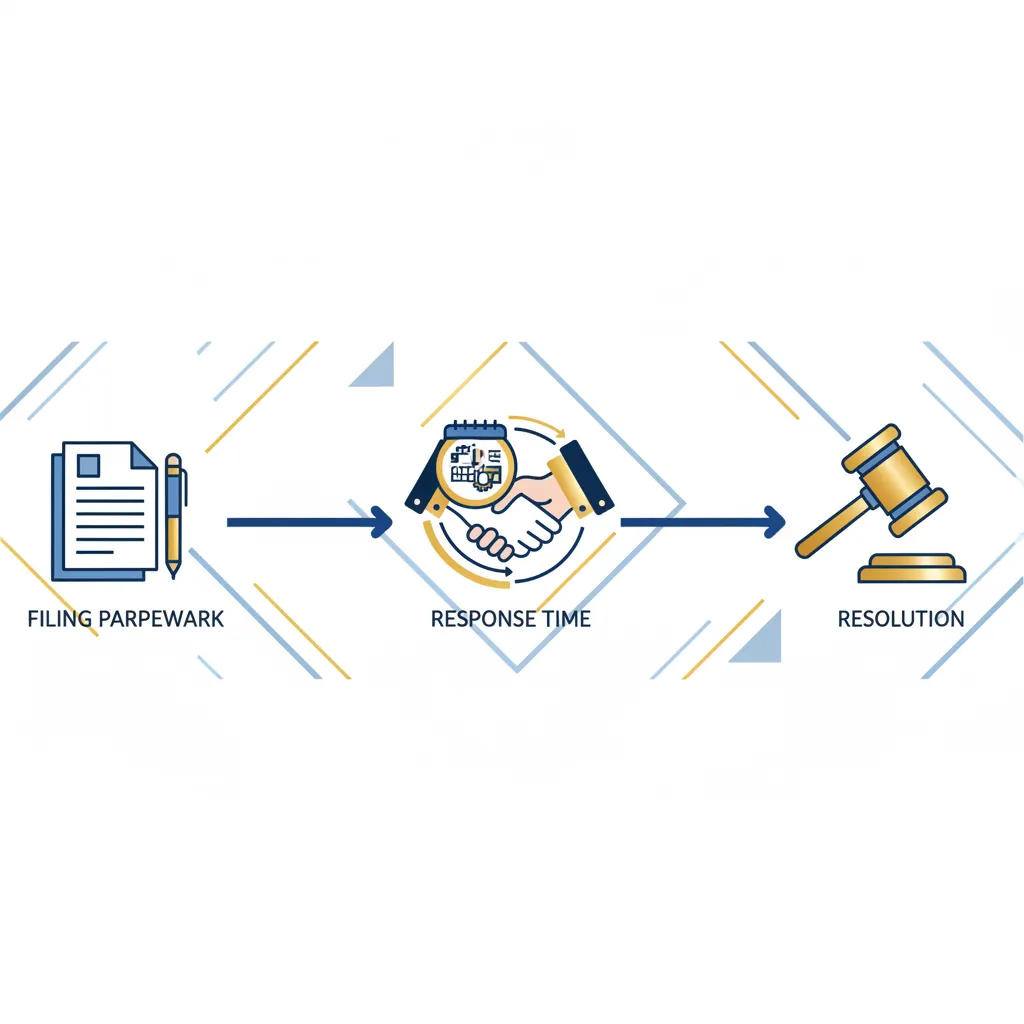
(NOTE: The timeframes contained herein are not guarantees and are subject to change at any time.)
You have a lemon law claim. Now what? For most vehicle owners dealing with a persistent defect, the uncertainty of what comes next is almost as frustrating as the car trouble itself. Understanding the lemon law claim process timeline removes that uncertainty and helps you make informed decisions at every stage.
At Kahn & Associates, we have guided more than 13,000 consumers through this exact process since 1996, recovering over $65 million along the way as of the date of this article. The good news: straightforward lemon law cases typically resolve relatively quickly and most clients never see the inside of a courtroom.
This guide walks you through every phase of the lemon law claim process, including realistic timeframes, what to expect from the manufacturer, and the decision points where an experienced attorney makes the biggest difference.
| Stage | Typical Timeframe | What Happens |
|---|---|---|
| Claim review and documentation | 1 to 2 weeks | We review your records and build the case file |
| Demand letter to manufacturer | 1 to 2 weeks | Formal written notice sent outlining defects and legal basis |
| Manufacturer response window | 2 weeks – 4 months | Manufacturer reviews the claim and responds |
| Negotiation and settlement (or denial) | 2 to 6 weeks | Your attorney negotiates a buyback, replacement, or cash settlement |
| Informal Arbitration (if needed) | 45 to 60 days | An independent arbitrator hears both sides and issues a decision |
| Litigation (minority of cases) | 6 to 18 months | If you file a lawsuit because manufacturer refuses fair resolution (may require new litigation counsel) |
Most cases with strong documentation resolve during the negotiation phase, meaning you could have a check or a new vehicle in hand within a handful of months of filing your claim.
Once you start your lemon law claim, the first step is a thorough review of your documentation. Your attorney examines your case file to confirm it meets the legal threshold under your state’s lemon law or the federal Magnuson-Moss Warranty Act.
This review stage is critical because it determines the legal strategy for your claim. In states like Ohio, the lemon law requires that a substantial defect be reported within the first 12 months or 18,000 miles. The federal warranty act can extend protections beyond those state-specific windows.
What you should do during this stage: Gather every document related to your vehicle’s problems. The more complete your records, the faster this phase moves and the stronger your case will be.
With your case file assembled, your attorney sends a formal demand letter to the vehicle manufacturer. This letter is not a casual request, nor is it the same a filing a lawsuit in court. It is a legal letter that puts the manufacturer on notice that you are pursuing a lemon law claim.
Many states require written notice to the manufacturer before you can pursue further legal action. Even in states where notice is not technically required, sending a demand letter strengthens your case and elicits a manufacturer’s response.
After receiving the demand letter, the manufacturer enters a response window. This is where the process can vary significantly depending on the manufacturer and the complexity of your claim and may involve some back and forth until the file is complete.
Once the file is complete, manufacturers generally respond in one of four ways:
The manufacturer’s response time varies. Some respond within weeks, others drag their feet for longer. An experienced lemon law attorney knows how to keep the process moving and prevent unnecessary delays.
The negotiation phase is where most lemon law claims are resolved. Manufacturers have strong financial incentives to settle rather than face arbitration or a courtroom. With very high settlement rate, Kahn & Associates resolves the vast majority of cases right here.
Under both state lemon laws and the federal Magnuson-Moss Warranty Act, the manufacturer may be required to pay your attorney fees if the claim is successful. This is why Kahn & Associates operates on a no-recovery, no-fee basis: you pay nothing unless we win.
Ready to find out what your case is worth? Take our free 60-Second Lemon Law Assessment™ or call 1-888-536-6671.
If negotiations do not produce a fair result, the next step is may be informal arbitration. Some states require arbitration before a lawsuit can be filed, while others make it optional. Either way, arbitration is faster, less formal, and less expensive than going to court.
Informal arbitration decisions typically only include buyback or replacement under the state lemon law, but not cash settlements. In most states, if you disagree with the arbitration decision, you still have the right to file a lawsuit.
| Factor | Arbitration | Litigation |
|---|---|---|
| Typical timeline | 45 to 60 days | 6 to 18 months |
| Cost to consumer | Usually free | Depends on law firm. Attorney fees typically paid by manufacturer if you win. Costs may be handled separately. |
| Formality | Less formal, no courtroom, no appearance may be necessary | Formal court proceedings with multiple hearings, possible mediation and depositions, etc. |
| Decision binding? | Varies by state, typically not binding on the consumer | Yes, once appellate options exhausted |
| Best for | Clear-cut defect cases under state lemon law | Complex cases or denied claims |
Your attorney will recommend the best path based on the specifics of your case, the manufacturer’s behavior during negotiations, and the strength of your evidence.
Litigation is the final option when the manufacturer refuses to offer a fair resolution through negotiation or arbitration. While it takes longer, it may be necessary for complex cases or when a manufacturer acts in bad faith. Whether litigation is pursued — and by whom — depends on the specifics of your case and the scope of your attorney’s engagement. This section explains what the litigation process looks like if it you should file suit.
Under the Magnuson-Moss Warranty Act and most state lemon laws, the manufacturer may have to pay your attorney fees and court costs if you prevail. This is why lemon law attorneys like Kahn & Associates can offer representation at no upfront or out-of-pocket cost. Learn more about how to sue a car company if your case reaches this stage.
No two lemon law cases follow the exact same timeline. Several factors can speed up or slow down the process:
While your attorney handles the process, there are steps you can take to support your case and protect your interests:
Lemon law timelines vary by state because each state has its own qualification criteria, notice requirements, and dispute resolution processes. Here is how the process differs across the states where Kahn & Associates practices:
If your vehicle does not qualify under your state’s specific lemon law, you may still have a claim under the federal Magnuson-Moss Warranty Act, which covers both new and used vehicles with a manufacturer warranty. Learn more about lemon law requirements to see if your vehicle qualifies.
The process can take approximately 60-120 days from demand to resolution, though complex cases and certain manufacturers and other factors may make it take longer. If the case does not settle pre-suit and you have to file a lawsuit, the court process may take six months to a year or more depending on the court.
No. Most lemon law attorneys work on a contingency basis, meaning they are only paid if you win or settle. Additionally, state and federal lemon laws provide a mechanism for manufacturers to pay your attorney fees and costs when a case is won or settled. If your case is not successful at our firm, you owe nothing.
Yes. You can continue using your vehicle during the claims process, but the more miles you put on the vehicle the stronger the manufacturer’s defense that the defect is not subtantial. However, if the defect poses a safety risk, discuss this with your attorney. Do not trade in or sell the vehicle while the claim is active.
If the manufacturer fails to respond or refuses to negotiate in good faith, your attorney can advise on options. Manufacturer delays and bad-faith behavior can actually strengthen your legal position and may result in additional damages being awarded in some states.
State lemon laws typically cover new vehicles. However, used vehicles that are still under the original manufacturer warranty or a certified pre-owned warranty may qualify under the federal Magnuson-Moss Warranty Act. The key factor is whether the vehicle was under a manufacturer warranty when the defect was first reported.
Recurring repairs for the same defect are exactly what lemon laws are designed to address. If your vehicle has been in the shop three or more times for the same issue, or has been out of service for 30 or more cumulative days, you likely qualify for lemon law protection. Read our guide on how the lemon law works for a complete breakdown of the qualification criteria.
Manufacturers have legal teams whose job is to minimize payouts. They know the deadlines, the documentation gaps to exploit, and the settlement offers most consumers will accept without question. An experienced lemon law attorney levels the playing field.
Craig A. Kahn founded Kahn & Associates in 1996 with a singular focus: lemon law. In nearly three decades, the firm has built a track record that includes (as of the date of this article):
When you work with Kahn & Associates, you get an attorney who has seen every manufacturer tactic and knows exactly how to counter them. Every case can be handled remotely, so you never need to visit an office regardless of where you live in Ohio, Florida, Michigan, North Carolina, or Pennsylvania.
If you have a potential lemon law claim or are considering your options, the most important thing you can do is get experienced legal guidance. The sooner an attorney reviews your case, the faster the process moves.
Take our free 60-Second Lemon Law Assessment™ to find out if your vehicle qualifies. Or call 1-888-536-6671 to speak with our team today. There is no fee unless we win your case.
*Disclaimer: The information contained in this Website is provided for informational purposes only, and should not be construed as offering legal advice, or creating an attorney client relationship between the reader and the author. While we aim for accuracy, the law is constantly changing and we make no guarantees regarding the completeness or timeliness of the information. You should not act or refrain from acting on the basis of any content included in this Website without seeking appropriate legal advice about your individual facts and circumstances from an attorney licensed in your state.
To see if you qualify, fill out the form below or call us at 1-888-536-6671 – No Office Visit Needed!

I had a great experience with Kahn & Associates! They made the process of dealing with an extremely frustrating lemon situation painless. They have very quick response times and everyone I dealt with was very friendly and helpful. Would definitely recommend!
Kahn and Associates did an awesome job with our lemon law case! We were getting nowhere with VW Customer Service and decided to hire an attorney who specialized with lemon law cases. We couldn’t be happier with the outcome. We were able to get a full refund on our lemon VW Atlas.
What a great experience! I was on the fence about hiring an attorney for my ongoing automotive issues and continued frustration with the manufacturer. It was a very simple process and I am very grateful Kahn and Associates for helping get me a settlement!
Real Honest attorneys!!! They are the real deal! I went back and forth with them and they explained to me every step and my rights under the law! I give them 5 stars because I won!!! Yes and my check is coming to me much sooner than I thought! I was stuck ! I own a brand new car and the dealer was giving me a hard time !

This page has been written, edited, and reviewed by a team of legal writers following our comprehensive editorial guidelines. This page was approved by Attorney Craig A. Kahn, who has more than 20 years of legal experience in lemon law.
It’s a sinking feeling: your new car is already having problems the dealership can’t seem to fi...
A missing repair date can weaken an otherwise well-documented warranty claim. A clear day-by-day record sho...
A vehicle that remains in the repair shop for an extended period often qualifies as a lemon under Florida l...

Stuck with a defective car in Ohio? State Lemon Laws protect you. Get a refund, replacement, or cash settlement. Learn your rights today!

Florida Lemon Laws cover new and used vehicles. If your car’s a lemon, you deserve compensation. Let us help you fight for justice!

Michigan’s Lemon Law protects you from faulty vehicles. Don’t settle for endless repairs—claim your refund or replacement now.

North Carolina Lemon Laws ensure defective vehicles are replaced or refunded. Know your rights and take action today!

Pennsylvania Lemon Law covers new cars with repeated issues. Get the compensation you deserve. Click to learn more!
To see if you qualify, fill out the form below or call us at 1-888-536-6671 – No Office Visit Needed!

The Truth About Attorney’s Fees in Lemon Law Cases Learn more
*Disclaimer: The information contained in this Website is provided for informational purposes only, and should not be construed as offering legal advice, or creating an attorney client relationship between the reader and the author. While we aim for accuracy, the law is constantly changing and we make no guarantees regarding the completeness or timeliness of the information. You should not act or refrain from acting on the basis of any content included in this Website without seeking appropriate legal advice about your individual facts and circumstances from an attorney licensed in your state.

 Message Us
  Call Us