
Have A Case? Call Us
1 888-536-6671
60 Second Lemon Law Assessment™
60 Second Lemon Law Assessment™
by Kahn & Associates - May 27th, 2026
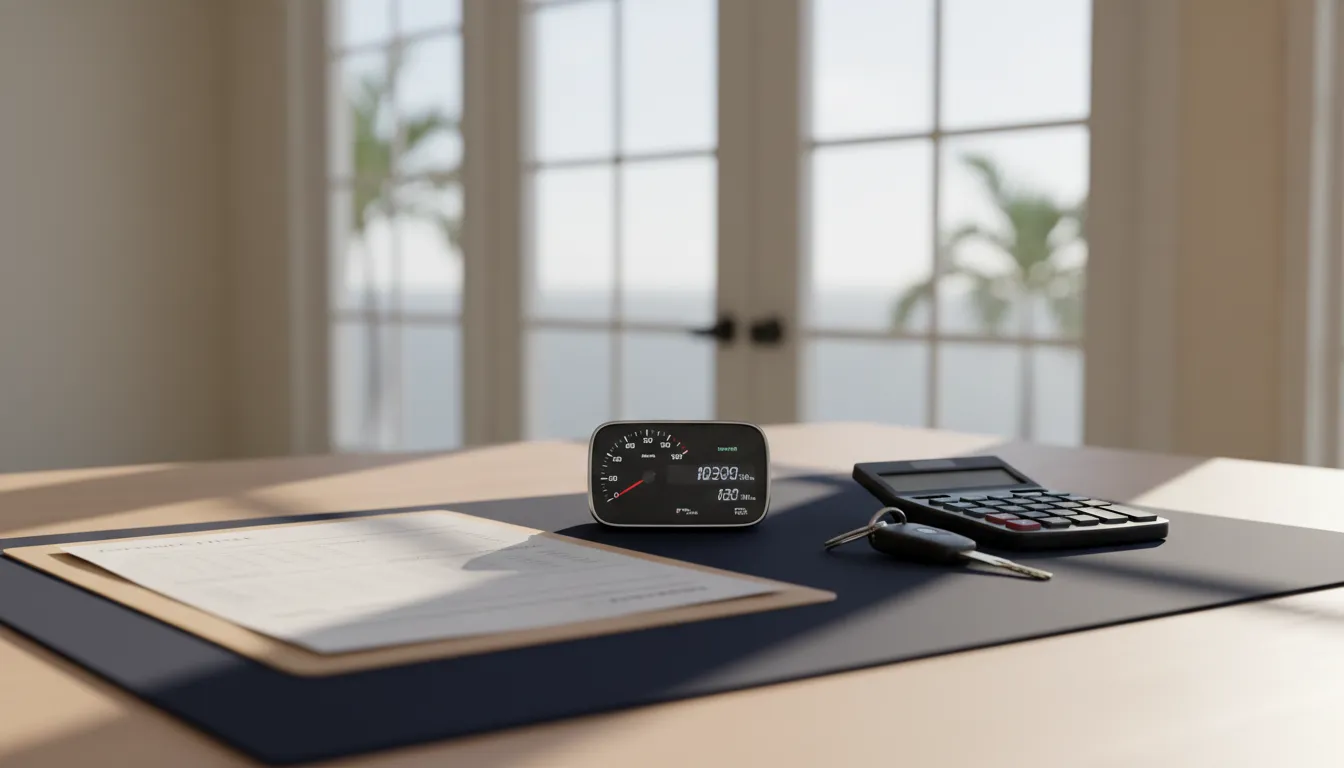
Every mile you drive in a defective vehicle can affect your Florida lemon law buyback calculation. While you are stuck waiting for repairs, commuting, or driving a vehicle that should have been fixed, those miles add up. At Kahn & Associates, we help Florida consumers understand how mileage offsets work so they know what to expect when pursuing a refund or replacement.
Need help reviewing your Florida lemon law mileage offset? At Kahn & Associates, we bring more than 29 years of experience, a 97% win rate including cases filed in court, and more than $65 million recovered and counting. Call 1 866-359-1940 or request your free case review; there are no out-of-pocket fees or costs to you, win or lose.
Think your vehicle’s mileage could reduce your buyback amount? Take our 60-Second Lemon Law Assessment to find out if you qualify — no office visit needed.
The Florida lemon law mileage offset is a use charge that may apply when a covered vehicle qualifies for repurchase or replacement. If the manufacturer owes you a refund or replacement, this charge can reduce the remedy amount. Florida law provides for a refund or replacement when a vehicle remains out of warranty conformity after a reasonable number of repair attempts or a reasonable amount of time out of service.
Eligibility depends on the vehicle, warranty, repair history, and the specific claim steps required. For a broader overview, read our guide on Florida Lemon Law rights and claims.
A remedy calculation only comes after the legal questions about coverage and conformity are resolved. You may have a serious repair problem without receiving a statutory remedy. The mileage offset is not an eligibility test and it is not an offer from the manufacturer — it is simply a calculation that applies once a remedy is owed.
The key question is when Florida counts your mileage. Under our state’s framework, the mileage used in the offset calculation runs through a settlement agreement or an arbitration hearing, whichever occurs first.
This point is widely misunderstood. Florida does not cut off the mileage count at the first repair visit. Early repair records remain important — they show when a defect first appeared and what repair efforts followed — but they do not freeze the mileage calculation. The settlement or hearing date is the real cutoff.
In plain terms, more miles you drive before the cutoff can increase the offset or charge. The calculation uses mileage attributable to you as the consumer, not every mile on the odometer. For example, qualifying service-agent test drive mileage can be excluded from the calculation.
The offset is only one part of the remedy analysis. It is not a guaranteed refund, replacement, or recovery. Keep your repair orders, warranty papers, mileage records, and manufacturer notices together for review. A dated copy is easier to compare with later readings. When reviewing mileage, preserve documents that show who put miles on the vehicle — service paperwork may note test drives or odometer readings. Clear records help separate your personal mileage from other recorded use when a remedy is calculated.
A Florida lemon law mileage offset is a use deduction calculated with a set formula. It does not stop when the vehicle is first repaired or when a defect is first reported. Under Florida’s remedy calculation framework, mileage runs through a settlement agreement or an arbitration hearing, whichever occurs first.
Formula: Base selling or sale price × Consumer-attributable mileage ÷ Applicable divisor = Reasonable offset for use
The formula starts with the base selling or sale price shown on your purchase invoice. This base price excludes taxes, government fees, and dealer fees. It is then multiplied by your consumer-attributable mileage and divided by the divisor for the vehicle type.
Consumer-attributable mileage is not always the current odometer reading. Begin with mileage through settlement or the arbitration hearing, whichever happens first. Then subtract:
– Mileage at delivery
– Documented miles not caused by your use
Non-consumer miles can include test drives by an authorized service agent during repairs for the claimed issue. They can also include test drives by the New Motor Vehicle Arbitration Board at a hearing. Keep repair orders and mileage notes so these entries can be verified.
This timing point matters — Florida’s framework uses the settlement or hearing milestone, not mileage at the first repair attempt. For broader eligibility and claims context, read our guide on how mileage offset affects your claim.
| Comparison Item | Non-Recreational Vehicle | Recreational Vehicle |
|---|---|---|
| Illustrative base sale price | $30,000 | $30,000 |
| Illustrative consumer-attributable mileage | 12,000 miles | 12,000 miles |
| Formula divisor | 120,000 | 60,000 |
| Illustrative offset calculation | $30,000 × 12,000 ÷ 120,000 | $30,000 × 12,000 ÷ 60,000 |
| Illustrative offset result | $3,000 | $6,000 |
The divisor is 120,000 for a non-recreational vehicle and 60,000 for a recreational vehicle. This sample shows how the divisor changes the arithmetic — it does not decide whether your vehicle qualifies or what you may ultimately receive.
A Florida lemon law mileage offset can change while a claim remains open. Our state’s remedy calculation counts mileage attributable to the consumer through a set cutoff — a settlement agreement or arbitration hearing, whichever occurs first. In plain terms, miles added before that point may enter the use deduction.
This is important because the cutoff is not the first repair visit. Repair dates still help show the vehicle’s history and reported problems. But the potential deduction may continue to change while you still need to drive the vehicle. Our overview of how mileage offset affects your claim provides context for a Florida case review.
Florida law describes procedures for a replacement or refund when a vehicle cannot be brought into warranty conformity. Entitlement and the remedy amount depend on the facts of each matter. More consumer-attributed miles before the cutoff can produce a larger deduction.
For that reason, an estimate prepared early in a dispute may not match a later calculation. If you must keep driving, preserve updated odometer records. We can then review the timing, vehicle type, purchase figures, and claimed mileage before discussing possible remedies.
Not every mile on the odometer is necessarily consumer mileage. The calculation framework directs us to subtract mileage at delivery and other non-consumer mileage, including service-agent test drives during repair for the claimed problem and test drives by the Arbitration Board during a state-run hearing.
Any request to exclude miles should be supported by records, not estimates. Useful materials include repair orders with in-and-out mileage, tow papers, dated odometer photos, and hearing records. These documents help separate documented service travel from ordinary driving and explain why a final deduction may differ from an earlier projection.
Keep a single paper or digital file starting from the day you take delivery. Records help show what went wrong, when you reported it, and how long repairs took. They also help track miles used in a Florida lemon law mileage offset review.
Start this checklist as soon as the vehicle has a warranty problem. Keep original files if you have them, and scan clear copies.
Early service papers do more than record mileage. They can show that the same concern was reported, inspected, or repaired more than once. This history helps us assess the defect timeline without relying only on memory.
A complete file does not guarantee that your vehicle qualifies or that a remedy will result. But it lets us assess the facts and possible offset with fewer gaps. For next steps, review our Florida lemon law repurchase remedy details.
Many owners start with the odometer reading from the first repair visit. That is not the correct reference point. Florida uses mileage attributable to the consumer through a settlement agreement or arbitration hearing, whichever occurs first.
That date difference can change an estimate because use may continue while a dispute is pending. Keep current odometer photos, repair orders, and any settlement or hearing notice together. A simple timeline can show which miles were driven, by whom, and before which key date.
Another common error is treating every added mile as consumer use. Florida’s calculation subtracts delivery mileage and other non-consumer mileage before applying the offset formula — including test drives by an authorized service agent during repairs and test drives during a state-run arbitration hearing.
Document those miles as they occur. Ask that repair orders show the incoming and outgoing odometer readings. Save service invoices, dealer messages, and inspection records that explain added mileage.
We can review your submitted records remotely through our 60-Second Lemon Law Assessment. Share your odometer photo, contract, warranty, and full repair file. A review can clarify your next step; it cannot promise recovery.
What is the Florida lemon law mileage offset?
Under Florida’s Lemon Law, a mileage offset is a reasonable use deduction applied when a consumer receives a refund or replacement remedy. It reflects consumer mileage through a settlement agreement or arbitration hearing, whichever occurs first, and reduces a refund or is paid for a replacement vehicle.
How is the mileage offset calculated in Florida?
Florida calculates the offset by multiplying the base sale price (or applicable lease value) by consumer-attributable mileage and dividing by 120,000 for a non-recreational vehicle. Mileage runs through settlement or arbitration hearing, whichever occurs first. Miles at delivery and qualifying non-consumer miles — such as specified repair test drives — are subtracted.
Does my mileage offset increase after I report a defect?
Yes. Reporting a defect does not freeze the mileage figure at the first repair visit. Consumer mileage is counted through settlement or arbitration hearing, whichever occurs first. Keep repair orders to document defect history and odometer records to support the mileage calculation.
Is the mileage offset different for RVs in Florida?
Yes. The divisor for a recreational vehicle is 60,000 instead of 120,000. Because the divisor is smaller, the same base price and consumer mileage can produce a larger offset. Coverage and any remedy still depend on the specific facts of your case.
Waiting can leave you sorting through more paperwork while key questions about mileage, repair timing, and possible refund deductions remain unresolved. Starting a careful record review now can help you identify missing documents and organize key dates before details become harder to track.
Ready to request a clear review of your situation? Gather your repair orders, mileage records, purchase or lease paperwork, and communications with the dealer or manufacturer. Request your free case review to discuss your complete records with us and learn which next steps may fit your circumstances.
Disclaimer: The information contained in this Website is provided for informational purposes only and should not be construed as offering legal advice or creating an attorney-client relationship between the reader and the author. While we aim for accuracy, the law is constantly changing and we make no guarantees regarding the completeness or timeliness of the information. You should not act or refrain from acting on the basis of any content included in this Website without seeking appropriate legal advice about your individual facts and circumstances from an attorney licensed in your state.
*Disclaimer: The information contained in this Website is provided for informational purposes only, and should not be construed as offering legal advice, or creating an attorney client relationship between the reader and the author. While we aim for accuracy, the law is constantly changing and we make no guarantees regarding the completeness or timeliness of the information. You should not act or refrain from acting on the basis of any content included in this Website without seeking appropriate legal advice about your individual facts and circumstances from an attorney licensed in your state.
To see if you qualify, fill out the form below or call us at 1-888-536-6671 – No Office Visit Needed!

I had a great experience with Kahn & Associates! They made the process of dealing with an extremely frustrating lemon situation painless. They have very quick response times and everyone I dealt with was very friendly and helpful. Would definitely recommend!
Kahn and Associates did an awesome job with our lemon law case! We were getting nowhere with VW Customer Service and decided to hire an attorney who specialized with lemon law cases. We couldn’t be happier with the outcome. We were able to get a full refund on our lemon VW Atlas.
What a great experience! I was on the fence about hiring an attorney for my ongoing automotive issues and continued frustration with the manufacturer. It was a very simple process and I am very grateful Kahn and Associates for helping get me a settlement!
Real Honest attorneys!!! They are the real deal! I went back and forth with them and they explained to me every step and my rights under the law! I give them 5 stars because I won!!! Yes and my check is coming to me much sooner than I thought! I was stuck ! I own a brand new car and the dealer was giving me a hard time !

This page has been written, edited, and reviewed by a team of legal writers following our comprehensive editorial guidelines. This page was approved by Attorney Craig A. Kahn, who has more than 20 years of legal experience in lemon law.
Honda Lemon Law Help for Repeat Warranty Repairs The second or third repair visit is often when frustratio...
Your Kia’s 10-year/100,000-mile warranty is an excellent safety net, but it only promises repairs. What h...
Hyundai ranks among the most popular vehicle brands in the United States, with the Tucson and Sonata consis...

Stuck with a defective car in Ohio? State Lemon Laws protect you. Get a refund, replacement, or cash settlement. Learn your rights today!

Florida Lemon Laws cover new and used vehicles. If your car’s a lemon, you deserve compensation. Let us help you fight for justice!

Michigan’s Lemon Law protects you from faulty vehicles. Don’t settle for endless repairs—claim your refund or replacement now.

North Carolina Lemon Laws ensure defective vehicles are replaced or refunded. Know your rights and take action today!

Pennsylvania Lemon Law covers new cars with repeated issues. Get the compensation you deserve. Click to learn more!
To see if you qualify, fill out the form below or call us at 1-888-536-6671 – No Office Visit Needed!

The Truth About Attorney’s Fees in Lemon Law Cases Learn more
*Disclaimer: The information contained in this Website is provided for informational purposes only, and should not be construed as offering legal advice, or creating an attorney client relationship between the reader and the author. While we aim for accuracy, the law is constantly changing and we make no guarantees regarding the completeness or timeliness of the information. You should not act or refrain from acting on the basis of any content included in this Website without seeking appropriate legal advice about your individual facts and circumstances from an attorney licensed in your state.

 Message Us
  Call Us