
Have A Case? Call Us
1 888-536-6671
60 Second Lemon Law Assessment™
60 Second Lemon Law Assessment™
by Kahn & Associates - October 5th, 2026
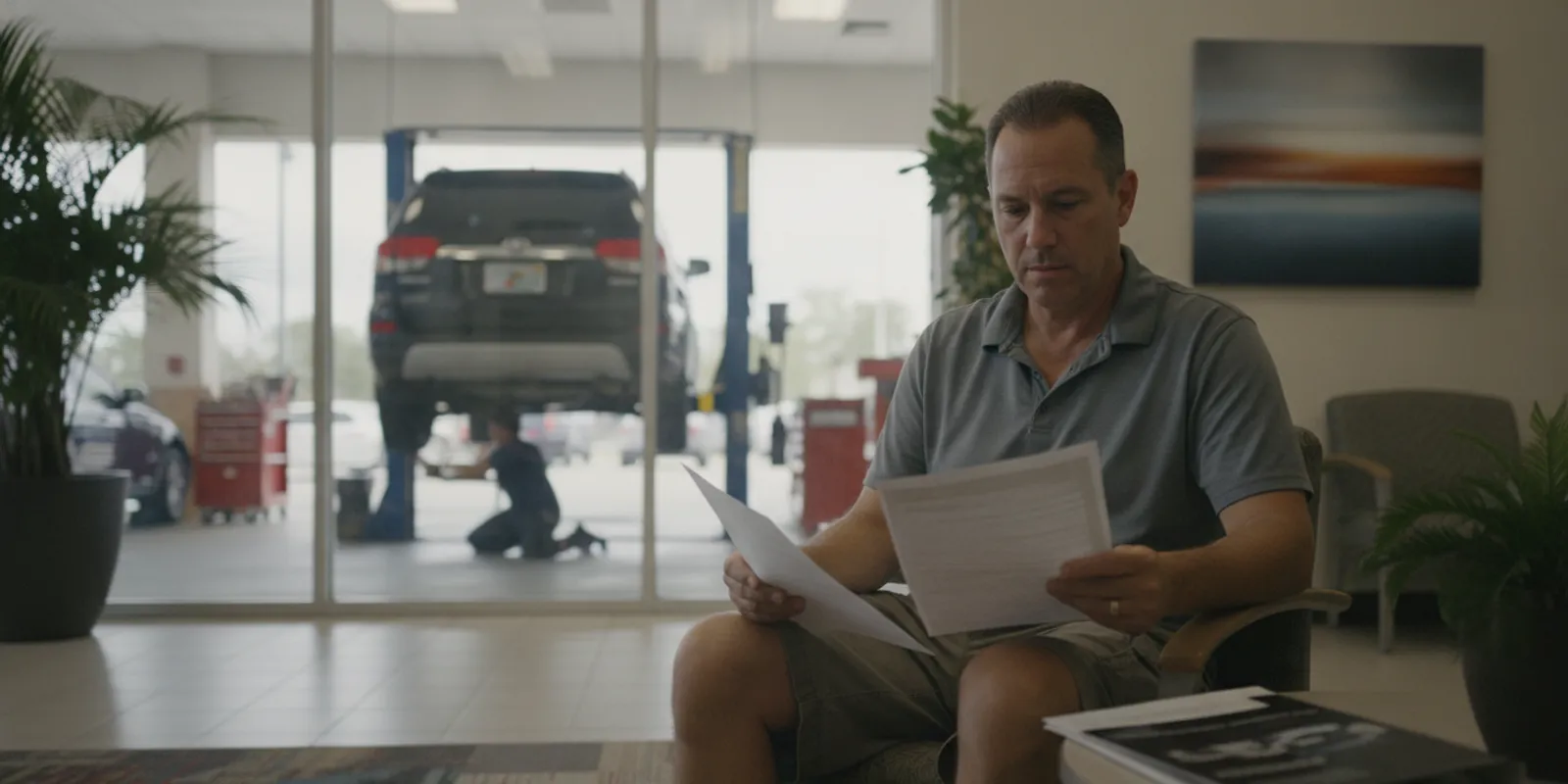
If your vehicle keeps returning to the shop for the same problem, you may be wondering whether the manufacturer gets one last chance to repair it before you can pursue a Florida lemon law claim. The short answer is that in some circumstances Florida does provide for a written notice and a final repair opportunity. The longer answer is that this step is narrower, more technical, and less decisive than most people assume.
If the same problem has sent your vehicle back twice, or it has been out of service for 21 days or more, that is the point to get the record reviewed. Request a free case review or call 1-888-536-6671. We have practiced since 1996 and, as of the beginning of 2026, have represented more than 13,000 consumers. You are not required to pay us any out-of-pocket fees or costs, win or lose.
Florida’s final repair opportunity is a step under the state’s motor vehicle lemon law. In certain circumstances a consumer must give the manufacturer written notice and an opportunity to make a final repair before filing for arbitration and a lawsuit. The purpose is to give the manufacturer a clearly communicated chance to address a problem earlier service visits did not fix. The Florida Bar’s consumer guide to the Motor Vehicle Lemon Law outlines the process.
Two points matter more than the mechanics. First, the notice is directed to the manufacturer, not to a dealer. Asking the dealership to take another look is not the same thing, and that misunderstanding is the most common reason consumers think they have completed a step they have not. Second, the specific requirements, recipient, timing, and proof of delivery are exacting enough that getting them right can be difficult.
It is also worth separating the notice step from the statutory presumption tied to number of repairs or time out of service. Florida treats those as different thresholds serving different roles, and neither number alone answers whether a vehicle qualifies. A final opportunity is one procedural checkpoint in a warranty dispute. It does not erase earlier repair attempts, make a recurring defect disappear, or by itself establish a claim..
This is where consumers get the wrong impression from most articles on the subject, including ones that treat a missed notice as fatal.
In practice, most Florida claims resolve without a lawsuit, and many manufacturers make offers without raising the notice question at all. A missed or imperfect notice is therefore not usually the thing that decides whether you recover under the lemon law. Where it becomes important is if the claim does not resolve and a lawsuit has to be filed, because that is the setting in which a manufacturer must raise a procedural defense or risk waiving it.
So the step is worth taking seriously without treating it as a trap you have already fallen into. If you have not sent notice, that is not a reason to assume your claim is eliminated. If you have sent something and are unsure whether it was adequate, that is a reason to have it looked at.
It matters when a vehicle has had repeated unsuccessful repair attempts or has accumulated substantial time in the shop. A continuing safety concern, a failure in a major system, or an intermittent problem can leave a vehicle unreliable even when a technician cannot reproduce it on every visit. The question is whether a defect covered by the warranty substantially affects the vehicle and remains unresolved after a reasonable opportunity to repair it.
Florida’s lemon law has its own eligibility rules, and the notice does not replace them. What matters includes the number and nature of repair attempts, whether the same defect was reported each time, the dates the vehicle was unavailable, the warranty status, and how the problem affected use, value, or safety.
There is also a reason not to let the process drift. Each additional month of driving adds mileage, and mileage is what a manufacturer points to when arguing that a defect never substantially impaired anything. A car that has covered another ten thousand miles since the last repair attempt is harder to describe as substantially impaired.
This article is focused on a claim against the manufacturer for a warranty issue. This is not a general remedy for every disagreement with a dealership, and it is different from a claim that a dealer misrepresented a vehicle at sale. For broader context, see our overview of Florida Lemon Law rights and our state lemon law information.
A used vehicle is not automatically in or out. Florida’s statute reaches vehicles that were new, demonstrators, or leased when first sold, and its rights period runs 24 months from that original delivery, so a previously titled car bought later in its life usually falls outside it. That is not the end of the analysis. The federal Magnuson-Moss Warranty Act is the federal version of the state lemon law. Its coverage turns on the existence of a written manufacturer warranty rather than the vehicle’s age or mileage, and it does not require the vehicle to be under warranty today so long as repairs were performed under the manufacturer’s warranty or extended warranty.
That distinction matters for this topic in particular, because the Florida notice process is part of the state statute. A claim proceeding under federal law is not governed by the same procedural step, which is one more reason to establish which law fits your vehicle before worrying about notice mechanics.
If notice has been given properly, the manufacturer may arrange a final inspection or repair opportunity within a defined period. Respond promptly to reasonable scheduling communications and make the vehicle available as directed. If a proposed location or time creates a genuine problem, document it and ask for a workable arrangement in writing. Do not assume the opportunity has lapsed because you have not heard back, and do not treat an informal conversation as proof the process was completed.
At the appointment, explain the same defect clearly: what the vehicle does, when it happens, and what conditions bring it on. Ask for the complaint to be written accurately on the repair order before leaving the vehicle. When you collect it, read the paperwork. If it says “could not duplicate” or lists only a brief symptom, ask that your full complaint and the technician’s findings be recorded.
If the problem persists afterward, keep the new repair order and note when the vehicle came back. A continuing defect can be significant. A final attempt is a procedural opportunity, not a guarantee the repair will work or that a buyback follows.
Good records show whether the same defect returned, how often the vehicle was presented, and how long it was unavailable. Keep paper and electronic copies in one place. You do not need to organize them before asking us to look.
Do not alter repair orders or discard documents that seem repetitive. A short entry such as “engine hesitation again” can be meaningful read beside earlier visits. If paperwork is inaccurate, ask the service department to correct or supplement it and keep a copy of the request. Our guide to filing a lemon law claim and our Lemon Law FAQ cover related questions.
It helps to separate a final repair opportunity from the other things that may be happening. These are related but not interchangeable.
| Situation | What it generally means | What it signals |
| Routine warranty visit | You report a defect and the authorized service facility attempts a repair under the warranty. | Nothing on its own. Keep the repair order, with dates and findings. |
| Florida final repair notice | A formal written notice to the manufacturer can trigger a final opportunity process in an eligible case. | That the claim has reached a stage worth having reviewed, since the requirements are specific. |
| Problem continues after the opportunity | The defect may remain unresolved, though eligibility still depends on the law and the full facts. | A strong point to get the record evaluated before deciding what to pursue. |
| Warranty claim denied or disputed | The manufacturer may dispute coverage, responsibility, or whether the repair is required. | Ask for the decision in writing. See our guide to options after a denied warranty claim. |
| Potential resolution | Depending on the applicable law and the claim, outcomes can include a repurchase with the loan paid off, a replacement vehicle, or cash compensation. | Compare any proposed terms carefully. Sending notice does not guarantee an outcome. |
Florida law is distinct from Ohio, Michigan, North Carolina, and Pennsylvania. If you have lived in or registered the vehicle in more than one state, explain the full history when asking for help, because which law applies is not always obvious.
The notice process can be a required step, but it does not decide a claim. A full evaluation looks at the vehicle and warranty, the nature of the defect, prior repair opportunities, time out of service, the manufacturer’s response, and whether the defect substantially affects use, value, or safety.
“Final repair” also does not mean you must accept endless visits for a defect that keeps returning. Nor does an unsuccessful visit automatically create a right to a refund. The question is whether the manufacturer received the opportunities the law requires and whether the other conditions are met.
If a claim succeeds, the outcome depends on which law applies. A Florida repurchase includes paying off the outstanding loan: the lienholder is paid directly and what you put in comes back to you, so the financing does not follow you into your next vehicle. A replacement vehicle is the other statutory remedy. Beyond those, a claim may resolve for cash, and that is usually not a preference anyone exercises. It generally follows from the claim not meeting the state statute and resolving under federal warranty law instead. If it does resolve for cash, you keep the vehicle but remain free to sell or trade it, apply the money to negative equity or a down payment, or simply keep it. For background, see the manufacturer buyback process and how lemon law settlements work.
Yes, and it is the better order of operations. A review beforehand can tell you whether you are dealing with a Florida final repair opportunity, an ordinary warranty repair, a coverage dispute, or a situation calling for a different approach entirely. It can also tell you whether the state statute covers your vehicle at all, which determines whether the notice process is even relevant.
We focus on Lemon Law and manufacturer breach of warranty claims and represent consumers in Florida, Ohio, Michigan, North Carolina, and Pennsylvania. We have handled these matters since 1996 and work remotely, so no office visit is required. You are not required to pay us any out-of-pocket fees or costs, win or lose; our fee comes from the recovery, not from any money in your pocket before the case resolves. More about the firm is on our about page.
Ask us to review your Florida lemon law situation or call 1-888-536-6671 to discuss your repair timeline before deciding what to send the manufacturer.
In some Florida lemon law situations, written notice is required because it gives the manufacturer a final repair opportunity. Whether it applies to you depends on the vehicle, the defect, the repair history, time out of service, and which law governs the claim. A dealership visit alone does not amount to formal notice to the manufacturer.
That is not usually the problem people fear. Most claims resolve without a lawsuit, and manufacturers frequently make offers without raising the notice question. It becomes significant mainly if the claim does not resolve and suit has to be filed. Have the record reviewed rather than assuming the claim is damaged beyond repair.
Keep the final repair order and watch whether the problem returns. A successful repair may affect the analysis, but the complete history still matters. If the defect comes back, document the symptoms and get advice about how that changes your options.
Sometimes. Florida’s statute covers vehicles that were new, demonstrators, or leased when first sold and the required repair attempts must occur within a 24-month rights period from original delivery. So an ordinary used care purchase would normally not allow enough time to meet the required number of repairs before the time runs out. Federal warranty law is the more common route for a used vehicle, and it does not require current warranty coverage so long as repairs were performed under the manufacturer’s warranty or extended warranty.
No. Notice is a procedural step, not a guarantee of eligibility or a particular result. If a claim qualifies and succeeds, outcomes may include a repurchase with the loan paid off, a replacement vehicle, or cash compensation, depending on the law and the facts.
Make a timeline of every repair visit and day out of service, gather the warranty and purchase documents, and preserve your communications with the service facility and the manufacturer. Then, before sending anything to the manufacturer, find out whether the notice process applies to your vehicle at all.
Two visits for the same problem, or 21 calendar days out of service (15 days in Florida), is enough to find out where you stand. Request a free Florida case review or call 1-888-536-6671. There are no out-of-pocket fees or costs to you, win or lose.
*Disclaimer: The information contained in this Website is provided for informational purposes only, and should not be construed as offering legal advice, or creating an attorney client relationship between the reader and the author. While we aim for accuracy, the law is constantly changing and we make no guarantees regarding the completeness or timeliness of the information. You should not act or refrain from acting on the basis of any content included in this Website without seeking appropriate legal advice about your individual facts and circumstances from an attorney licensed in your state.
To see if you qualify, fill out the form below or call us at 1-888-536-6671 – No Office Visit Needed!

I had a great experience with Kahn & Associates! They made the process of dealing with an extremely frustrating lemon situation painless. They have very quick response times and everyone I dealt with was very friendly and helpful. Would definitely recommend!
Kahn and Associates did an awesome job with our lemon law case! We were getting nowhere with VW Customer Service and decided to hire an attorney who specialized with lemon law cases. We couldn’t be happier with the outcome. We were able to get a full refund on our lemon VW Atlas.
What a great experience! I was on the fence about hiring an attorney for my ongoing automotive issues and continued frustration with the manufacturer. It was a very simple process and I am very grateful Kahn and Associates for helping get me a settlement!
Real Honest attorneys!!! They are the real deal! I went back and forth with them and they explained to me every step and my rights under the law! I give them 5 stars because I won!!! Yes and my check is coming to me much sooner than I thought! I was stuck ! I own a brand new car and the dealer was giving me a hard time !

This page has been written, edited, and reviewed by a team of legal writers following our comprehensive editorial guidelines. This page was approved by Attorney Craig A. Kahn, who has more than 20 years of legal experience in lemon law.
Your car jerks, stalls, loses power, flashes a warning light, or makes a troubling sound. Yet when you brin...
Chevrolet is one of the most popular vehicle brands in the United States, with the Silverado consistently...
A collision does not automatically erase a valid lemon law claim. What matters is whether the recurring pro...

Stuck with a defective car in Ohio? State Lemon Laws protect you. Get a refund, replacement, or cash settlement. Learn your rights today!

Florida Lemon Laws cover new and used vehicles. If your car’s a lemon, you deserve compensation. Let us help you fight for justice!

Michigan’s Lemon Law protects you from faulty vehicles. Don’t settle for endless repairs—claim your refund or replacement now.

North Carolina Lemon Laws ensure defective vehicles are replaced or refunded. Know your rights and take action today!

Pennsylvania Lemon Law covers new cars with repeated issues. Get the compensation you deserve. Click to learn more!
To see if you qualify, fill out the form below or call us at 1-888-536-6671 – No Office Visit Needed!

The Truth About Attorney’s Fees in Lemon Law Cases Learn more
*Disclaimer: The information contained in this Website is provided for informational purposes only, and should not be construed as offering legal advice, or creating an attorney client relationship between the reader and the author. While we aim for accuracy, the law is constantly changing and we make no guarantees regarding the completeness or timeliness of the information. You should not act or refrain from acting on the basis of any content included in this Website without seeking appropriate legal advice about your individual facts and circumstances from an attorney licensed in your state.

 Message Us
 Call Us