
Have A Case? Call Us
1 888-536-6671
60 Second Lemon Law Assessment™
60 Second Lemon Law Assessment™
by Kahn & Associates - October 23rd, 2026
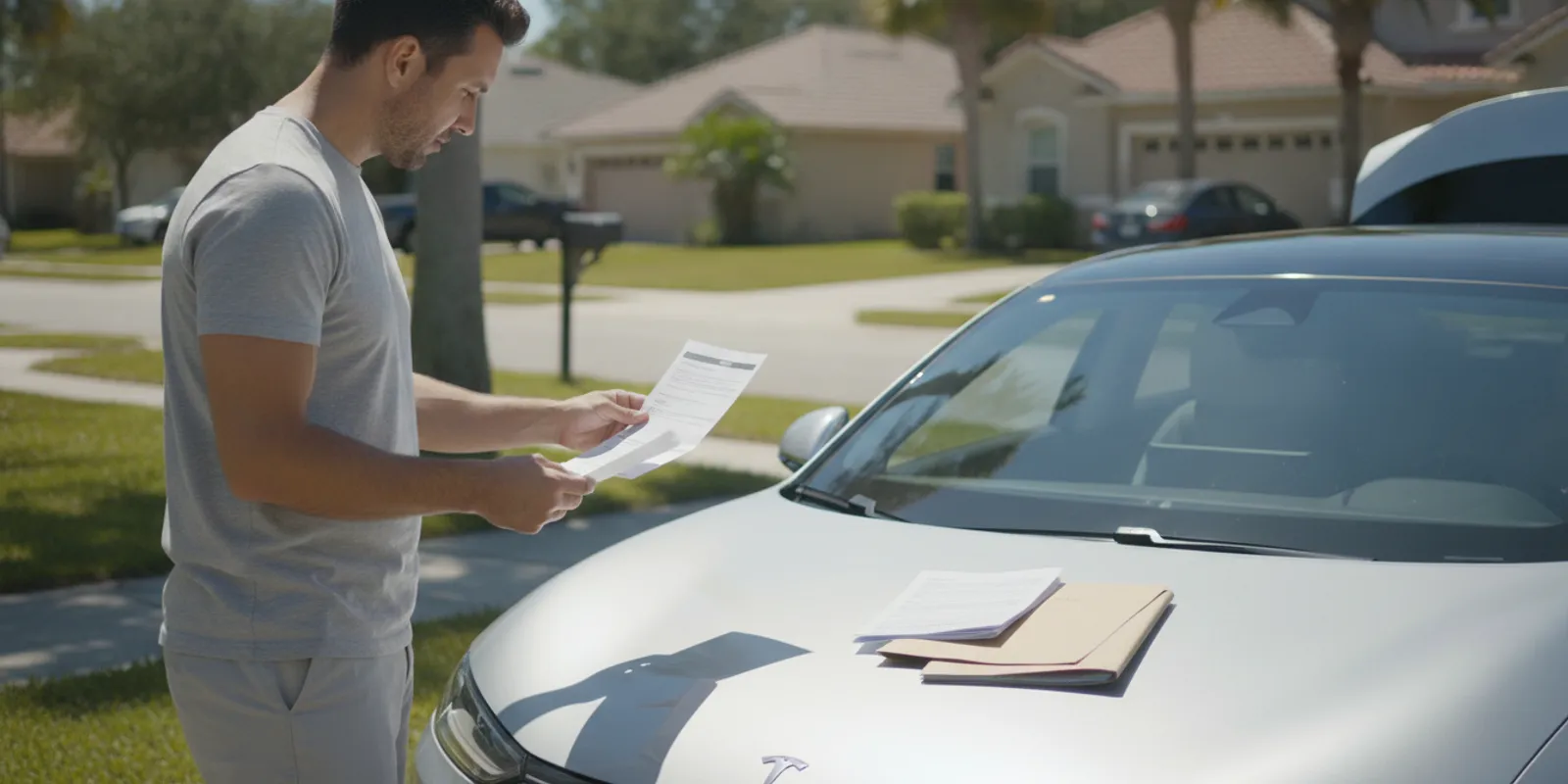
If repeated warranty repairs have not fixed a substantial defect in your vehicle, you may be searching for a Tallahassee lemon law attorney to help you understand what comes next. The repair history, the time your vehicle has spent out of service, the warranty terms, and the nature of the defect all matter. A vehicle does not become a legal lemon simply because it has been inconvenient, but repeated unsuccessful repair attempts may justify a closer review under Florida law or federal warranty protections.
If your vehicle has been in for the same issue at least twice, or has been or will be out of service for at least 21 calendar days, that is enough to ask. Call 1-888-536-6671 or start your case review online. We have focused exclusively on Lemon Law since 1996, represent consumers across Florida, and you are not required to pay us any out-of-pocket fees or costs, win or lose.
A warranty gives the manufacturer an opportunity to address covered defects. If the same substantial problem continues after a reasonable number of repair attempts, or if the vehicle has been out of service or at the repair shop for an unreasonable amount of time, the history may support a Lemon Law or breach of warranty claim. The exact standard depends on the facts and the law that applies.
Examples can include a recurring transmission problem, an electrical failure, a braking or steering concern, an engine issue, or another defect that substantially affects the vehicle’s use, value, or safety. A single repair visit can be important, but a pattern is often more informative. What matters is what was reported, what the repair facility did, whether the concern returned, and how many days the vehicle was unavailable.
Florida vehicle owners do not need to wait until a vehicle becomes completely unusable before asking for an assessment. There is also a cost to waiting: every month you keep driving the vehicle and adding miles gives the manufacturer an argument that the defect is not substantially impairing its use, value, or safety. A vehicle driven for a long stretch after the repairs looks, to a manufacturer’s lawyer, like a vehicle that works. You can compare the general requirements on our Florida Lemon Law information page.
Start by creating one file for the vehicle. You do not need to organize it before calling us, and a missing document is not a reason to delay. Your records should ideally tell the story from purchase or lease through the most recent repair attempt. Here’s what you should have:
Do not edit a repair order or discard a document because it seems repetitive. A series of nearly identical orders may help show that the same complaint returned. You do not need the warranty booklet itself, since those terms can usually be located for you.
A simple timeline makes a large file easier to understand. Use one line per visit: the date you contacted the repair facility, the date you delivered the vehicle, the date it was ready, the odometer reading, the exact symptom, and the work listed on the order. Add a note when the symptom returned. For example: “May 4: warning light appeared during normal driving; May 6: vehicle delivered; May 9: returned, software update listed; May 12: warning light returned.”
Keep descriptions factual rather than diagnostic. “Vehicle hesitated when accelerating from a stop” is more useful than “transmission is defective” if the cause has not been determined. Preserve both how the problem feels and the diagnosis the facility recorded, since one symptom can have several causes and one defect can produce several symptoms. If a service adviser summarizes your complaint inaccurately, ask for a correction or send a follow-up message recording what you reported, and save both.
Separate the days you waited for an appointment from the days the vehicle was actually out of service at a repair facility. Those facts may matter differently. If the vehicle was unsafe to drive while waiting, document the reason and how you arranged transportation.
A recall and an individual warranty claim can involve the same vehicle system, but they are not the same process. A recall is a manufacturer’s campaign to address a known safety or compliance issue across affected vehicles. A warranty claim is an individual request for repair under the vehicle’s written warranty. A vehicle can have a recall and still require an individual warranty analysis.
Do not assume a recall answers whether your vehicle is a lemon. A recall repair may correct the defect in one visit. In other situations the remedy may be delayed, unavailable, incomplete, or unrelated to the continuing symptoms. Likewise, a problem does not have to appear in a recall for a warranty review to be worthwhile. Our guide to recall versus Lemon Law explains why the two should be evaluated separately.
Florida ties its process to the number of repair attempts or days your vehicle has been out of service, and to a formal written notice step that gives the manufacturer a final opportunity to repair. Reaching one threshold can trigger that procedural requirement; reaching a higher one can support a statutory presumption in your favor.
A presumption does not decide the case. It shifts the burden: rather than you proving the manufacturer had a reasonable number of opportunities, the manufacturer has to show it did not. That is a real advantage, though the manufacturer can still contest whether the visits involved the same defect or whether it was substantial.
The notice requirement is where otherwise strong claims get weakened. The proper notice, recipient, timing, and procedure depend on the circumstances, and a casual conversation with a service adviser is not notice. Rather than working through the mechanics yourself, keep a running total of every day the vehicle was unavailable and get the file reviewed early. The Florida Bar’s consumer explanation confirms that written notice and an opportunity to repair come before relief under the state law. Our Florida Lemon Law guide provides additional context.
For a Tallahassee consumer, an accurate count comes from the repair paperwork rather than memory. Note when the vehicle was delivered and when the facility said it was ready, and keep any text or call log showing a delay, parts issue, or revised completion date. If the vehicle was returned and then brought back for the same symptom, list each period separately and maintain a cumulative total.
No checklist determines eligibility by itself. A useful preliminary review considers several connected questions:
These are starting points, not a promise that a claim will succeed. A review can also identify issues outside Florida’s state Lemon Law. The federal Magnuson-Moss Warranty Act turns on the existence of a written manufacturer warranty rather than the vehicle’s age or mileage, which is why we evaluate every claim under both state and federal law.
Depending on the facts, a resolution may involve a repurchase, a replacement vehicle, or a cash settlement. In a repurchase the outstanding loan is paid off as part of the remedy: the lienholder is paid directly, and you are separately returned what you have put into the vehicle, so the financing is retired rather than carried into your next vehicle.
Which remedy is available is usually not the consumer’s choice. It normally depends on whether the claim qualifies under the state statute at all. Where it does not, cash is typically the only offer, with the matter resolving under federal law as a breach of warranty. Occasionally a manufacturer prefers cash because the buyback numbers do not work for it, or a consumer who does qualify passes on a buyback because replacement vehicles have become too expensive.
If a claim resolves for cash, keeping the vehicle is not the same as being stuck with it. You remain free to trade it in or sell it afterward, the money can go toward negative equity on the loan or a down payment on a replacement, or you can simply keep it and keep driving.
Florida mileage calculations require care. Do not assume every state uses the same formula, or that the calculation is based on miles driven before the first repair. In Florida the mileage offset is calculated using miles at settlement, so the vehicle’s use through the resolution of the claim matters.
In a negotiated settlement, particularly one reached before a lawsuit is filed, manufacturer-paid attorney fees are typically agreed by the parties as part of the total recovery. They are not automatically awarded by a court merely because a consumer has a dispute. Many state Lemon Laws say attorney fees shall be paid if the consumer wins, while the federal Magnuson-Moss Warranty Act says they may be paid. That distinction is one reason a legal review is valuable.
Do not compare only the headline amount. Ask what happens to the vehicle, the loan or lease, taxes and fees, and any continuing warranty obligations. Identify exactly which claims the agreement resolves, the payment timing, any payoff terms, and what must be returned or transferred. A release can have consequences beyond accepting money. If a term is unclear, ask for an explanation in writing and get legal advice based on the complete document.
Yes. We represent consumers with qualifying vehicle warranty and Lemon Law claims across Florida without requiring an office visit, and we also represent consumers in Ohio, Michigan, North Carolina, and Pennsylvania. Our process uses phone consultations, email, electronic document submission, and digital signatures, so a Tallahassee-area consumer can begin without taking time off or driving anywhere.
We have focused exclusively on Lemon Law since 1996. You are not required to pay us any out-of-pocket fees or costs, win or lose. We handle breach of warranty and Lemon Law claims against manufacturers; we do not handle claims against car dealers for fraud or related sales-practice violations. To request a review, use our contact page, or learn more about our free case evaluation process and our firm’s experience and approach.
For an initial review, have the purchase or lease date, current mileage, repair orders, and a short description of the concerns. Note whether the vehicle is currently at a repair facility, whether it is safe to drive, and whether the manufacturer has sent any written response.
Two repair visits for the same issue, or 21 calendar days out of service, is enough to ask. Send your Tallahassee repair records for a Florida Lemon Law review or call 1-888-536-6671.
Not necessarily, though an early review helps you document the complaint correctly and understand what to preserve. Our rule of thumb is that two visits for the same issue, or 21 calendar days out of service, is enough to request a review. A serious safety defect, extended downtime, or an unresolved warranty denial may justify calling sooner.
No. A recall and an individual warranty claim are different. The recall remedy may resolve the issue, or it may not. Keep the recall notice and all related repair records so its effect can be evaluated with the rest of your history.
Usually not under the state statute. Florida’s Lemon Law covers new vehicles, demonstrators, leased vehicles, and recreational vehicles, so a previously titled used car is generally outside it. Federal law is the more common route for used purchases, and it does not require the vehicle to be under warranty today, provided repairs were performed under the manufacturer’s warranty or extended warranty. An expired warranty does not end the matter.
No. Our service model is remote for consumers in Florida and our other covered states. Documents can be exchanged electronically, and the first step is an online case review through our contact page or a phone call.
No. You are not required to pay us any out-of-pocket fees or costs, win or lose. When a claim resolves, the attorney fee is typically negotiated with the manufacturer as part of the total recovery. A case review can clarify how that applies to your situation.
If repeated repairs have left your Tallahassee-area vehicle unreliable, preserve the records and request a review before making decisions about a release, settlement, or another repair attempt. Call 1-888-536-6671 or start your case review online. We have focused exclusively on Lemon Law since 1996, represent consumers across Florida, and you are not required to pay us any out-of-pocket fees or costs, win or lose.
*Disclaimer: The information contained in this Website is provided for informational purposes only, and should not be construed as offering legal advice, or creating an attorney client relationship between the reader and the author. While we aim for accuracy, the law is constantly changing and we make no guarantees regarding the completeness or timeliness of the information. You should not act or refrain from acting on the basis of any content included in this Website without seeking appropriate legal advice about your individual facts and circumstances from an attorney licensed in your state.
To see if you qualify, fill out the form below or call us at 1-888-536-6671 – No Office Visit Needed!

I had a great experience with Kahn & Associates! They made the process of dealing with an extremely frustrating lemon situation painless. They have very quick response times and everyone I dealt with was very friendly and helpful. Would definitely recommend!
Kahn and Associates did an awesome job with our lemon law case! We were getting nowhere with VW Customer Service and decided to hire an attorney who specialized with lemon law cases. We couldn’t be happier with the outcome. We were able to get a full refund on our lemon VW Atlas.
What a great experience! I was on the fence about hiring an attorney for my ongoing automotive issues and continued frustration with the manufacturer. It was a very simple process and I am very grateful Kahn and Associates for helping get me a settlement!
Real Honest attorneys!!! They are the real deal! I went back and forth with them and they explained to me every step and my rights under the law! I give them 5 stars because I won!!! Yes and my check is coming to me much sooner than I thought! I was stuck ! I own a brand new car and the dealer was giving me a hard time !

This page has been written, edited, and reviewed by a team of legal writers following our comprehensive editorial guidelines. This page was approved by Attorney Craig A. Kahn, who has more than 20 years of legal experience in lemon law.
Let’s clear up a common myth: hiring a lawyer is always expensive. While that can be true in some legal f...
Buying a car is a huge deal. But walking into a dealership can feel like you’re at a disadvantage. They h...
Receiving a recall notice can feel like a solution to a frustrating vehicle defect. However, a recall is a ...

Stuck with a defective car in Ohio? State Lemon Laws protect you. Get a refund, replacement, or cash settlement. Learn your rights today!

Florida Lemon Laws cover new and used vehicles. If your car’s a lemon, you deserve compensation. Let us help you fight for justice!

Michigan’s Lemon Law protects you from faulty vehicles. Don’t settle for endless repairs—claim your refund or replacement now.

North Carolina Lemon Laws ensure defective vehicles are replaced or refunded. Know your rights and take action today!

Pennsylvania Lemon Law covers new cars with repeated issues. Get the compensation you deserve. Click to learn more!
To see if you qualify, fill out the form below or call us at 1-888-536-6671 – No Office Visit Needed!

The Truth About Attorney’s Fees in Lemon Law Cases Learn more
*Disclaimer: The information contained in this Website is provided for informational purposes only, and should not be construed as offering legal advice, or creating an attorney client relationship between the reader and the author. While we aim for accuracy, the law is constantly changing and we make no guarantees regarding the completeness or timeliness of the information. You should not act or refrain from acting on the basis of any content included in this Website without seeking appropriate legal advice about your individual facts and circumstances from an attorney licensed in your state.

 Message Us
 Call Us