
Have A Case? Call Us
1 888-536-6671
60 Second Lemon Law Assessment™
60 Second Lemon Law Assessment™
by Kahn & Associates - July 20th, 2026
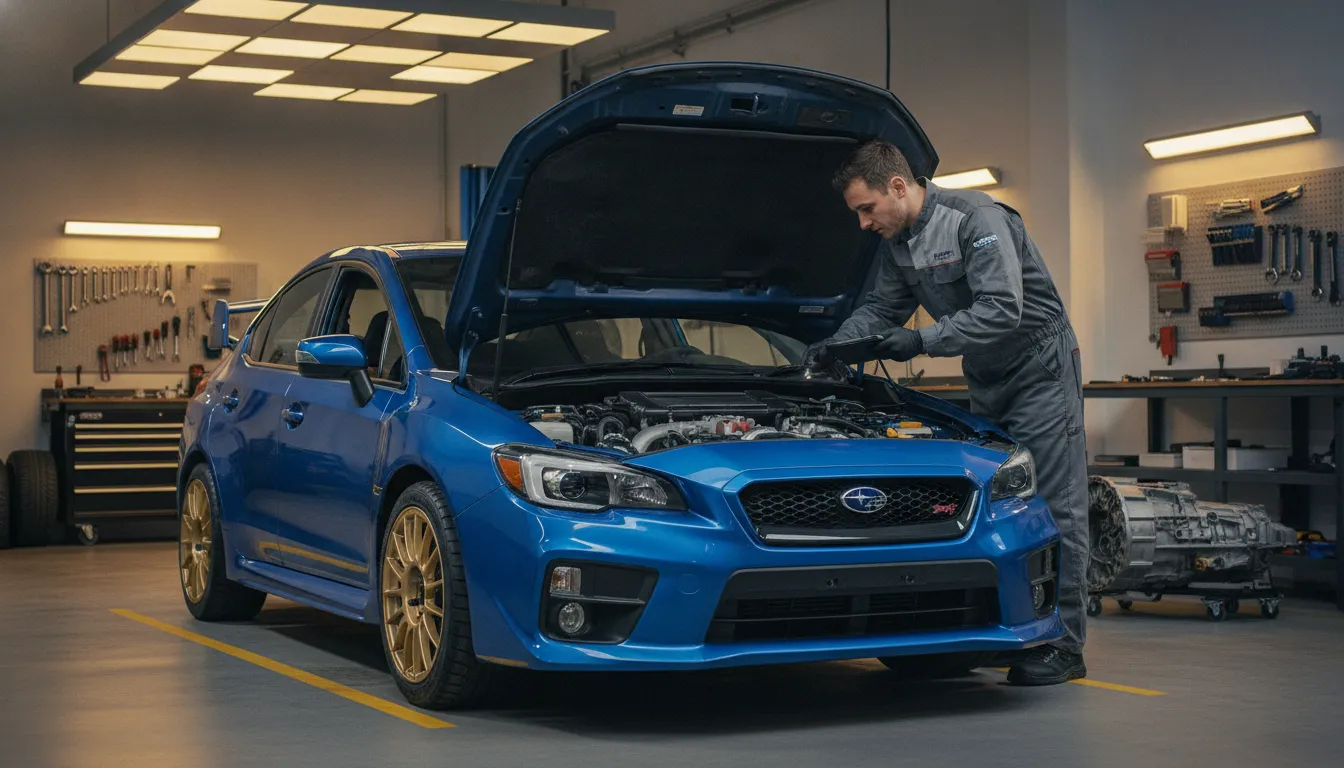
Repeated transmission shuddering or an engine that burns oil between services turns a car you trusted into one you have to plan around. The repairs themselves are usually covered under warranty, so cost is rarely the issue unless you have been paying for rental vehicles. What wears on you is the cycle of booking the appointment, arranging a ride, waiting, and finding the same condition back a few weeks later. When a vehicle needs too many repairs, state and federal law offer protection. We represent owners across five states in claims for a repurchase, a replacement, or a cash settlement.
The Subaru lemon law protects drivers in Ohio, Florida, Michigan, North Carolina, and Pennsylvania who own defective vehicles. It allows you to seek a manufacturer repurchase, a replacement vehicle, or cash compensation. To qualify, your Subaru must have a substantial, recurring nonconformity that impairs its use, value, or safety. You must give the vehicle manufacturer a reasonable number of repair attempts, or the vehicle must spend more time at the dealership than is reasonable. Our firm can handle the claim on your behalf, and you are not required to pay us any out-of-pocket fees or costs, win or lose.
(Note: This article refers to the Subaru lemon law as a matter of writing style. There is no lemon law written specifically for Subaru. The statutes apply to all vehicle manufacturers equally.)
Take our 60-Second Lemon Law Assessment to find out if your Subaru qualifies for a repurchase or replacement.
You do not need to wait until you hit a statutory threshold to ask. Our rule of thumb is simple: if your Subaru has been in for the same issue at least twice, or has been out of service for at least 21 calendar days, that is enough to warrant a free case review and often even have a valid pre-suit claim. Below we break down the conditions that most often lead to these claims.
Subaru has a strong reputation for safety and durability, but several models have well-documented problems. These conditions can put your safety at risk and cost you a great deal of time. If your vehicle has persistent trouble, you may qualify for lemon law protections. Understanding the condition is the first step toward a successful claim.
Owners report significant trouble with the Continuously Variable Transmission. The symptoms are consistent: shuddering, hesitation, and stalling in traffic. In some cases the CVT fails outright while the vehicle is moving. Losing power on a highway is a serious safety risk, and a nonconformity of that kind carries substantial weight in a lemon law claim.
Subaru of America extended powertrain coverage for the CVT on many 2010 to 2015 models from the original 5 years or 60,000 miles to 10 years or 100,000 miles. It is worth being accurate about why. The bulletin announcing the extension, TSB 16-107-17, states that the change was not made in response to any specific condition, but to give customers added assurance about the transmission’s performance. A warranty extension is not an admission of a defect. What matters for your claim is your own repair history: if the dealership could not correct the problem after a reasonable number of attempts, the vehicle may be a lemon regardless of what prompted the extension.
Subaru vehicles with FB-series engines have drawn complaints for burning oil between scheduled services. Owners find themselves adding oil regularly, watching the low-oil light come on, or hearing engine noise. Sustained oil loss can damage internal components and, in severe cases, lead to engine failure or stalling. Subaru addressed the issue in its own oil consumption warranty extension bulletin, which set out the inspection and oil consumption test procedure dealerships were to follow.
This issue produced a class action, Yaeger v. Subaru of America, which settled in 2016. The settlement extended powertrain coverage for oil consumption repairs to 8 years or 100,000 miles on the affected vehicles, and reimbursed owners for oil consumption tests and related repairs. The covered vehicles were the 2011–2014 Forester, the 2013 Legacy and Outback, the 2012–2013 Impreza, and the 2013 XV Crosstrek.
One point deserves emphasis. Owners who did not opt out of that settlement by the deadline are class members, and class settlements typically release the claims they cover. The terms are set out in the settlement class notice. Whether you retain a separate claim depends on your specific circumstances, including whether you opted out and when your condition arose. If you own one of these vehicles and are still dealing with oil consumption, have your situation reviewed rather than assuming either way.
Owners also report sudden engine stalling, sometimes at a stoplight and sometimes at highway speed. A vehicle that stalls in traffic is unsafe and can leave you stranded on the shoulder of a busy road.
Electronic conditions appear frequently as well. Touchscreens freeze, go black, or restart on their own, which can cut off access to navigation and safety features. EyeSight driver assistance can disengage without warning or apply the brakes when no hazard is present. When a safety system behaves unpredictably, it defeats the purpose of having it. Open recalls and owner complaints for your specific vehicle can be searched by VIN through the NHTSA recalls database. Where several systems fail across a series of visits, the cumulative record can matter as much as any single condition, particularly in states that count total repair visits across all defects.
Not every problem makes a vehicle a lemon. To qualify for lemon law protections, your Subaru must have a nonconformity the dealership cannot correct in a timely manner, and it must be substantial — meaning it impairs the safety, use, or value of the vehicle. These rules apply to purchased and leased vehicles alike.
Used vehicles can qualify too. A common misconception is that the vehicle has to be under warranty right now. It does not. There may be an implied warranty claim as well as a claim for breach of the written warranty covering repairs already performed under it. What is needed is that repairs were made under the manufacturer’s warranty or the manufacturer’s extended warranty.
The law does not expect you to keep returning indefinitely. You may have a lemon after a reasonable number of repair attempts for the same condition. For most conditions the dealership gets three or four attempts. Where the nonconformity is one likely to cause death or serious bodily injury, some states require only a single unsuccessful attempt. Florida, Michigan, and North Carolina also require written notice to the manufacturer before the statutory presumption attaches, sent by registered or certified mail, and the manufacturer then gets a final opportunity to repair. Missing that step can give the manufacturer a clean procedural defense, especially when filing a lawsuit.
A vehicle can also qualify if it spends an unreasonable amount of time out of service, commonly thirty or more cumulative days, or twenty business days in North Carolina. The days do not have to run consecutively. They add up across visits.
In the landmark Royster case, our firm established that thirty or more cumulative days out of service creates a legal presumption of lemon law relief in Ohio.
Craig Kahn and his team handled the landmark case Royster v. Toyota Motor Sales, U.S.A., Inc. from the trial court all the way to the Ohio Supreme Court in 2001, establishing the legal precedent that 30 or more cumulative days out of service creates a presumption of lemon law relief, regardless of whether the vehicle is ultimately repaired. That decision is now used by professors and attorneys and continues to benefit lemon owners in Ohio and beyond.
The nonconformity must be substantial. A malfunctioning piece of trim generally will not qualify on its own. A transmission that slips or an engine that stalls will. The more a condition impairs the use, value, or safety of the vehicle, the stronger your position.
If your vehicle qualifies, the available outcomes include a repurchase, which pays off your loan and refunds what you paid, a replacement vehicle, or a cash settlement. You are not required to pay us any out-of-pocket fees or costs, win or lose. When a claim resolves, our fee is typically negotiated with the manufacturer and paid by the manufacturer as a part of the total recovery.
When you pursue a claim, state and federal rules determine your final recovery. Many owners do not realize that most states allow the manufacturer to subtract an allowance for the miles driven. That deduction is the mileage offset, and the formulas differ substantially from state to state.
Ohio is the most favorable of our states: it permits no mileage offset at all, on either a repurchase or a replacement, so an Ohio owner recovers the full purchase price. Florida calculates the offset on miles driven at the time of settlement. Michigan uses miles driven before the first repair plus any miles over 25,000. North Carolina uses the odometer reading at the third repair attempt, or at the twentieth cumulative business day out of service if that comes first. Pennsylvania takes the lesser of ten cents per mile at the first repair or ten percent of the purchase price.
These differences can move your final number by thousands of dollars on the same set of facts. Several states publish their own consumer guidance; the North Carolina Department of Justice is one example. We represent drivers across five states, including clients in Ohio, Michigan, Florida, North Carolina and Pennsylvania.
| State | Key Statute | Mileage Offset Formula | Out of Service Limit |
| Ohio | Ohio Revised Code Section 1345.71 et seq. | No offset for a repurchase or a replacement | 30 cumulative days |
| Florida | Florida Statutes Chapter 681 | Based on miles driven at settlement | 30 cumulative days |
| Michigan | Michigan Compiled Laws Section 257.1401 et seq. | Miles before the first repair, plus miles over 25,000 | 30 cumulative days |
| North Carolina | North Carolina General Statutes Section 20-351 et seq. | Miles at the third repair attempt, or at the 20th business day out of service if that comes first | 20 business days |
| Pennsylvania | Pennsylvania Lemon Law, 73 P.S. Section 1951 et seq. | Lesser of 10 cents per mile at first repair or 10% of the purchase price | 30 cumulative days |
Our legal team has handled manufacturer warranty claims for nearly thirty years. We know the tactics manufacturers use to reduce a settlement, we know the attorneys who represent them, and we know who to reach inside the manufacturer to resolve a claim quickly. We do not handle claims against car dealers for fraud or related sales practices violations; an auto fraud attorney handles those. Our work is breach of warranty and lemon law claims against manufacturers.
If your CVT still has problems after repairs, you may still qualify for lemon law protections. Understanding what the warranty extension does and does not do is the starting point.
Subaru extended CVT powertrain coverage to 10 years or 100,000 miles, whichever comes first, up from the original 5 years or 60,000 miles. The 2017 bulletin covered the 2010–2015 Legacy and Outback, the 2012–2015 Impreza, the 2013–2015 Crosstrek and 2014–2015 Crosstrek Hybrid, the 2014–2015 Forester, and the 2015 WRX. A later bulletin issued in 2018 extended the same coverage to additional model years.
Be aware of the arithmetic. Coverage runs ten years from the original warranty start date, so on the 2010–2015 vehicles it has now largely run out. That does not necessarily end your options. If repairs were performed under the extended coverage and the condition persisted, that repair history can still support a claim (as of the date of this article). What it does mean is that a vehicle of that age is well outside every state lemon law window, so any claim would proceed under federal law.
Where a dealership verified a covered condition, it was required to repair or replace the transmission following the procedures in the bulletin. Subaru also reimbursed owners who had paid out of pocket for qualifying repairs before the program began, though the deadline to submit those claims has long passed.
A warranty extension is useful, but it does not replace your legal rights, and it does not obligate you to let the dealership keep trying indefinitely. If your vehicle spends more time at the dealership than is reasonable, or the dealership cannot correct the transmission after a reasonable number of attempts, you may have a claim. We help drivers in Ohio, Florida, Michigan, North Carolina, and Pennsylvania seek a repurchase, a replacement, or a cash settlement.
State law is not your only option. The federal Magnuson-Moss Warranty Act is a significant tool for owners of defective vehicles, and it frequently reaches claims a state statute does not.
The federal act works alongside state law. If you are weighing which applies, our comparison of federal lemon law vs. state lemon law sets out the differences. One of them involves attorney fees. Many state lemon laws provide that the manufacturer shall pay a prevailing owner’s fees. The Magnuson-Moss Warranty Act is permissive: it provides that a court may award them. Where a claim resolves before a lawsuit is filed, the fee is typically agreed between the parties rather than awarded by a court, which is how fees are set after a trial verdict.
The federal act requires manufacturers to honor their written warranties. Where a manufacturer fails to repair a covered condition after a reasonable number of attempts, the act provides a remedy, though the measure of recovery is typically the difference between the vehicle’s value as warranted and its actual value rather than a full repurchase.
State lemon laws impose tight windows. Ohio requires the condition to be reported within the first year or 18,000 miles; Pennsylvania within one year, 12,000 miles, or the warranty term. A transmission or oil consumption condition can surface well after that. Where the state window has closed, a federal claim may still be available. This is why we evaluate every file under both frameworks.
Two things get conflated. A warranty claim can simply mean bringing your vehicle in for a covered repair. A breach of warranty claim, or lemon law claim, is a legal claim seeking compensation because the manufacturer did not fix the problem in a timely manner pursuant to promises in the warranty. Bringing the vehicle in for repair is the first; asking the manufacturer to buy it back is the second.
Starting a claim does not have to be difficult, and we handle each step. Our firm maintains a very high win rate and has recovered more than $65 million for our clients (as of the beginning of 2026). Understanding how a lemon law claim works can help you prepare.
Every time you take your Subaru in, ask for a copy of the repair order. It records the date, the mileage, the complaint you reported, and the work performed. Consistent complaint descriptions across visits are what show one condition recurring rather than a series of unrelated problems. Save your emails and notes from the dealership as well.
That said, do not let paperwork stop you from calling. You do not need to organize your repair orders or build a chart before requesting a free case review. It helps if you have them handy, but it is not necessary.
The next step is simple. Take our 60-Second Lemon Law Assessment, so we can tell you whether you qualify for free. We represent clients with no out-of-pocket fees or costs, win or lose.
Once we take your case, we deal with the manufacturer so you do not have to. Here is the sequence:
Negotiate the resolution. We pursue a repurchase, a replacement, or a cash settlement, with no out-of-pocket cost to you.
Your Subaru may be a lemon if it has a substantial nonconformity the dealership cannot correct after a reasonable number of attempts, or if it has been out of service for an unreasonable amount of time. The condition has to affect the safety, use, or value of the vehicle. Severe stalling or CVT slipping are typical examples. If you are not sure, we can review your repair records.
It can. The vehicle does not need to be under warranty today. What matters is that repairs were performed under the manufacturer’s warranty or the manufacturer’s extended warranty. There may also be an implied warranty claim alongside the written warranty claim. We can evaluate your warranty dates and repair history and tell you where you stand.
Subaru extended CVT powertrain coverage to 10 years or 100,000 miles on many 2010 to 2015 models, up from 5 years or 60,000 miles. The bulletin announcing it states the change was not made in response to a specific condition. You can read the bulletin itself for the model list and terms. On the earliest covered vehicles that coverage has now expired, but repairs performed under it may still support a claim (as of the date of this article).
You are not required to pay us any out-of-pocket fees or costs, win or lose. We work on a pure contingency basis. When a claim resolves, our fee is typically negotiated with the manufacturer and paid by the manufacturer as part of the total recovery.
A Subaru with a recurring transmission or engine condition is a safety concern and a standing source of frustration. Acting sooner matters, because lemon laws have defined windows in which the condition must be reported, and separate deadlines govern how long you have to bring a claim.
Contact Kahn & Associates today to take the 60-Second Lemon Law Assessment and find out if your Subaru qualifies for a repurchase or replacement or cash compensation.
*Disclaimer: The information contained in this Website is provided for informational purposes only, and should not be construed as offering legal advice, or creating an attorney client relationship between the reader and the author. While we aim for accuracy, the law is constantly changing and we make no guarantees regarding the completeness or timeliness of the information. You should not act or refrain from acting on the basis of any content included in this Website without seeking appropriate legal advice about your individual facts and circumstances from an attorney licensed in your state.
To see if you qualify, fill out the form below or call us at 1-888-536-6671 – No Office Visit Needed!

I had a great experience with Kahn & Associates! They made the process of dealing with an extremely frustrating lemon situation painless. They have very quick response times and everyone I dealt with was very friendly and helpful. Would definitely recommend!
Kahn and Associates did an awesome job with our lemon law case! We were getting nowhere with VW Customer Service and decided to hire an attorney who specialized with lemon law cases. We couldn’t be happier with the outcome. We were able to get a full refund on our lemon VW Atlas.
What a great experience! I was on the fence about hiring an attorney for my ongoing automotive issues and continued frustration with the manufacturer. It was a very simple process and I am very grateful Kahn and Associates for helping get me a settlement!
Real Honest attorneys!!! They are the real deal! I went back and forth with them and they explained to me every step and my rights under the law! I give them 5 stars because I won!!! Yes and my check is coming to me much sooner than I thought! I was stuck ! I own a brand new car and the dealer was giving me a hard time !

This page has been written, edited, and reviewed by a team of legal writers following our comprehensive editorial guidelines. This page was approved by Attorney Craig A. Kahn, who has more than 20 years of legal experience in lemon law.
Most law firms will tell you they can handle a claim against a big automaker. But how many have taken Toyot...
A GMC Sierra that shakes during acceleration or slips between gears is more than just a minor annoyance. ...
If you bought a used car in Michigan and it turned out to be a constant headache, your first thought was pr...

Stuck with a defective car in Ohio? State Lemon Laws protect you. Get a refund, replacement, or cash settlement. Learn your rights today!

Florida Lemon Laws cover new and used vehicles. If your car’s a lemon, you deserve compensation. Let us help you fight for justice!

Michigan’s Lemon Law protects you from faulty vehicles. Don’t settle for endless repairs—claim your refund or replacement now.

North Carolina Lemon Laws ensure defective vehicles are replaced or refunded. Know your rights and take action today!

Pennsylvania Lemon Law covers new cars with repeated issues. Get the compensation you deserve. Click to learn more!
To see if you qualify, fill out the form below or call us at 1-888-536-6671 – No Office Visit Needed!

The Truth About Attorney’s Fees in Lemon Law Cases Learn more
*Disclaimer: The information contained in this Website is provided for informational purposes only, and should not be construed as offering legal advice, or creating an attorney client relationship between the reader and the author. While we aim for accuracy, the law is constantly changing and we make no guarantees regarding the completeness or timeliness of the information. You should not act or refrain from acting on the basis of any content included in this Website without seeking appropriate legal advice about your individual facts and circumstances from an attorney licensed in your state.

 Message Us
  Call Us