
Have A Case? Call Us
1 888-536-6671
60 Second Lemon Law Assessment™
60 Second Lemon Law Assessment™
by Craig Kahn - July 10th, 2026
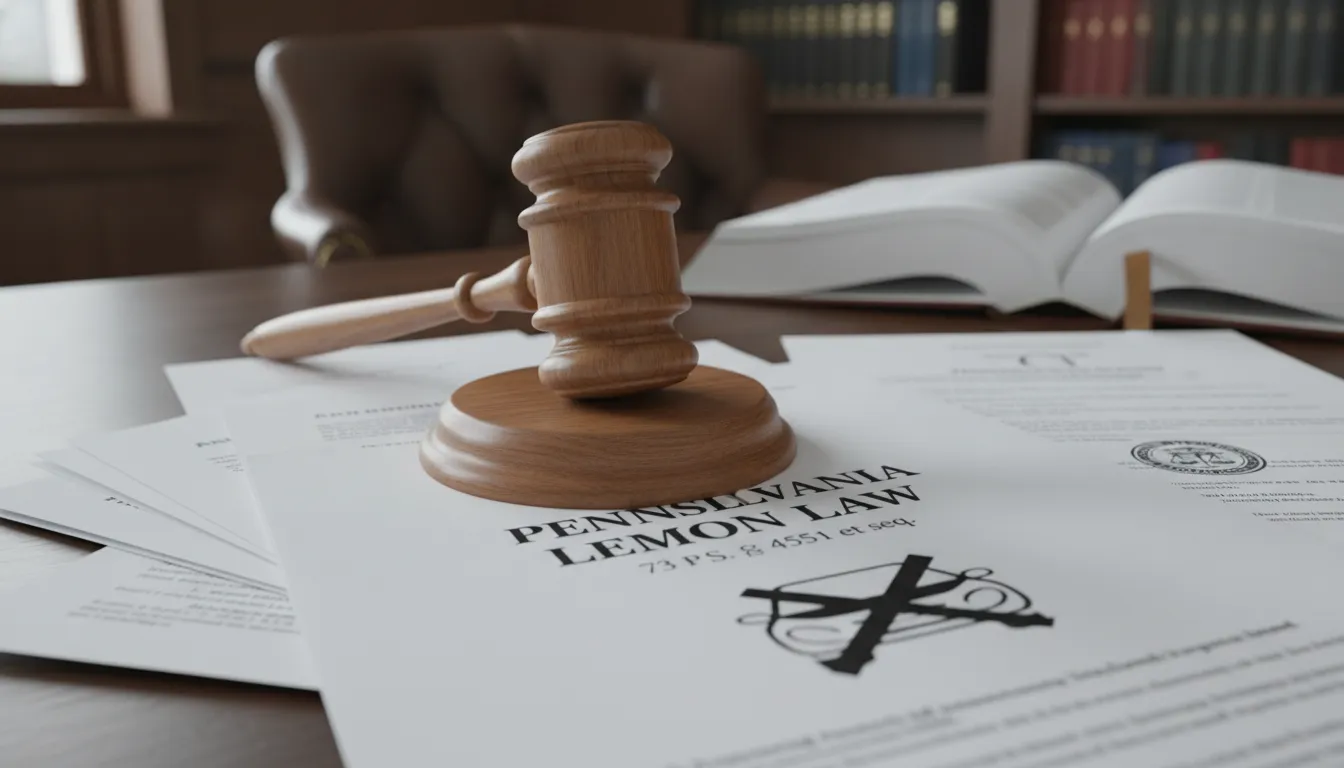
A defective car can disrupt your life while the vehicle sits at the repair shop for weeks. The Pennsylvania Lemon Law provides a legal path to get a refund or a replacement when your vehicle is repeatedly in the repair shop.
The Pennsylvania Lemon Law protects consumers who buy or lease new vehicles with recurring defects. This statute covers vehicle defects first reported within the first twelve months or twelve thousand miles. It applies when the manufacturer cannot fix a defect after a reasonable number of repair attempts. One unique feature is the mileage offset rule for repurchases. In Pennsylvania, the manufacturer can only deduct the lesser of ten cents per mile or ten percent of the purchase price. This rule starts at the time of your first repair attempt. This cap helps consumers by preventing a high mileage count from wiping out their refund.
Many drivers are unsure if their vehicle qualifies for protection or how the refund process works. You can find the specific requirements and coverage limits in the next section.
The Pennsylvania Lemon Law gives strong rights to people who buy or lease cars with substantial problems. This state law helps you get a refund or a new car when the manufacturer cannot fix such a defect or condition. It applies to new cars and light trucks and motorcycles purchased or first registered in the state. If your car is a lemon, you do not have to keep a vehicle that is causing you endless frustration and even fear.
Most new cars and light trucks and motorcycles used for personal use fall under this shield. While the law mainly covers new cars. Used cars typically don’t qualify, except demo vehicles. A used car may qualify under federal law if the repairs were made under the original warranty from the manufacturer. You can see more in the official Pennsylvania Lemon Law fact sheet from the state.
The law does not cover every vehicle. Big trucks used for work might not fit the state lemon law rules. But other laws like the Uniform Commercial Code may still help. Our team helps you find which rules fit your case so you get a fair result. We have helped more than 13,000 people since 1996 in multiple states, as of the date of this article.
A car is a lemon when it has a nonconformity not timely repaired as defined under the law. This is a legal term for a defect or conditions that substantially impairs the use, value, or safety of the vehicle. To file a claim, the flaw must show up within the first 12 months or 12,000 miles of use. You must give the manufacturer a fair chance to fix the car before you seek help. Usually, this means three or more tries to fix the same flaw or if the car is out of use for 30 or more days in the first year, it may be a lemon. These days do not have to be all at once.
If your car does not fit the strict state rules, you still have paths to compensation. The Magnuson-Moss Warranty Act is a federal law that helps when a warranty has been breached by a failure to timely repair. This law can cover cars that are past the 12-month or 12,000-mile state window. It also covers more types of vehicles than the state law. This gives you a second chance to hold the manufacturer liable for a bad car.
Kahn & Associates uses both state and federal laws to fight for you. We look at your repair notes to build a strong case. We work on a no-win, no-fee model. We only get paid if we win or reach a deal with the manufacturer. This means you can get top legal help with no risk to your own bank account.
The mileage offset is a deduction from your refund or replacement. It accounts for the time you used the car before you first reported the defect. Pennsylvania has a unique rule to calculate this cost. It is often much better for the consumer than the rules in other states.
In Pennsylvania, the offset is the lesser of two numbers. First, it could be $0.10 for every mile driven. This is based on the miles on the car at the time of the first repair attempt. Second, it could be 10% of the purchase price. The law uses whichever number is lower.
This rule protects you from a high offset. Even if you drove many miles, you will not lose a big part of your refund. The 10% cap keeps the deduction fair. This is a key part of the Pennsylvania Lemon Law fact sheet.
Many states do not have a cap on the mileage offset. In those states, the deduction can grow very large if you drive a lot. The lemon laws across our five-state coverage area vary. The Pennsylvania cap ensures you get a fair amount of money back. It stops the manufacturer from taking too much of your refund.
For example, if you buy a car for $40,000, the offset cannot go over $4,000. This is true even if the mileage math would usually result in a higher cost. This safeguard helps people get back on their feet after buying a lemon.
It is helpful to see how Pennsylvania compares to other states. Each state has its own way to handle usage. Some states are much more strict than others. This table shows how the law handles these costs in the states we serve.
| State | How Offset is Handled |
|---|---|
| Pennsylvania | Lesser of $0.10/mile at first repair or 10% of price. |
| Ohio | No mileage offset deduction is allowed. |
| Florida | Offset is based on miles at the time of settlement. |
| Michigan | Miles before first repair plus miles over 25,000. |
| North Carolina | Offset is based on miles at the third repair attempt. |
Knowing these rules is helpful. If you have a lemon, probably want to know how much money you will get back. Our team can help you look at your repair records and find your offset. We have very high success rate in obtaining compensation from car companies. We work to make sure you get the best result possible from the manufacturer.
The state uses a two-part formula to find your offset. You take the lower of these two numbers. First, multiply your miles at the first repair by ten cents. Second, take ten percent of what you paid for the car. Follow these steps to see how it works for a car that cost $35,000 with 8,000 miles on the dash.
In this case, the $800 cost is much lower than the $3,500 cap. The manufacturer would take $800 from your refund. You can check the real Pennsylvania fact sheet for more on these rules.
The ten percent cap is a big win for people who drive a lot. Some states take a cut based on every mile you drive. Pennsylvania is different because it stops the cost at a set limit. This keeps the manufacturer from taking too much of your money if you drove many miles before the first shop visit. It makes the Pennsylvania Lemon Law a strong tool for car owners.
If you had 40,000 miles at the first repair, ten cents per mile would be $4,000. But if your car cost $35,000, the cap is only $3,500. The law says the manufacturer must use the $3,500 limit. Other states like Florida take the offset at the time of settlement, which can be much higher. In Pennsylvania, your cost stays low even if the case takes time to finish.
A winning state lemon law claim often leads to a full buyback or a new car. The manufacturer must pay back the purchase price and taxes. They also cover fees and the loan costs you paid on your loan. They only take out the mileage offset we discussed. Our firm has resolved many successful lemon law cases for clients who went through this process. We work to ensure you get every dollar you deserve under the law.
You do not have to worry about legal costs either. If you win, the manufacturer typically pays your attorney fees. This makes it easier for you to fight for a fair deal. You can get a new start without a bill at the end. It ensures that every consumer has a chance to stand up to big car companies.
When you win a Pennsylvania Lemon Law case, a full refund or a replacement car are the most common results. But the law allows you to recover more than just the price of the car. You can also get back the extra money you spent because the vehicle was defective. This ensures that you do not lose money while trying to fix a lemon.
A defective car causes many problems beyond the repair shop. Other expenses you may recover include tags, lien fees, sales tax, document fees, and finance charges. You may have paid for a tow truck when the car broke down on the road. You might have rented a car or paid for rides to get to work. Whether you can get these reimbursed is unclear under the language of the statute and may depend on the manufacturer and/or court. You should keep all receipts for towing, rental cars, and other costs.
Sometimes you might choose to keep the car instead of doing a full buyback or you simply may not qualify under the state law, but you have a case under federal law. In these cases, you can seek cash for the loss in value. A car with a history of major repairs is often worth less than a car with no issues. This is called diminished value. In a cash settlement you keep the car and receive money for your trouble (although you can still trade-in or sell the car once the settlement is complete). This money can help cover future repairs, the lower resale value, any negative equity at trade in or even an extended warranty.
One of the best parts of the law is how it handles legal fees. Under the Pennsylvania Lemon Law, the manufacturer SHALL pay your attorney fees and costs if you win your case. This rule is found in the state law to help people fight big companies. The federal Magnuson-Moss Warranty Act also says that fees MAY be paid to the consumer. This means you can get top legal help without paying out of your own pocket.
It is important to know how these fees are paid. If your case goes to trial and you win, the court awards the fees. However, most cases end in a settlement either out of court or before a trial. In those cases, the manufacturer and your lawyer agree on the fees as part of the deal. At our firm, we have a very high win rate and we work on a contingency basis, so there is no fee unless we win for you.
Many people in Pennsylvania worry about the cost of a lawyer. They think they cannot afford to fight a big car company. But the cost to hire a Pennsylvania lemon law lawyer is usually zero dollars out of your own pocket. Most lemon law firms work on a “no win, no fee” plan. This means they only get paid if they win your case. You do not have to pay any money out-of-pocket regardless of the outcome.
Since 1996, we have helped over 13,000 people in multiple states (as of the date of this article). We have won more than $65 million for our clients, with a very high succces /win rate, which includes cases we file in court. We have had an A+ rating from the Better Business Bureau for over 25 years. We also have a 4.9 rating on Google from hundreds of happy drivers. We provide remote service to everyone in Pennsylvania. You do not need to visit an office or take time off work. We handle the case by phone, email, and mail. You can see the results we have achieved for other drivers. We make it easy to fight for your rights without any out-of-pocket cost to you.
The Pennsylvania Lemon Law mainly covers new cars that people buy or lease. A used car may qualify under federal law it if had repairs under the original manufacturer warranty or manufacturer’s extended warranty. If a used vehicle has a defect that starts within the 12-month or 12,000-mile window, you may have a case. Our firm can help you check if your used car fits these rules. You can find more details on our Lemon Law FAQs page.
Yes. The law in Pennsylvania covers both bought and leased cars. If you lease a car, light truck or motorcycle for personal use, you have the same rights as a buyer. If your leased car spends more time at the dealership than is reasonable, you may be able to get a refund or a new car. You can read more about these rules on the Pennsylvania Lemon Law fact sheet website.
To qualify under state law, you must register your car in Pennsylvania. The law covers cars that are first registered in this state. If you bought your car in another state but registered it here first, you may still be covered. If you do not qualify under state law, you may still have a claim under another state lemon law or even federal rules. The Magnuson-Moss Warranty Act helps many people who cannot use state lemon laws. This federal law covers cars that have had repairs under a manufacturer warranty or manufacturer extended warranty.
You must act fast when you notice a defect or condition. The state law looks at the first 12 months or 12,000 miles of use. You should keep all your repair bills and records. If your car needs three or more repairs for the same issue, or if it is out of service for 30 days or more, you should seek help.
Yes to motorcycles, but no to RVs. This includes vehicles used for daily or family needs. If you have a problem with an RV, you may still have rights under federal law. You can read more about lemon laws across our five-state area to see how these rules might affect your car.
The Pennsylvania Lemon Law covers vehicles used primarily for personal, family or household purposes. However, if you use your truck for work, you might still get help. Other laws like the Uniform Commercial Code provide rights for business vehicles. You should contact a lawyer to see which rules apply to your specific claim. Our firm has achieved many results for buyers in these types of cases.
Yes. Pennsylvania law limits the mileage offset to the lesser of ten cents per mile or ten percent of the purchase price. This cap is a major win for buyers. It means the manufacturer cannot take more than one-tenth of your refund. This is true even if you drove the vehicle for many miles before the first repair. You can find more details in our Lemon Law FAQs.
You may still be able to file a claim. While the strict state law has a 12,000-mile limit, the federal Magnuson-Moss Warranty Act offers broader help. This law covers many defects as long as they happen while the original manufacturer warranty is still active. You should check the lawyer fees in lemon law cases to know how you can get legal help at no cost.
Delaying your claim can lead to losing your rights under the state window because Pennsylvania law has strict time limits for all legal lemon claims. If you wait too long to act, you might miss out on a full refund or a new car from the vehicle manufacturer. Starting your case today helps you get the best result for your claim.
*Disclaimer: The information contained in this Website is provided for informational purposes only, and should not be construed as offering legal advice, or creating an attorney client relationship between the reader and the author. While we aim for accuracy, the law is constantly changing and we make no guarantees regarding the completeness or timeliness of the information. You should not act or refrain from acting on the basis of any content included in this Website without seeking appropriate legal advice about your individual facts and circumstances from an attorney licensed in your state.
To see if you qualify, fill out the form below or call us at 1-888-536-6671 – No Office Visit Needed!

I had a great experience with Kahn & Associates! They made the process of dealing with an extremely frustrating lemon situation painless. They have very quick response times and everyone I dealt with was very friendly and helpful. Would definitely recommend!
Kahn and Associates did an awesome job with our lemon law case! We were getting nowhere with VW Customer Service and decided to hire an attorney who specialized with lemon law cases. We couldn’t be happier with the outcome. We were able to get a full refund on our lemon VW Atlas.
What a great experience! I was on the fence about hiring an attorney for my ongoing automotive issues and continued frustration with the manufacturer. It was a very simple process and I am very grateful Kahn and Associates for helping get me a settlement!
Real Honest attorneys!!! They are the real deal! I went back and forth with them and they explained to me every step and my rights under the law! I give them 5 stars because I won!!! Yes and my check is coming to me much sooner than I thought! I was stuck ! I own a brand new car and the dealer was giving me a hard time !

This page has been written, edited, and reviewed by a team of legal writers following our comprehensive editorial guidelines. This page was approved by Attorney Craig A. Kahn, who has more than 20 years of legal experience in lemon law.
Hyundai ranks among the most popular vehicle brands in the United States, with the Tucson and Sonata consis...
When a vehicle keeps returning to the repair shop, a manufacturer-sponsored arbitration program may look li...
Buying a new vehicle is a major investment, and you expect it to work properly. But when your car, truck, o...

Stuck with a defective car in Ohio? State Lemon Laws protect you. Get a refund, replacement, or cash settlement. Learn your rights today!

Florida Lemon Laws cover new and used vehicles. If your car’s a lemon, you deserve compensation. Let us help you fight for justice!

Michigan’s Lemon Law protects you from faulty vehicles. Don’t settle for endless repairs—claim your refund or replacement now.

North Carolina Lemon Laws ensure defective vehicles are replaced or refunded. Know your rights and take action today!

Pennsylvania Lemon Law covers new cars with repeated issues. Get the compensation you deserve. Click to learn more!
To see if you qualify, fill out the form below or call us at 1-888-536-6671 – No Office Visit Needed!

The Truth About Attorney’s Fees in Lemon Law Cases Learn more
*Disclaimer: The information contained in this Website is provided for informational purposes only, and should not be construed as offering legal advice, or creating an attorney client relationship between the reader and the author. While we aim for accuracy, the law is constantly changing and we make no guarantees regarding the completeness or timeliness of the information. You should not act or refrain from acting on the basis of any content included in this Website without seeking appropriate legal advice about your individual facts and circumstances from an attorney licensed in your state.

 Message Us
  Call Us