
Have A Case? Call Us
1 888-536-6671
60 Second Lemon Law Assessment™
60 Second Lemon Law Assessment™
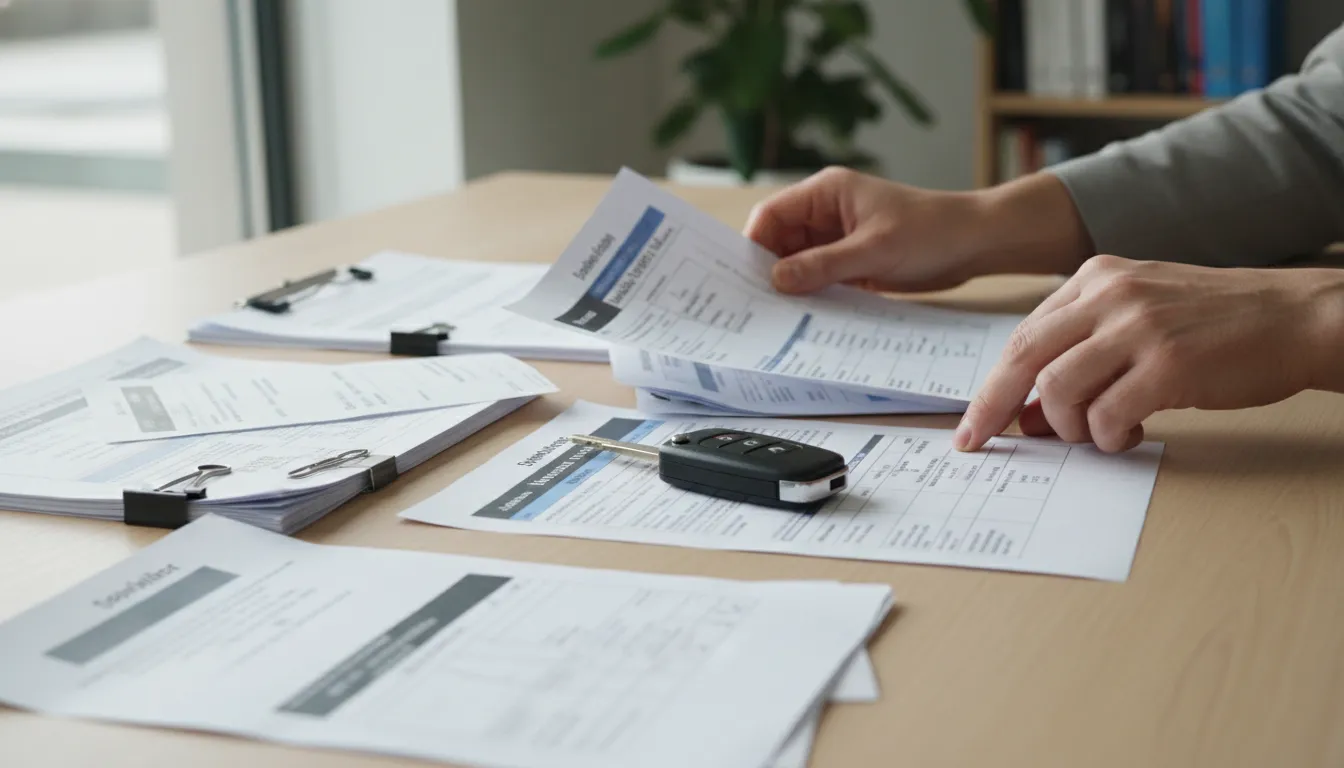
When a vehicle keeps returning to the dealership for the same warranty problem, the paperwork from each visit can become as important as the repair itself. Ohio lemon law repair orders create a dated record of what you reported, what the technician found, what the dealer tried, and how long the vehicle remained at the shop.
Ready to review your repair records? Start the 60-Second Lemon Law Assessment.
Complete records do not automatically prove that a vehicle qualifies under Ohio law. They do, however, give an attorney the facts needed to evaluate repeated repair issues, warranty coverage, and time out of service. The most useful approach is simple: review every order before leaving, request corrections promptly, and keep each order with related messages and receipts.
This guide explains what to preserve after every warranty visit, how to organize the records, and when it may make sense to request a free case review.
A strong repair order tells the story of one service visit from beginning to end. It should allow a person who was not present to understand the reported symptom, the dealer’s response, and the result. Vague wording can hide an important pattern, while precise wording helps connect recurring problems across multiple visits.
Before the appointment, write down exactly what you saw, heard, or felt. Note when the condition occurs, how often it happens, the driving conditions, warning lights, sounds, and whether the problem affects safe or reliable use. At intake, ask the service advisor to put those details on the order rather than reducing the complaint to a phrase such as “check vehicle.”
Use consistent language when the same problem returns, but do not force every visit into identical wording. For example, a vibration at highway speed and shaking during acceleration may be connected, yet both descriptions should appear accurately. Review the complaint language before signing or initialing it.
Check that the order shows the date the vehicle entered the shop, the date it was returned, and the mileage. Those details establish a chronology and may help calculate the total time the vehicle was unavailable. Preserve paperwork even when the dealership says it could not duplicate the condition or performed no repair.
Ohio requires an itemized written statement when a vehicle is returned after service or repair. The firm’s Ohio Lemon Law resource provides more context about potential consumer rights. Eligibility always depends on the vehicle’s facts and applicable law.
Good documentation is easier to create in real time than to reconstruct months later. Follow the same process for every warranty repair visit, including visits where no repair is completed.

If you notice an error after leaving, request a correction in writing. Do not alter the original document yourself. Keep the original, your correction request, and any revised order together. This preserves the history and avoids confusion about which version came from the dealership.
An attorney generally reads repair orders as a connected timeline, not as isolated invoices. The sequence can show when a condition began, whether it returned, how it was described at each visit. What the dealer attempted, and how much time the vehicle spent at the repair shop.
The same underlying problem may be described differently over time. One order may say “loss of power,” while another refers to “hesitation during acceleration.” An attorney can compare the complaints. Technician findings, diagnostic codes, and completed work to assess whether the records may reflect a recurring warranty issue.
A “could not duplicate” entry does not make a visit meaningless. It may still show that you reported the concern and gave the dealership an opportunity to inspect it. Preserve the order and continue describing the symptom precisely if it happens again.
For example, imagine a driver reports intermittent loss of power during three warranty visits. The first order notes the symptom but no diagnosis, the second records a software update, and the third documents a replaced component after the problem returned. Read together, those orders may help an attorney understand the repeated concern, the manufacturer’s repair opportunities, and whether the attempted work resolved it. The example does not establish eligibility by itself, but it shows why precise, complete records matter.
Have repeated warranty visits left the problem unresolved? Start the 60-Second Lemon Law Assessment to request a free case review.
Open and close dates help show how long the vehicle was unavailable. Several shorter stays can matter when viewed together. Records may also indicate whether the complaint was reported while the manufacturer’s warranty applied. An attorney will consider those details alongside the nature of the defect and the complete vehicle history.
No single repair order decides eligibility. Ohio consumers may have a lemon after a reasonable number of repair attempts or after a reasonable amount of time out of service or at the repair shop. What is reasonable depends on the facts and whether the state law presumptions apply or its a federal lemon law case. The firm’s guide to filing a lemon law claim in Ohio explains the broader process.
Service records are not always complete. Missing details do not necessarily end an evaluation, but addressing gaps promptly can make the chronology easier to understand.
| Documentation gap | Why it matters | Practical response |
|---|---|---|
| No final repair order | The visit and work may be difficult to verify | Request a complete copy in writing and save the request |
| Complaint is vague | It may not show that a recurring symptom was reported | Ask for accurate wording before signing the intake order |
| Wrong dates or mileage | The timeline and time out of service may be unclear | Request a corrected order and keep both versions |
| “Could not duplicate” without details | The testing performed may be unknown | Ask what tests were completed and preserve the answer |
| Verbal updates only | Important explanations may be forgotten | Send a polite email confirming the conversation |
You do not need to argue with the service department to protect the record. Be specific and professional. Ask for a complete copy, identify the missing or inaccurate detail, and request that the dealer’s own records reflect what occurred. Preserve the response even if the dealer declines to make a change.
If several visits appear on one consolidated order, ask whether separate visit records exist. Keep any appointment confirmations, loaner agreements, or messages that help establish the individual dates. An attorney can evaluate the available evidence and identify what else may be useful.
The best supporting file preserves the vehicle’s purchase, warranty, repair, and communication history in one chronological record. Repair orders remain central, but other dated documents can confirm when problems occurred, how the manufacturer or dealer responded, and how long the vehicle was unavailable.
For additional context about warranty protections that may apply beyond a state lemon law, review the firm’s Federal Lemon Law resource. Answers to other common documentation and claim questions are available in the lemon law frequently asked questions.
Repair orders are central, but they are not the only documents that may help explain a warranty history. Keep supporting records in the same folder so the sequence is easy to follow.

A one-page timeline can make a large file easier to review. For each visit, list the date in, date out, mileage, reported condition, dealer finding, work performed, and whether the problem returned. Treat the timeline as an index, not a replacement for the original records.
Store digital copies in a secure folder with clear file names, such as the visit date followed by the dealership name. Keep originals in chronological order. Do not edit photos or overwrite email threads. Complete, organized source records give an attorney a clearer view than a summary alone.
Consider requesting a review when the same warranty problem keeps returning, a serious condition remains unresolved. Or the vehicle spends more time at the repair shop than is reasonable. You do not need to decide for yourself whether the vehicle meets every legal requirement before asking questions.
A prompt review can be useful while records are easy to locate and details remain fresh. Gather the orders you have, but do not wait for perfect paperwork. Missing records can be identified during the review, and other documents may help fill in parts of the chronology.
An attorney can review the repair history, warranty information, recurring symptoms, and time out of service. The review may clarify whether additional records are needed and which laws may apply. It is not a promise that a vehicle qualifies or that a particular outcome will occur.
Kahn & Associates, L.L.C. represents consumers with lemon-law or manufacturer-warranty claims involving defective vehicles. These claims are against manufacturers for warranty issues, not car dealers for fraud or related sales practices.
Ask the service department for a complete copy in writing. Include the approximate visit date, vehicle identification number, and mileage if available. Save your request and the response. Appointment confirmations, messages, and towing records may also help document the visit.
Keep the order. It can still document that you reported the symptom and brought the vehicle in for warranty service. If the condition returns, describe it precisely at the next visit and preserve safe photos or videos when available.
There is no answer that fits every vehicle or problem. The law expects the manufacturer to be given a fair chance to fix your car. But that chance isn’t endless. This is where the “reasonable number of repair attempts” rule comes in. If the dealership has tried and failed to fix the same substantial problem multiple times, your car may qualify as a lemon.
So, what’s a “reasonable” number? Typically, under the law this means 3 or more attempts to repair the same issue, however in negotiations we can often resolve matters with only 2 repair attempts. However, if the defect is a serious safety concern, that number could be less. If you’re stuck in a cycle of repeated repairs and the problem persists, it is definitely time to stop dealing with the dealership and start exploring your legal options.
No. If a serious warranty problem remains unresolved after repeated visits or the vehicle spends more time at the repair shop than is reasonable, a prompt review can help you understand possible next steps.
If repeated warranty repairs have not resolved your vehicle’s problem, organized repair orders can help clarify what happened. Kahn & Associates, L.L.C. offers a free case review, with no out-of-pocket fees or costs to the client, win or lose.
Start the 60-Second Lemon Law Assessment and share the Ohio lemon law repair orders and supporting records you have.
*Disclaimer: The information contained in this Website is provided for informational purposes only, and should not be construed as offering legal advice, or creating an attorney client relationship between the reader and the author. While we aim for accuracy, the law is constantly changing and we make no guarantees regarding the completeness or timeliness of the information. You should not act or refrain from acting on the basis of any content included in this Website without seeking appropriate legal advice about your individual facts and circumstances from an attorney licensed in your state.
To see if you qualify, fill out the form below or call us at 1-888-536-6671 – No Office Visit Needed!

I had a great experience with Kahn & Associates! They made the process of dealing with an extremely frustrating lemon situation painless. They have very quick response times and everyone I dealt with was very friendly and helpful. Would definitely recommend!
Kahn and Associates did an awesome job with our lemon law case! We were getting nowhere with VW Customer Service and decided to hire an attorney who specialized with lemon law cases. We couldn’t be happier with the outcome. We were able to get a full refund on our lemon VW Atlas.
What a great experience! I was on the fence about hiring an attorney for my ongoing automotive issues and continued frustration with the manufacturer. It was a very simple process and I am very grateful Kahn and Associates for helping get me a settlement!
Real Honest attorneys!!! They are the real deal! I went back and forth with them and they explained to me every step and my rights under the law! I give them 5 stars because I won!!! Yes and my check is coming to me much sooner than I thought! I was stuck ! I own a brand new car and the dealer was giving me a hard time !

This page has been written, edited, and reviewed by a team of legal writers following our comprehensive editorial guidelines. This page was approved by Attorney Craig A. Kahn, who has more than 20 years of legal experience in lemon law.
A collision does not automatically erase a valid lemon law claim. What matters is whether the recurring pro...
That sinking feeling you get when you realize the car you just bought is a lemon is awful. It’s a frustra...
Florida Lemon Law Guide: What Every Car Buyer Needs to Know If your new car keeps going back to the dealer...

Stuck with a defective car in Ohio? State Lemon Laws protect you. Get a refund, replacement, or cash settlement. Learn your rights today!

Florida Lemon Laws cover new and used vehicles. If your car’s a lemon, you deserve compensation. Let us help you fight for justice!

Michigan’s Lemon Law protects you from faulty vehicles. Don’t settle for endless repairs—claim your refund or replacement now.

North Carolina Lemon Laws ensure defective vehicles are replaced or refunded. Know your rights and take action today!

Pennsylvania Lemon Law covers new cars with repeated issues. Get the compensation you deserve. Click to learn more!
To see if you qualify, fill out the form below or call us at 1-888-536-6671 – No Office Visit Needed!

The Truth About Attorney’s Fees in Lemon Law Cases Learn more
*Disclaimer: The information contained in this Website is provided for informational purposes only, and should not be construed as offering legal advice, or creating an attorney client relationship between the reader and the author. While we aim for accuracy, the law is constantly changing and we make no guarantees regarding the completeness or timeliness of the information. You should not act or refrain from acting on the basis of any content included in this Website without seeking appropriate legal advice about your individual facts and circumstances from an attorney licensed in your state.

 Message Us
  Call Us