
Have A Case? Call Us
1 888-536-6671
60 Second Lemon Law Assessment™
60 Second Lemon Law Assessment™
by Kahn & Associates - October 2nd, 2026
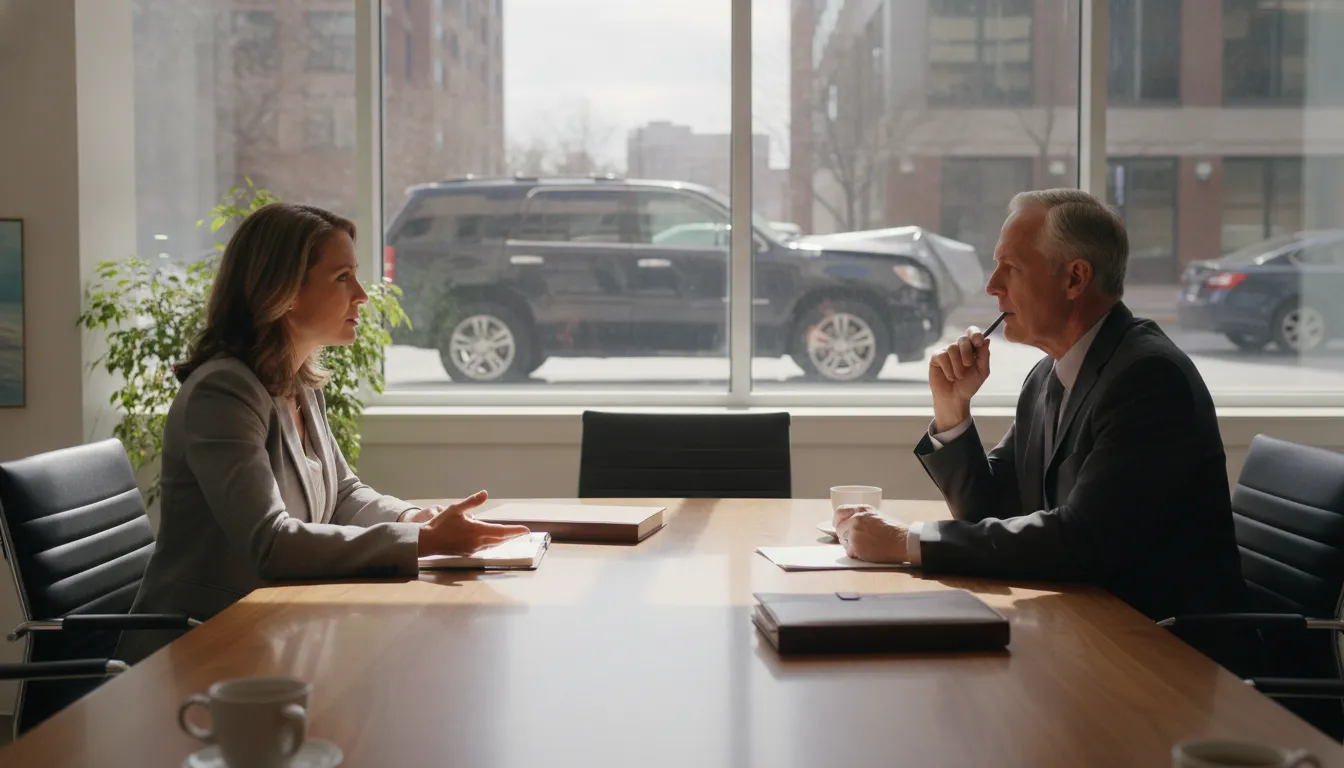
When a manufacturer answers a warranty complaint by pointing you to its arbitration program, the first thing to figure out is whether you actually have to go. In North Carolina, sometimes you do. Often you do not. The answer is in the warranty that came with the vehicle, and it is worth knowing before you fill anything out.
If the same problem has sent your vehicle back twice, or it has been out of service for 21 days or more, that is enough to request a free case review or call 1-888-536-6671. We have handled these claims since 1996 and, as of the beginning of 2026, have recovered more than $65 million for consumers. You are not required to pay us any out-of-pocket fees or costs, win or lose.
Two conditions have to be met, and both come from N.C. Gen. Stat. § 20-351.7. The program must substantially comply, in design and in operation, with the federal Magnuson-Moss Warranty Act regulations. And the requirement to use it must be stated clearly and conspicuously in the written warranty and the warranty instructions delivered with the vehicle.
Miss either condition and the program may not be a prerequisite to filing suit or settling the case. A dispute process mentioned on a website, described in a brochure, or offered over the phone by a customer-service representative does not become a legal prerequisite just because the manufacturer treats it as one.
The name means nothing either. These programs are variously called arbitration, mediation, informal dispute settlement, or something invented for the brand. What matters is whether the program meets the statutory standard and whether the warranty actually tells you to use it before filing suit.
Find the dispute-resolution section in the warranty booklet or the paperwork that came with the vehicle. Read it for three things: whether it says plainly that the program must be used before suit, who administers it, and what the program is allowed to decide. Keep the full warranty and the program rules. A service adviser summarizing them over the counter is not the same as the document.
Whatever the warranty says about arbitration, it does not replace a claim brought in court. A program reviews records under its own rules and issues a decision under those rules. North Carolina separately lets a consumer bring a civil action, provided the manufacturer gets written notice of intent to sue at least 10 days beforehand.
Worth settling before anything else, because the arbitration requirement belongs to the state statute. If the statute does not cover your vehicle, the question of whether a program applies to you must be looked at under federal law as well, but it may largely fall away.
North Carolina covers a new motor vehicle, and the definition is about titling rather than condition. A vehicle counts as new where a certificate of origin has never been supplied to a consumer, or where the seller states in writing that it is being sold as new. Once that certificate has gone to a first owner, an ordinary resale is outside the act.
A vehicle outside the state statute is not outside the law. The federal Magnuson-Moss Warranty Act cover used vehicle and breach of warranty cases. It turns on whether a written manufacturer warranty exists, not on the vehicle’s age or mileage, and it does not require the vehicle to be under warranty today so long as repairs were performed under the manufacturer’s warranty or an extended warranty from the manufacturer. That is the route that fits most used and certified pre-owned purchases, and it is why we look at every claim under both bodies of law instead of testing the state statute and stopping there.
North Carolina asks whether a defect substantially impairs the value of the vehicle to the consumer. That wording is worth noticing, because most states say use, value, or safety. Safety still matters here, but in North Carolina a safety problem is argued as something that destroys the vehicle’s value rather than as a standard of its own.
The statute then sets out two thresholds that create a presumption the manufacturer has had a reasonable number of chances to repair. A presumption shifts the burden to the manufacturer rather than deciding the case, and falling short of one does not end anything, because substantial impairment can be proved by other evidence.
| What the law looks at | The North Carolina standard | What proves it |
| Repeat repairs | The same defect has gone back to the manufacturer, its agent, or an authorized dealer four or more times and still has not been fixed. | Repair orders showing the complaint, the diagnosis, the work attempted, and the date you got the vehicle back. |
| Time out of service | The vehicle has been out of service, including time waiting on parts, for 20 or more business days in any 12-month period of the warranty. | Repair orders showing the dates you dropped the vehicle off and picked it up, for every visit. |
| Written notice | Where this condition applies, you notify the manufacturer directly in writing and give it up to 15 calendar days to fix the problem. | A copy of the notice, proof of delivery, the response, and the dates. |
| Timing | The defect has to occur within 24 months or 24,000 miles of the vehicle’s original delivery. | The purchase or lease paperwork, the delivery date, the mileage, and when you first reported the problem. Repair orders showing the complaint, the diagnosis, the work attempted, and the date you got the vehicle back. |
The presumption runs on four repair attempts. The third attempt matters for an entirely different reason: it is one of the two moments at which the mileage deduction gets locked in, which is the subject of our North Carolina third repair milestone article. Reaching three attempts is not the statutory presumption, and the two should not be read together.
The written-notice condition in the table has a catch that runs the consumer’s way. Section 20-351.5 requires the manufacturer to state clearly in the warranty or the owner’s manual that written notice is required before a refund or replacement, and to give the address where that notice goes. If the manufacturer never made that disclosure, the notice condition does not apply at all. Before you conclude you have missed a step, it is worth having someone check whether your warranty made it.
Where the statutory remedy applies, if you win, you may choose between a comparable new vehicle and a refund. Section 20-351.3 spells out what a refund covers: the full contract price, including undercoating, dealer preparation, transportation charges and installed options, plus collateral charges such as sales tax and registration fees, plus the finance charges you incurred after first reporting the defect, along with incidental and consequential damages.
The refund is then reduced by an allowance for the use you got out of the vehicle, and North Carolina calculates that more favorably than several other states. Only the miles up to the third repair attempt, or the twentieth cumulative business day out of service, count toward it. Whichever comes first fixes the number. That figure is multiplied by the purchase price and divided by 120,000.
One practical consequence follows from that. Because the deduction locks in early, driving the vehicle while a dispute drags on does not keep enlarging it, as it would in a state that measures mileage at settlement. What the extra miles do instead is give the manufacturer its favorite argument: that a vehicle you put another fifteen thousand miles on cannot have been substantially impaired in value. In North Carolina, delay costs you on the evidence rather than the arithmetic.
If the vehicle is financed, the loan gets resolved as part of the remedy rather than left to you. The lienholder is paid directly out of the refund, and what you put in comes back to you, so the financing does not follow you into the next vehicle.
Programs differ, so this is what they commonly look like rather than a description of any particular one. You submit a written account of the vehicle, the problem, and the repair history. The program requests supporting records, gives the manufacturer a chance to respond, and issues a written decision. Some offer a hearing by phone, in writing, or in person. The deadlines for submitting documents and for answering a decision are set by the program.
The part that catches people off guard is that this is an adversarial proceeding, however much the paperwork reads like a customer-service form. The manufacturer is on the other side of it. How the defect gets characterized, what the repair records are said to show, and what resolution you ask for all shape the result. Our guide to lemon law arbitration and our answers to common lemon law questions cover related ground.
Read the decision alongside the program rules before you accept or reject it. A program is typically an all or nothing result meaning they either deem the case a lemon law buyback or they do not, and you receive nothing. This is not always the case, but in our past experience, they are not normally given the power to make a cash award for cases that fall short of the state lemon law standards but would normally qualify as breach of warranty.
Accepting a decision binds the manufacturer to perform it in some programs. Rejecting one may leave court remedies open, but it is not a casual step, and programs usually set a window for responding. Keep proof of when and how you answered.
If you accept, get the terms in writing and check them. For a refund or a replacement, that means the amount, the charges, the financing, the title, and the delivery timing, measured against what the statute says a refund includes rather than against the figures in a program letter.
If you reject, understand what that does and does not do. It does not establish that you would win in court, and it creates no right by itself. What it can do is keep options open that accepting would close. Any later claim means a fresh look at the repair orders, the warranty, the notices, the correspondence, and the arbitration record. Before answering, it is worth weighing the decision against both state and federal lemon law protections.
Two further provisions are worth knowing about, neither of them automatic. North Carolina allows damages to be trebled where a court finds the manufacturer unreasonably refused to meet its statutory obligations, and allows a court to award a reasonable attorney fee to the prevailing party’s attorney where the manufacturer unreasonably failed or refused to resolve the matter. Both require findings a court has to make, and neither follows from an arbitration that ended badly.
Confirm the manufacturer’s performance terms in writing. For a refund or replacement, review how the amount, vehicle, charges, financing, title, and delivery timing are calculated. North Carolina’s statutory remedies can include a comparable new motor vehicle or a refund. The refund provision may include the full contract price, collateral charges, and certain finance charges incurred after the defect was first reported, along with other qualifying damages. Those details should be checked against your records and the applicable law rather than assumed from a program letter.
Rejecting an informal decision does not automatically establish that you will win in court. It may, however, leave court remedies available under the program rules and applicable law. A lawsuit can involve a fresh evaluation of the evidence, including repair orders, warranty language, notices, communications, and the arbitration record. Before responding, compare the decision with both state and federal lemon-law protections and consider whether federal warranty-law options may apply.
A clear record makes the vehicle problem and the manufacturer’s handling of it far easier to assess. None of it has to be organized before you call us, and a missing document is not a reason to wait.
If you cannot find the warranty booklet, do not spend time hunting for it; those terms can usually be located for you. More starting points are on our lemon law resources page.
A letter or a call from a manufacturer makes the whole thing feel urgent, especially when it asks you to accept a repair, enter a program, or give a statement about the vehicle. But what you should do depends on the warranty language, the repair history, the notices, and which law reaches your vehicle. None of that is visible from the letter.
We represent North Carolina consumers in lemon law and manufacturer breach of warranty claims, and we can work remotely by phone, email, and online form, so there is no office visit. We do not handle dealer fraud or other sales-practice disputes. You are not required to pay us any out-of-pocket fees or costs, win or lose; our fee comes from the recovery, not from any money in your pocket before the case resolves. Our North Carolina lemon law page has more state-specific background.
Two visits for the same problem, or 21 calendar days out of service, is enough to find out where you stand. Request a free case review or call 1-888-536-6671, and bring the warranty, the repair orders, and any arbitration materials you have.
Not automatically. A manufacturer can require an informal settlement procedure first, but only if the program substantially complies with the federal warranty requirements and the warranty states that requirement clearly and conspicuously. Section 20-351.7 also requires written notice of intent to sue at least 10 days before an action is filed. Read the warranty and the program rules before assuming arbitration applies to you.
Most cases can be resolve prior to filing suit and so there is no reason to go through arbitration. Have the file reviewed first. These programs are adversarial, with the manufacturer on the other side, and how the defect is described and which records go in will shape the outcome. If you have already been through one, keep everything that was exchanged and have the decision looked at before you accept or reject it.
Normally you can reject any decision you do not like and then file suit. So, do not assume a decision closes every option, and do not assume your answer to it carries no consequences. The effect depends on the warranty, the program terms, the decision, and the facts. Have the decision and the surrounding correspondence reviewed before signing anything.
Basically, you first need a defect that substantially impairs the value of the vehicle to the consumer, occurring within 24 months or 24,000 miles of original delivery. A presumption may arise after four or more repair attempts for the same continuing defect, or after 20 or more cumulative business days out of service in a 12-month period of the warranty. Those are not the only ways to prove substantial impairment. The standard is in Section 20-351.5. Additionally, there is a federal law that can help if you do not meet the state law requirements.
The statutory thresholds describe when a presumption arises, not when it makes sense to get advice. There is also a federal lemon law with more relaxed rules. Our rule of thumb is that two visits for the same issue, or 21 calendar days out of service, is reason enough, and an arbitration notice on top of that history is reason to call sooner.
Usually not under the state statute, but it does under the federal law. An ordinary used purchase falls outside it. Federal warranty law is the more common route, and it does not require current warranty coverage so long as repairs were performed under the manufacturer’s warranty or an extended warranty from the manufacturer.
An arbitration notice is not something to answer by guessing. The warranty language, the repair records, the notices, and the program materials together decide what your next step should be, and working that out is a short conversation.
Two repair visits for the same issue, or 21 calendar days out of service, is enough to find out where you stand. Call 1-888-536-6671 or use our contact form to request a free case review. There are no out-of-pocket fees or costs to you, win or lose.
*Disclaimer: The information contained in this Website is provided for informational purposes only, and should not be construed as offering legal advice, or creating an attorney client relationship between the reader and the author. While we aim for accuracy, the law is constantly changing and we make no guarantees regarding the completeness or timeliness of the information. You should not act or refrain from acting on the basis of any content included in this Website without seeking appropriate legal advice about your individual facts and circumstances from an attorney licensed in your state.
To see if you qualify, fill out the form below or call us at 1-888-536-6671 – No Office Visit Needed!

I had a great experience with Kahn & Associates! They made the process of dealing with an extremely frustrating lemon situation painless. They have very quick response times and everyone I dealt with was very friendly and helpful. Would definitely recommend!
Kahn and Associates did an awesome job with our lemon law case! We were getting nowhere with VW Customer Service and decided to hire an attorney who specialized with lemon law cases. We couldn’t be happier with the outcome. We were able to get a full refund on our lemon VW Atlas.
What a great experience! I was on the fence about hiring an attorney for my ongoing automotive issues and continued frustration with the manufacturer. It was a very simple process and I am very grateful Kahn and Associates for helping get me a settlement!
Real Honest attorneys!!! They are the real deal! I went back and forth with them and they explained to me every step and my rights under the law! I give them 5 stars because I won!!! Yes and my check is coming to me much sooner than I thought! I was stuck ! I own a brand new car and the dealer was giving me a hard time !

This page has been written, edited, and reviewed by a team of legal writers following our comprehensive editorial guidelines. This page was approved by Attorney Craig A. Kahn, who has more than 20 years of legal experience in lemon law.
A dealer can try to fix a serious vehicle defect without turning a wrench. As cars rely more on code, a sof...
Three dealership visits for the same BMW defect can signal more than bad luck. Repeated warranty repairs ma...
Buying a car is a huge deal. But walking into a dealership can feel like you’re at a disadvantage. They h...

Stuck with a defective car in Ohio? State Lemon Laws protect you. Get a refund, replacement, or cash settlement. Learn your rights today!

Florida Lemon Laws cover new and used vehicles. If your car’s a lemon, you deserve compensation. Let us help you fight for justice!

Michigan’s Lemon Law protects you from faulty vehicles. Don’t settle for endless repairs—claim your refund or replacement now.

North Carolina Lemon Laws ensure defective vehicles are replaced or refunded. Know your rights and take action today!

Pennsylvania Lemon Law covers new cars with repeated issues. Get the compensation you deserve. Click to learn more!
To see if you qualify, fill out the form below or call us at 1-888-536-6671 – No Office Visit Needed!

The Truth About Attorney’s Fees in Lemon Law Cases Learn more
*Disclaimer: The information contained in this Website is provided for informational purposes only, and should not be construed as offering legal advice, or creating an attorney client relationship between the reader and the author. While we aim for accuracy, the law is constantly changing and we make no guarantees regarding the completeness or timeliness of the information. You should not act or refrain from acting on the basis of any content included in this Website without seeking appropriate legal advice about your individual facts and circumstances from an attorney licensed in your state.

 Message Us
 Call Us