
Have A Case? Call Us
1 888-536-6671
60 Second Lemon Law Assessment™
60 Second Lemon Law Assessment™
by Kahn & Associates - September 3rd, 2026
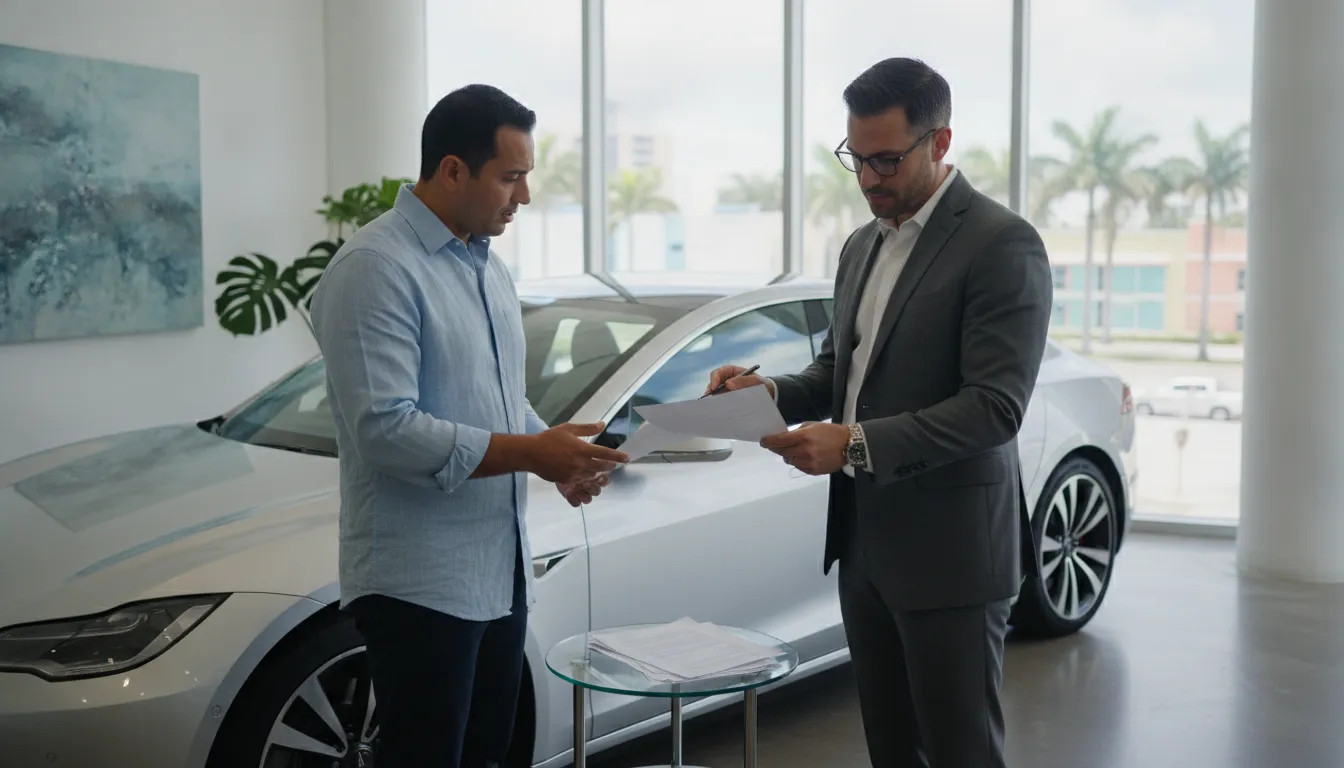
Repeated trips to a Miami dealership for the same warranty problem can turn an inconvenient defect into a serious disruption. Keep every repair order, invoice, mileage entry, anything the dealership or manufacturer put in writing about the problem, and your own notes about missed work, family transportation, or rental costs. Those details help show what happened and give an attorney the facts needed to evaluate your options.
If you are looking for a Lemon Law attorney Miami consumers can turn to, we offer a free case review at our online contact form or 1-888-536-6671. If your vehicle has been in for the same issue at least twice, or has been or will be out of service for at least 21 calendar days, that is enough to ask.
Florida consumers may qualify under the lemon laws when a vehicle has recurring warranty problems, repeated dealership visits and a substantial defect affecting its safety, use, or value. The vehicle’s warranty, repair history, timing, and specific defect all matter.
A vehicle outside Florida’s window is not necessarily outside the law. The federal Magnuson-Moss Warranty Act turns on the existence of a written manufacturer warranty rather than the vehicle’s age or mileage, so a claim should be evaluated under both state and federal law rather than tested against the Florida statute alone.
The next step is to understand what repeated repairs may signal, and why the practical impact of the problem matters alongside the number of visits.
Repeated warranty repairs are more than an inconvenience. They create a record showing that a vehicle has continued to experience a problem despite being presented for service. For a Miami vehicle owner, that record may help an attorney evaluate whether the issue is a defect or nonconformity covered by the manufacturer’s warranty and whether it substantially affects the vehicle’s use, value, or safety.
That does not mean every return visit automatically makes a vehicle a lemon. Florida law requires a fact-specific review. The nature of the condition, the repair history, the warranty coverage, the time the vehicle has spent at the repair shop, and the manufacturer’s opportunity to address the problem can all matter. A vehicle may raise Lemon Law concerns after a reasonable number of repair attempts, or after an unreasonable amount of time out of service or at the repair facility. There is no single number that determines the result for every consumer.
A recurring braking concern, transmission problem, electrical failure, or other unresolved condition may become more significant when it returns after the manufacturer or an authorized service agent has attempted a repair. The same is true when separate visits involve related symptoms, even if the wording on each repair order differs. The goal is to understand whether the vehicle has actually been fixed, not simply to count appointments. A warranty promises that defects will be repaired. What you bargained for is a vehicle that works, and the question is whether you have one.
Florida’s Motor Vehicle Warranty Enforcement Act recognizes that a defective vehicle can create hardship and provides statutory procedures that may lead to a replacement vehicle or refund when the manufacturer cannot repair the defect. Those remedies are not automatic. The available path and potential result depend on the vehicle, the warranty, the repair history, and the applicable legal requirements. The statute identifies franchised dealers as authorized service agents of the manufacturer, so records from those visits can be important when assessing what happened.
Repeated repairs can affect more than the vehicle itself. Missed work, family transportation problems, towing, rental expenses, and safety concerns may show the practical impact of the condition. Keep those details with the repair records. They can help explain why the problem is substantial and how it has affected daily life.
There is also a cost to waiting that owners rarely anticipate. Every month you keep driving the vehicle and adding miles gives the manufacturer an argument that the defect is not substantially impairing its use, value, or safety. A vehicle driven for a long stretch after the repairs looks, to a manufacturer’s lawyer, like a vehicle that works.
If your vehicle has recurring warranty problems in Miami, preserve every repair order and communication before assuming you have a legal claim or accepting a proposed resolution. A review by a Lemon Law attorney in Miami may help distinguish a routine warranty repair from a potential Lemon Law or breach of warranty dispute.
Good records turn a frustrating series of repair visits into a timeline that can be evaluated. After every visit in Miami, save the documents and details while they are still easy to verify. Do not rely on memory or assume the dealership’s computer file will contain everything you may later need. You do not need to organize any of it before asking for a review from our firm.
When a warranty issue appears, report it through an authorized service agent when appropriate and describe the symptoms accurately. Florida law recognizes that a franchised motor vehicle dealer may serve as the manufacturer’s authorized service agent, but the specific warranty and repair circumstances still matter. Keep copies of what you submitted and what the service department recorded. If the repair order leaves out a symptom or incorrectly states that the concern was not duplicated, politely ask whether the record can be corrected. If it cannot, preserve your own written account and any supporting communication.
Create one folder, either paper or electronic, for the vehicle. Name files by date, such as “2026-09-03 repair order,” and maintain a simple running timeline. This makes it easier to explain the history and learn how to file a lemon law claim if individualized legal review becomes appropriate. Keep the original files, back them up, and continue documenting later visits rather than stopping once you contact a lawyer.
Timing matters because Florida’s Lemon Law process is tied to specific statutory periods, not simply the number of times a vehicle has visited a Miami dealership. The Lemon Law rights period ends 24 months after the date the manufacturer originally delivered the vehicle to the consumer. Florida defines days as calendar days, so a careful record of each relevant date can matter when evaluating a potential claim.
Florida also layers procedural requirements on top of the repair history. There are filing windows that run separately from the rights period, a dispute resolution route that applies in some circumstances, and deadlines that can affect what options remain. Missing one of them can limit the paths available even when the repair record is strong. The requirements are set out in Florida’s Lemon Law statute, but rather than working through them on your own, the practical point is simple: do not wait until warranty coverage or the rights period is close to expiring before getting the file reviewed. Timing questions are among the clearest reasons to talk to counsel early.
That is also why organized evidence matters. Keep repair orders, written communications with the dealership or manufacturer, invoices, mileage, and records showing when the vehicle was unavailable. Those documents help establish what was reported, whether the manufacturer or an authorized service agent had an opportunity to address the condition, and when each event occurred.
For an overview of the law and potential next steps, review our Florida Lemon Law information.
You do not have to wait until a manufacturer denies responsibility before asking for a legal review. Speaking with counsel earlier can help you understand what your repair history shows, what documents matter, and whether additional steps could affect your options. We use the following points as screening indicators, not guaranteed Florida thresholds or a substitute for reviewing the full facts.
Bring repair orders, written communications with the dealership or manufacturer, invoices, dates, mileage, towing or rental records, and notes about how the defect affected your work or family. A Miami consumer can start a review with our firm by phone, email, or our online form.
The review starts with a conversation about the vehicle, the warranty, and the problem that has continued despite repair visits. We represent Florida consumers statewide and handle the whole process by phone, email, and electronic documents, so nothing about it requires you to take time off or drive anywhere.
During the initial contact, share the vehicle’s year, make, model, purchase or lease information, and current warranty status. Then describe the problem in plain terms: what the vehicle actually does, when it started, how often you have taken it in, and what it has cost you in missed work, canceled plans, or transportation you had to arrange. You do not need to judge whether that meets a legal standard such as substantial impairment of use, value, or safety. That is our job, and it is one of the reasons the conversation is worth having.
These details help us identify the questions that require closer review. A pattern such as repeated unsuccessful repairs or substantial time out of service may justify a valid case, but no general screening point guarantees that a claim qualifies under Florida law. The analysis depends on the vehicle’s records, warranty coverage, communications with the manufacturer, and other facts, under both state and federal law.
You can send repair orders, warranty communications, invoices, dates, mileage, and towing or rental records electronically. Include photographs or videos when they help show the condition, along with notes describing how the defect affected your work or family. If records are incomplete, begin with what you have. We can explain what additional documents may be useful and help organize the information.
We focus on manufacturer breach of warranty and Lemon Law claims, not dealer fraud or general sales-practice disputes. That distinction keeps the review on the legal issue we handle.
We were founded in September 1996 and focus exclusively on Lemon Law cases. As of the date of this article we are in our 30th year, and as of the beginning of 2026 we have represented more than 13,000 consumers and recovered more than $65 million for clients. If the facts and applicable law support further action, potential paths may include a buyback, a comparable replacement vehicle, or cash compensation. The appropriate outcome depends on the individual claim, not on a promise made during an initial review.
In a Florida repurchase, the outstanding loan is paid off as part of the remedy: the lienholder is paid directly, and you are separately returned what you have put into the vehicle. Which remedy is available is usually not the consumer’s choice. It normally depends on whether the claim qualifies under the state statute at all. Where it does not, cash is typically the only offer, with the matter resolving under federal law as a breach of warranty. Occasionally a manufacturer prefers cash because the buyback numbers do not work for it, or a consumer who does qualify passes on a buyback because replacement vehicles have become too expensive.
If a claim resolves for cash, keeping the vehicle is not the same as being stuck with it. You remain free to trade it in or sell it afterward, the money can go toward negative equity on the loan or a down payment on a replacement, or you can simply keep it.
The fee arrangement is straightforward: you are not required to pay us any out-of-pocket fees or costs, win or lose. When a claim resolves, the attorney fee is typically negotiated with the manufacturer as part of the total recovery. To request a free case review, call 1-888-536-6671 or use the online contact form.
A vehicle may qualify under the Lemon Law when a defect or nonconformity affects its use, value, or safety and remains unresolved despite warranty repairs or time out of service. Repair attempts, warranty coverage, repair records, and the surrounding facts all matter. Florida’s Lemon Law rights period generally ends 24 months after the vehicle’s original delivery, but that deadline does not determine eligibility by itself, and a vehicle outside it may still support a federal claim. Florida’s statute should be reviewed alongside the specific vehicle history.
Individualized counsel can help you distinguish an ordinary warranty repair request from a potential Lemon Law or breach of warranty claim, organize the evidence, and understand available next steps. A review is especially practical after repeated unresolved repairs, a serious safety concern, or substantial time out of service. Because there are no out-of-pocket fees or costs to you, win or lose, there is no financial downside to asking.
Sometimes, and the answer depends on which law applies. Florida’s rights period runs from the date of original delivery, so a vehicle resold early in its life can still fall inside it while an older used purchase will not. Federal law reaches further and does not require the vehicle to be under warranty today, provided repairs were performed under the manufacturer’s warranty or extended warranty. Gather the purchase or lease documents, warranty information, and every repair order so counsel can evaluate both.
Yes. We work with Florida consumers by phone, email, online forms, and electronic documents, so a Miami consumer does not need to visit an office. You can provide repair orders, written communications with the dealership or manufacturer, invoices, mileage, and related records for review. Potential outcomes depend on the facts and law, and may include a buyback with the loan paid off, a comparable replacement vehicle, or cash compensation.
A case review can help you organize your repair history and understand which next steps may fit your situation. Florida’s rights period runs from the date of original delivery and does not pause while you keep trying to get the vehicle fixed, so the sooner the file is reviewed, the more options remain.
Two repair visits for the same issue, or 21 calendar days out of service, is enough to find out where you stand. Call Kahn & Associates at 1-888-536-6671 or use the online contact form to request a free case review or complete the 60-Second Lemon Law Assessment. There are no out-of-pocket fees or costs to you, win or lose.
*Disclaimer: The information contained in this Website is provided for informational purposes only, and should not be construed as offering legal advice, or creating an attorney client relationship between the reader and the author. While we aim for accuracy, the law is constantly changing and we make no guarantees regarding the completeness or timeliness of the information. You should not act or refrain from acting on the basis of any content included in this Website without seeking appropriate legal advice about your individual facts and circumstances from an attorney licensed in your state.
To see if you qualify, fill out the form below or call us at 1-888-536-6671 – No Office Visit Needed!

I had a great experience with Kahn & Associates! They made the process of dealing with an extremely frustrating lemon situation painless. They have very quick response times and everyone I dealt with was very friendly and helpful. Would definitely recommend!
Kahn and Associates did an awesome job with our lemon law case! We were getting nowhere with VW Customer Service and decided to hire an attorney who specialized with lemon law cases. We couldn’t be happier with the outcome. We were able to get a full refund on our lemon VW Atlas.
What a great experience! I was on the fence about hiring an attorney for my ongoing automotive issues and continued frustration with the manufacturer. It was a very simple process and I am very grateful Kahn and Associates for helping get me a settlement!
Real Honest attorneys!!! They are the real deal! I went back and forth with them and they explained to me every step and my rights under the law! I give them 5 stars because I won!!! Yes and my check is coming to me much sooner than I thought! I was stuck ! I own a brand new car and the dealer was giving me a hard time !

This page has been written, edited, and reviewed by a team of legal writers following our comprehensive editorial guidelines. This page was approved by Attorney Craig A. Kahn, who has more than 20 years of legal experience in lemon law.
If your Chrysler Pacifica keeps returning to the dealership for warranty repairs, you may be wondering whet...
A recall notice is supposed to identify a safety problem and give the manufacturer a way to correct it. But...
Mazda Lemon Law Claims for CX-5, CX-9, Mazda3, and Mazda6 If your Mazda has been back to the dealership fo...

Stuck with a defective car in Ohio? State Lemon Laws protect you. Get a refund, replacement, or cash settlement. Learn your rights today!

Florida Lemon Laws cover new and used vehicles. If your car’s a lemon, you deserve compensation. Let us help you fight for justice!

Michigan’s Lemon Law protects you from faulty vehicles. Don’t settle for endless repairs—claim your refund or replacement now.

North Carolina Lemon Laws ensure defective vehicles are replaced or refunded. Know your rights and take action today!

Pennsylvania Lemon Law covers new cars with repeated issues. Get the compensation you deserve. Click to learn more!
To see if you qualify, fill out the form below or call us at 1-888-536-6671 – No Office Visit Needed!

The Truth About Attorney’s Fees in Lemon Law Cases Learn more
*Disclaimer: The information contained in this Website is provided for informational purposes only, and should not be construed as offering legal advice, or creating an attorney client relationship between the reader and the author. While we aim for accuracy, the law is constantly changing and we make no guarantees regarding the completeness or timeliness of the information. You should not act or refrain from acting on the basis of any content included in this Website without seeking appropriate legal advice about your individual facts and circumstances from an attorney licensed in your state.

 Message Us
 Call Us