
Have A Case? Call Us
1 888-536-6671
60 Second Lemon Law Assessment™
60 Second Lemon Law Assessment™
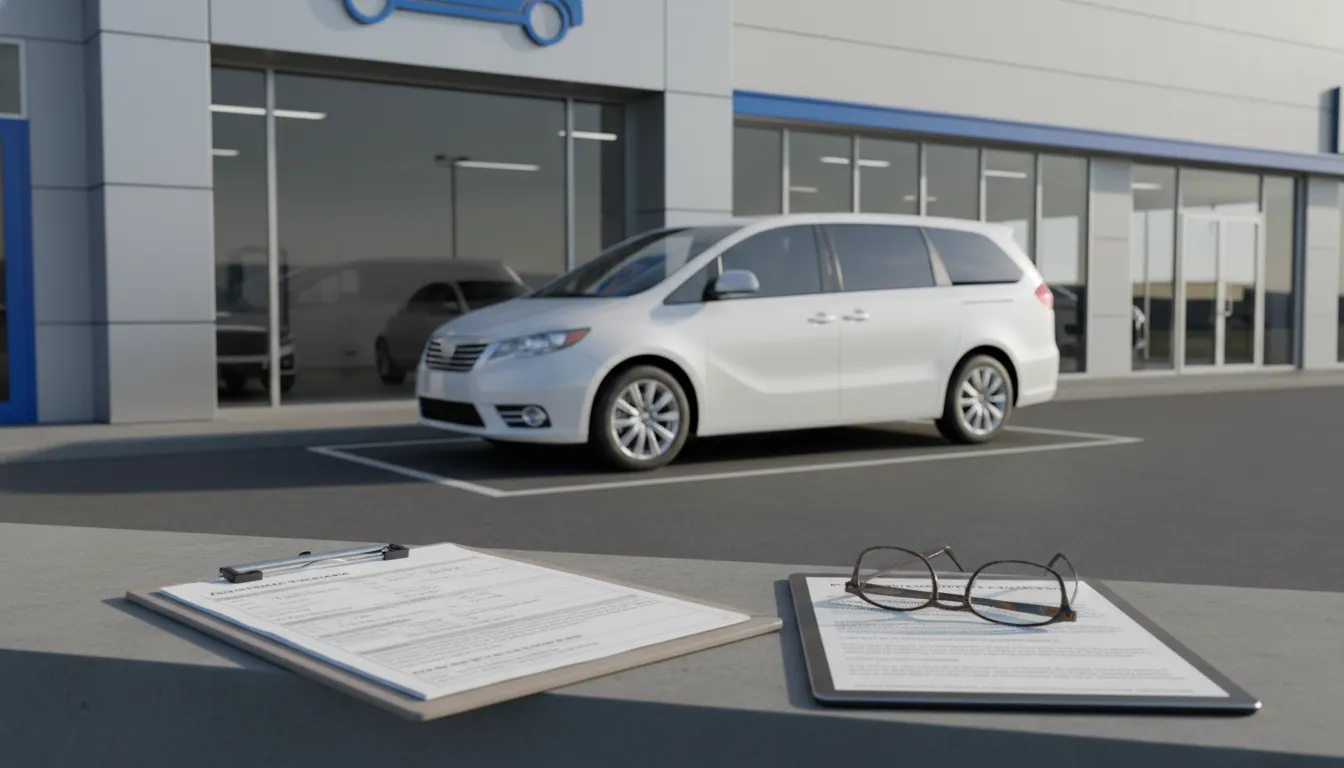
If your Chrysler Pacifica keeps returning to the dealership for warranty repairs, you may be wondering whether lemon law protections apply. A persistent defect can disrupt family transportation, work schedules, and everyday plans. The most important next step is not guessing how many visits are enough. It is building a clear repair record and getting advice based on the law that applies to your situation.
Request your free Chrysler Pacifica case review if the same warranty-covered defect keeps returning or your vehicle is out of service for more than 21 days.
A Chrysler Pacifica may qualify for lemon law or warranty-law protection when a defect covered by the manufacturer’s warranty persists after a reasonable number of repair attempts or after a reasonable amount of time out of service or at the repair shop. The answer depends on the facts, including where you live, the vehicle’s warranty status, when the issue began, and the repair history.
This guide explains the practical steps to take when a Pacifica problem continues after warranty repair visits. It focuses on documentation, repair attempts, days out of service, and what to do before the paper trail becomes harder to reconstruct.
There is no single nationwide rule that turns every Pacifica into a lemon buyback after the same number of dealership visits. State lemon laws differ. A federal warranty law claim may also be relevant in some situations. That is why it is important to review the complete repair history instead of relying on a one-size-fits-all checklist found online.
The nature of the defect matters. A recurring concern may affect the vehicle’s use, value, or safety. The history also matters: when the concern first appeared, whether it was covered by the manufacturer’s warranty. What the authorized dealership did, whether the concern returned, and how long the vehicle remained unavailable.
Do not assume that a repair-count rule quoted for another state applies to you. Some claims focus on repeated opportunities to fix a concern. Others may involve a vehicle that spends more time at the dealership than is reasonable. For a general overview, see Kahn & Associates’ lemon law information. You can also review this guide to lemon law requirements for more context on qualification questions.
Your repair paperwork is the foundation of a Chrysler Pacifica lemon law case. Each service visit shows what happened, when it happened, what the dealership attempted, and how long the vehicle was unavailable. A complete written record is more useful than a consumer’s memory alone.
Do not leave the dealership without a copy of the repair order. Review it before you leave. It should accurately describe the concern you reported, the work performed, the dates, and the mileage. If the write-up is vague or incorrect, ask for the record to be corrected.
If the same Pacifica concern returns, describe it consistently during each service visit. That does not mean diagnosing the vehicle yourself. It means explaining the symptoms precisely. Identify when the symptom happens, and what changes in the vehicle’s operation.
A repair order marked “could not duplicate” still matters. It shows that you presented the vehicle for the recurring concern and gave the dealership an opportunity to address it. Keep that document with the rest of your records rather than treating the visit as irrelevant. If warranty coverage becomes disputed, read what to do when a car warranty claim is denied.
Consumers often focus only on the number of repair visits. That can miss an important part of the analysis. A Pacifica may have spent more time at the dealership than is reasonable even if its repair history does not fit a simple visit count. Track both the attempts and the calendar.
| What to record | Why it matters |
|---|---|
| Date delivered to the dealership | Helps establish the repair timeline |
| Date returned to you | Helps calculate days out of service |
| Mileage in and mileage out | Shows when the repair attempt occurred |
| Your reported symptoms | Helps identify recurring concerns |
| Dealership findings and work performed | Shows what the dealership attempted |
| Whether the concern returned | Helps show that the defect persists |
Create a simple chronological log. Record each appointment, the number of days the Pacifica remained at the shop, and when the symptom returned.
Get a free case review for us to review your Pacifica warranty repair records for a possible case.
Document any recurring warranty concern that affects the vehicle’s use, value, or safety. The goal is not to assume that every reported Pacifica issue automatically creates a claim. The goal is to create an accurate record when a defect persists. The following are some, but not all, of the possible defects or nonconformities:
This is not a list of defects affecting every Chrysler Pacifica, and it is not a claim that a particular issue guarantees a remedy. Your own repair orders and your owner experience are what matter. Avoid relying on online anecdotes as proof of your claim, because another owner’s experience and applicable law may differ.
Continue communicating in a calm, factual way. Save written communications and record the date and substance of telephone conversations. Do not sign a release or settlement document you do not understand. Consider getting legal advice before accepting terms that may affect your rights.
Depending on the law and the facts, a lemon case outcome may include monetary compensation, repurchasing the vehicle or a new vehicle. The available result is case-specific, so no outcome should be assumed before the documents are reviewed. The manufacturer, warranty, repair timeline, and applicable law all affect the analysis.
Kahn & Associates, L.L.C. focuses on claims against manufacturers for warranty issues. The firm does not handle claims against car dealers for fraud or related sales-practice violations. Consumers pay no out-of-pocket fees or costs to the firm, win or lose.
Many state lemon laws say attorney fees shall be paid if the consumer wins. While the Magnuson-Moss Warranty Act says attorney fees may be paid if the consumer wins. In negotiated settlements, especially before a lawsuit is filed, manufacturer-paid attorney fees are agreed by the parties rather than awarded by a court after trial.
A used Chrysler Pacifica may still be worth reviewing if it remains covered by the manufacturer’s warranty. The key question is not merely whether the vehicle was purchased new or used. Warranty coverage, repair history, timing, and applicable law all matter.
Do not assume every used vehicle does not qualify. Kahn & Associates handles used vehicles only when they are still under manufacturer warranty. If you are unsure whether coverage remained in effect when repairs occurred, gather your documents and request a review.
There is no universal answer. The applicable state law, nature of the defect, repair history, and amount of time the Pacifica spent out of service all matter. A reasonable number of repair attempts depends on the facts.
Keep the repair order. Such a visit can still help document that you reported the concern and gave the dealership an opportunity to investigate and repair it. Continue describing the symptoms clearly and consistently on any future visits.
Yes. Time out of service or at the repair shop can be important. Track the date you deliver the vehicle and the date you get it back for every warranty visit.
Yes. If a Chrysler Pacifica Hybrid has a persistent concern covered by the manufacturer’s warranty, preserve the repair records and request a case review. Qualification depends on the applicable law and facts, not the vehicle make and model.
If your Chrysler Pacifica has returned to the dealership repeatedly or spent more time there than is reasonable, request a free case review. You do not need to determine the legal answer on your own.
Kahn & Associates, L.L.C. represents consumers with lemon-law or manufacturer-warranty claims in Ohio, Florida, Michigan, North Carolina, and Pennsylvania. Request your free case review to discuss your Chrysler Pacifica repair history.
*Disclaimer: The information contained in this Website is provided for informational purposes only, and should not be construed as offering legal advice, or creating an attorney client relationship between the reader and the author. While we aim for accuracy, the law is constantly changing and we make no guarantees regarding the completeness or timeliness of the information. You should not act or refrain from acting on the basis of any content included in this Website without seeking appropriate legal advice about your individual facts and circumstances from an attorney licensed in your state.
To see if you qualify, fill out the form below or call us at 1-888-536-6671 – No Office Visit Needed!

I had a great experience with Kahn & Associates! They made the process of dealing with an extremely frustrating lemon situation painless. They have very quick response times and everyone I dealt with was very friendly and helpful. Would definitely recommend!
Kahn and Associates did an awesome job with our lemon law case! We were getting nowhere with VW Customer Service and decided to hire an attorney who specialized with lemon law cases. We couldn’t be happier with the outcome. We were able to get a full refund on our lemon VW Atlas.
What a great experience! I was on the fence about hiring an attorney for my ongoing automotive issues and continued frustration with the manufacturer. It was a very simple process and I am very grateful Kahn and Associates for helping get me a settlement!
Real Honest attorneys!!! They are the real deal! I went back and forth with them and they explained to me every step and my rights under the law! I give them 5 stars because I won!!! Yes and my check is coming to me much sooner than I thought! I was stuck ! I own a brand new car and the dealer was giving me a hard time !

This page has been written, edited, and reviewed by a team of legal writers following our comprehensive editorial guidelines. This page was approved by Attorney Craig A. Kahn, who has more than 20 years of legal experience in lemon law.
A reasonable number of repair attempts is the basic legal rule used to decide when a car maker must replace...
Quick Summary: Dodge Ram Lemon Law Rights Kahn & Associates, L.L.C. has represented thousands of consu...
Ohio lemon law has two clocks, and most confusion about deadlines comes from mixing them up. One is short a...

Stuck with a defective car in Ohio? State Lemon Laws protect you. Get a refund, replacement, or cash settlement. Learn your rights today!
Florida Lemon Laws cover new and used vehicles. If your car’s a lemon, you deserve compensation. Let us help you fight for justice!

Michigan’s Lemon Law protects you from faulty vehicles. Don’t settle for endless repairs—claim your refund or replacement now.

North Carolina Lemon Laws ensure defective vehicles are replaced or refunded. Know your rights and take action today!

Pennsylvania Lemon Law covers new cars with repeated issues. Get the compensation you deserve. Click to learn more!
To see if you qualify, fill out the form below or call us at 1-888-536-6671 – No Office Visit Needed!

The Truth About Attorney’s Fees in Lemon Law Cases Learn more
*Disclaimer: The information contained in this Website is provided for informational purposes only, and should not be construed as offering legal advice, or creating an attorney client relationship between the reader and the author. While we aim for accuracy, the law is constantly changing and we make no guarantees regarding the completeness or timeliness of the information. You should not act or refrain from acting on the basis of any content included in this Website without seeking appropriate legal advice about your individual facts and circumstances from an attorney licensed in your state.

 Message Us
  Call Us