
Have A Case? Call Us
1 888-536-6671
60 Second Lemon Law Assessment™
60 Second Lemon Law Assessment™
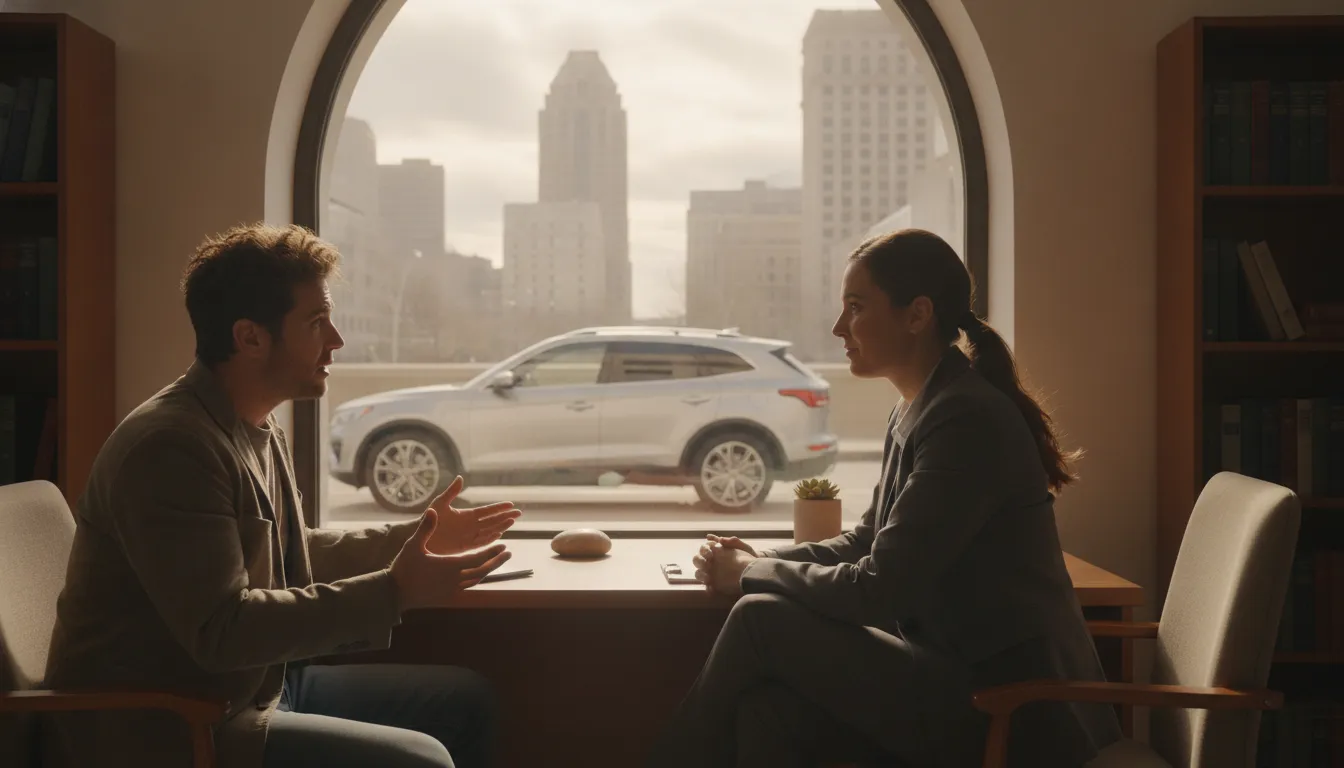
A vehicle that repeatedly returns to a Cincinnati dealership with the same serious problem can turn ordinary transportation into a continuing burden. Engine, transmission, electrical, braking, steering, and technology defects may all raise warranty concerns when the manufacturer cannot correct them within a reasonable number of repair attempts or a reasonable amount of time.
If you are searching for a lemon law attorney in Cincinnati Ohio residents rely on, state protections may provide a path to compensation, a loan payoff, or a replacement vehicle when a vehicle does not conform to its warranty. Ohio law focuses on repair history and time out of service, so preserve repair orders, invoices, warranty records, and communications with the manufacturer. Where a vehicle falls outside Ohio’s window, the federal Magnuson-Moss Warranty Act often still applies, so we evaluate every claim under both.
(A note on terms: there is no separate Cincinnati lemon law. Ohio’s statute applies statewide, and the federal Magnuson-Moss Warranty Act applies nationwide. We use “Cincinnati lemon law” here as shorthand for a claim brought by a Cincinnati-area owner.)
Our team represents Cincinnati consumers in manufacturer-warranty claims statewide and handles the process remotely by phone, email, and digital signature. Understanding the Ohio qualification standards is the first step in determining whether your vehicle may be a lemon.
If your vehicle has been in for repair for the same issue at least twice, or has been or will be out of service for at least 21 calendar days, contact Kahn & Associates for a free case evaluation at 1-888-536-6671 or through our contact form.
Ohio’s lemon law generally applies during the first 12 months after delivery or the first 18,000 miles, whichever comes first. The vehicle must have a defect, also called a nonconformity, that substantially impairs its use, value, or safety. The problem must be covered by the manufacturer’s warranty and must continue despite a reasonable opportunity to repair it.
Ohio law provides several presumptions that help show when the manufacturer has had a reasonable opportunity to fix the vehicle. A vehicle may qualify when, during that window:
These numbers matter, but they are not the only way to evaluate a claim. A consumer may have a lemon after a reasonable number of repair attempts or after a reasonable amount of time out of service, which is a term of art and can mean different things to different people. A vehicle that spends more time at the dealership than is reasonable may warrant further action under federal and other laws even when the repair history does not fit neatly into one category. We review the defect, repair orders, time out of service, and warranty coverage together. You do not need to reach any of these thresholds before calling: two visits for the same issue, or 21 days out of service, is enough to ask.
Ohio’s law primarily protects purchasers and lessees of new motor vehicles, and its coverage window runs from the date of original delivery rather than from the date you bought the vehicle. A vehicle resold early in its life, while still within the first year or 18,000 miles, can qualify, and a later owner who takes it during the express warranty may enforce those rights. Past that point the state statute no longer reaches the vehicle, even with factory warranty remaining, because a typical factory warranty runs far longer than the lemon law window.
For most used and certified pre-owned purchases, the federal Magnuson-Moss Warranty Act is the route that fits, since it turns on the existence of a written manufacturer warranty rather than the vehicle’s age or mileage. An extended service contract or a dealer promise is a different thing and does not by itself create breach of warranty coverage. The claim is generally directed toward the manufacturer, which is responsible for defects covered by its warranty.
For a closer explanation of eligibility and available remedies, read our Ohio lemon law guide. We can also examine whether your repair history supports a claim when the facts are more complicated than the basic presumptions suggest.
For a Cincinnati driver, a vehicle problem does not have to be dramatic every time it appears to create a serious warranty concern. The issue may involve an engine that loses power, a transmission that slips or refuses to shift properly, or a vehicle that repeatedly returns to the dealership for the same unresolved condition. A possible claim depends on the facts, including whether the vehicle fails to conform to its warranty after a reasonable number of repair attempts or a reasonable amount of time.
Engine and transmission defects are common problems. Stalling, hesitation, overheating, oil leaks, abnormal shifting, loss of acceleration, and recurring warning lights can affect both reliability and safe operation. The repair order should identify the complaint clearly, not simply state that the vehicle was inspected. If the same symptom returns after a repair, tell the service department it is recurring and make sure that description appears in the records.
Modern vehicles depend on complex electrical systems and software. Repeated battery drain, failure to start, malfunctioning displays, cameras that go blank, navigation or connectivity failures, and software-related warning messages may interfere with ordinary use. A defect does not become irrelevant because it is intermittent. If the problem repeatedly appears after the vehicle is returned, that pattern can be important evidence. Technology and software issues may also be warranty defects when they prevent the vehicle from functioning as warranted.
Problems involving brakes, steering, airbags, seat belts, collision warning systems, lane-assistance features, or other advanced driver assistance systems deserve prompt attention. Even when a warning disappears before inspection, report exactly what happened, when it happened, and whether the vehicle behaved differently. Safety-related defects can be particularly significant because they may affect a driver’s ability to control the vehicle or rely on its protective systems. Do not continue driving a vehicle that appears unsafe simply to create another repair visit. Follow the manufacturer and dealership’s safety instructions and obtain appropriate assistance.
Keep every repair order, invoice, tow receipt, appointment confirmation, and communication with the dealership or manufacturer. Record the date, mileage, symptoms, warning messages, time out of service, and what the dealership did or promised to do. A clear timeline helps distinguish a one-time inconvenience from a recurring warranty nonconformity. That said, you do not need to organize your records before contacting us. It helps if you have them handy, but it is not necessary.
For Cincinnati drivers, working with a lemon law attorney serving Cincinnati, Ohio does not require a trip across the state. Kahn & Associates handles Ohio claims remotely from our Beachwood headquarters. We work with clients by phone, email, and digital signature, so you can focus on getting a reliable vehicle back instead of rearranging your schedule for office visits.
Our team has focused on lemon law since 1996. That experience matters when a manufacturer disputes a defect, minimizes repeated repairs, or proposes a resolution that does not fully address the consumer’s losses. We know the tactics manufacturers use, we know the attorneys who represent them, and we know who to reach at the manufacturer to resolve a claim quickly.
Ohio also provides an important advantage in a repurchase or replacement case. Ohio does not apply a mileage offset, meaning the refund or replacement is not reduced based on miles driven. That state-specific rule can materially affect the value of a claim and is one reason local knowledge matters. If you want a clearer assessment of your options, review our Ohio lemon law attorney resource or contact us for a case evaluation.
When a defective vehicle keeps returning to the dealership, the next step is not simply another repair visit. We organize the facts, identify the manufacturer’s warranty obligations, and pursue the remedy that fits the circumstances.
As for timing, it varies more than most consumers expect, and the single biggest factor is the manufacturer. Most pre-suit claims resolve in roughly 60 to 120 days from demand to resolution, though complex cases and certain manufacturers take longer. If a claim does not resolve before suit and a consumer chooses to file a lawsuit, that is a substantially longer process, often a year or more depending on the court and the manufacturer. Anyone promising a specific number of days is promising something they do not control.
If your vehicle continues to return to the repair shop with the same problem, do not treat each visit as an isolated inconvenience. Keep every repair order, invoice, warranty document, towing receipt, and message exchanged with the dealership or manufacturer. These records help show what went wrong, how often the vehicle was presented for repair, and how long you were without dependable transportation.
Pay attention to patterns. A warning light that keeps returning, a transmission issue that is never fully corrected, or an electrical defect that appears intermittently may still be important even when the problem is not present during every inspection. Write down the date of each occurrence, the symptoms you noticed, and what the repair facility told you. Ask for a copy of the repair order before leaving the dealership, and review it to make sure your concern is described accurately.
Timing also matters. Ohio’s coverage window generally closes 12 months after original delivery or at 18,000 miles, whichever comes first, and separate deadlines govern how long you have to bring a claim. Those deadlines run whether or not you are still trying to get the vehicle fixed. If you are approaching either limit, do not wait for another repair visit before learning whether your claim should be evaluated.
Our team represents consumers throughout Ohio, including Cincinnati and Hamilton County. We handle claims against manufacturers, not dealer-fraud cases, and our remote process means you can work with us by phone, email, and digital signature. If you are still unsure what your repair history means, review our answers to common lemon law questions before continuing to the frequently asked questions below.
You are not required to pay us any out-of-pocket fees or costs, win or lose. Depending on the facts, a successful claim may result in monetary compensation, a loan payoff, or a replacement vehicle. In a negotiated settlement, payment of attorney fees by the manufacturer is agreed upon by the parties as part of the total recovery, rather than automatically awarded by a court. Learn more about our approach.
Possibly. Ohio’s lemon law is directed primarily at new motor vehicles and measures its window from original delivery, so a used vehicle qualifies only if it is still within the first year or 18,000 miles from that date. Beyond that, the federal Magnuson-Moss Warranty Act is usually the better route, and it does not require the vehicle to be under warranty today so long as repairs were performed under the manufacturer’s warranty or extended warranty. The warranty terms, repair records, purchase documents, and nature of the defect all matter.
A vehicle may qualify when a significant warranty defect continues after a reasonable number of repair attempts or after a reasonable amount of time out of service. A vehicle that spends more time at the dealership than is reasonable may also raise a serious concern. The defect must affect the vehicle’s use, value, or safety, and the manufacturer must have an opportunity to address it. In Royster v. Toyota Motor Sales, U.S.A., Inc., the Supreme Court of Ohio held that 30 or more cumulative days out of service creates a presumption of relief regardless of whether the vehicle is ultimately repaired. Craig Kahn and his team handled that case from the trial court all the way to the Ohio Supreme Court in 2001.
Sometimes. Ohio law can require it in certain circumstances before a court action is brought, and whether that applies to your claim depends on the specifics of your situation and what the manufacturer provided you. The requirement is set out in Ohio Revised Code Section 1345.77.
If repeated repair visits have left you unsure what to do next, a case evaluation can help clarify your options and the documentation that may matter. Share the basic details of your vehicle and repair history, and our team can explain the next step for pursuing a potential claim against the manufacturer.
Two repair visits for the same issue, or 21 calendar days out of service, is enough to find out where you stand. Call us at 1-888-536-6671 or contact us through our online assessment..
*Disclaimer: The information contained in this Website is provided for informational purposes only, and should not be construed as offering legal advice, or creating an attorney client relationship between the reader and the author. While we aim for accuracy, the law is constantly changing and we make no guarantees regarding the completeness or timeliness of the information. You should not act or refrain from acting on the basis of any content included in this Website without seeking appropriate legal advice about your individual facts and circumstances from an attorney licensed in your state.
To see if you qualify, fill out the form below or call us at 1-888-536-6671 – No Office Visit Needed!

I had a great experience with Kahn & Associates! They made the process of dealing with an extremely frustrating lemon situation painless. They have very quick response times and everyone I dealt with was very friendly and helpful. Would definitely recommend!
Kahn and Associates did an awesome job with our lemon law case! We were getting nowhere with VW Customer Service and decided to hire an attorney who specialized with lemon law cases. We couldn’t be happier with the outcome. We were able to get a full refund on our lemon VW Atlas.
What a great experience! I was on the fence about hiring an attorney for my ongoing automotive issues and continued frustration with the manufacturer. It was a very simple process and I am very grateful Kahn and Associates for helping get me a settlement!
Real Honest attorneys!!! They are the real deal! I went back and forth with them and they explained to me every step and my rights under the law! I give them 5 stars because I won!!! Yes and my check is coming to me much sooner than I thought! I was stuck ! I own a brand new car and the dealer was giving me a hard time !

This page has been written, edited, and reviewed by a team of legal writers following our comprehensive editorial guidelines. This page was approved by Attorney Craig A. Kahn, who has more than 20 years of legal experience in lemon law.
Let’s clear up a common myth: hiring a lawyer is always expensive. While that can be true in some legal f...
There are many myths about consumer protection laws that stop people from getting the justice they deserve....
Every mile you drive in a defective vehicle can affect your Florida lemon law buyback calculation. While yo...

Stuck with a defective car in Ohio? State Lemon Laws protect you. Get a refund, replacement, or cash settlement. Learn your rights today!

Florida Lemon Laws cover new and used vehicles. If your car’s a lemon, you deserve compensation. Let us help you fight for justice!

Michigan’s Lemon Law protects you from faulty vehicles. Don’t settle for endless repairs—claim your refund or replacement now.

North Carolina Lemon Laws ensure defective vehicles are replaced or refunded. Know your rights and take action today!

Pennsylvania Lemon Law covers new cars with repeated issues. Get the compensation you deserve. Click to learn more!
To see if you qualify, fill out the form below or call us at 1-888-536-6671 – No Office Visit Needed!

The Truth About Attorney’s Fees in Lemon Law Cases Learn more
*Disclaimer: The information contained in this Website is provided for informational purposes only, and should not be construed as offering legal advice, or creating an attorney client relationship between the reader and the author. While we aim for accuracy, the law is constantly changing and we make no guarantees regarding the completeness or timeliness of the information. You should not act or refrain from acting on the basis of any content included in this Website without seeking appropriate legal advice about your individual facts and circumstances from an attorney licensed in your state.

 Message Us
  Call Us