
Have A Case? Call Us
1 888-536-6671
60 Second Lemon Law Assessment™
60 Second Lemon Law Assessment™
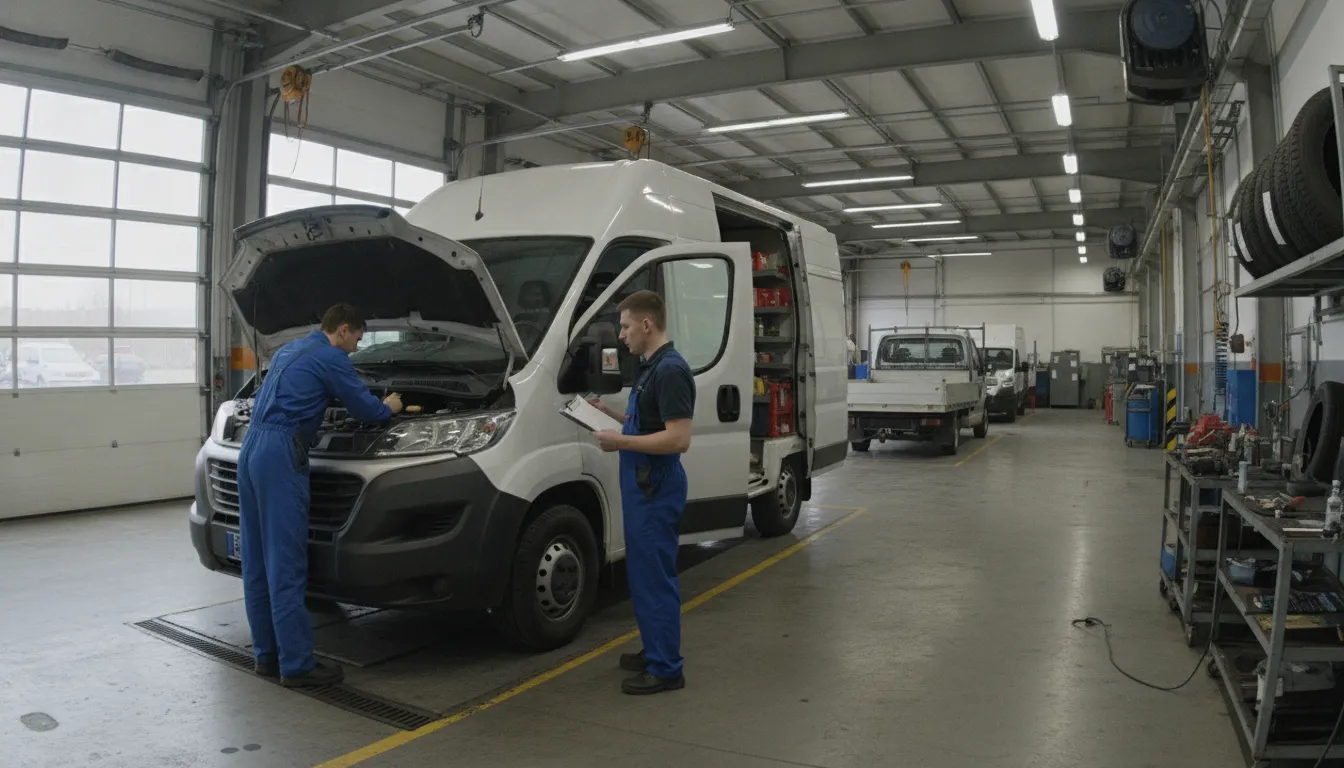
When a commercial truck or van repeatedly returns to the repair shop, downtime can disrupt deliveries, schedules, and revenue. A commercial vehicle breach of warranty claim may arise when a manufacturer does not honor a written warranty or when other applicable warranty protections have been breached. A business-use vehicle may fall outside some consumer lemon laws, but other laws may apply, including express and implied warranties under the Uniform Commercial Code (UCC). Eligibility and potential remedies depend on the documents, governing law, defect, repair history, and other case-specific facts.
Understanding the warranty, preserving complete repair records, and documenting unreasonable time at the repair shop can help an attorney assess the available options. The first question is when a commercial vehicle breach of warranty claim may arise.
A commercial vehicle warranty claim can start when your truck or van has a defect that the manufacturer cannot fix within a reasonable number of attempts or amount of time. These flaws often show up soon after you buy or lease the vehicle. The law expects a truck to work as the maker said it would. If the truck breaks down often, you may have a legal path to get help.
Many people think their only rights come from state lemon laws. However, a business-use vehicle may fall outside some consumer lemon laws. Other protections may apply, including the vehicle’s written warranty and express or implied warranties under the Uniform Commercial Code (UCC).
A commercial vehicle warranty claim may become clearer after repeated repair attempts for the same issue. There is no universal number of attempts that establishes a claim. The seriousness of the defect, warranty terms, governing law, and repair history all matter.
Time out of service is also important. If your truck sits in the shop for an unreasonable amount of time, it can hurt your bottom line and may support a breach of warranty legal analysis. Keep good records of every repair visit. These laws also apply if you have a warranty claim denied by the manufacturer who disputes coverage.
The Magnuson-Moss Warranty Act is a federal law designed for products normally used for personal, family, or household purposes. This means, unfortunately, that commercial vehicles do not qualify for help under this law.
Many state lemon laws focus on vehicles acquired for personal, family, or household use. If you use your truck or van for work, the statute’s definitions and exclusions must be reviewed carefully. A standard consumer lemon law claim may not fit a vehicle that is part of a fleet or primarily used for business.
State laws may look at how the vehicle was acquired and used to decide whether the buyer and vehicle qualify. Some statutes also set vehicle-type or weight limits. You should review the rules in your state to see whether your commercial vehicle warranty claim falls under a lemon law or another legal path.
If a state consumer lemon law excludes your vehicle, the inquiry does not necessarily end. The sales contract, written warranty, and UCC may provide other avenues. Because the federal Magnuson-Moss Warranty Act generally concerns consumer products, its application to a business-use vehicle requires a case-specific legal review.
Since state and federal lemon laws often skip business trucks, the UCC is a vital tool. Under the UCC, there is an implied warranty of merchantability for goods. This means the truck must be fit for the normal tasks it was made to do. If a semi-truck cannot haul a load without breaking, it fails this test.
The UCC also covers a truck’s fitness for a special goal. This applies if the seller knew you needed the truck for a certain job and you relied on their skill to pick it. If the truck fails at that job, a claim can arise. These rights exist even if the paper you signed does not mention them, unless specifically disclaimed in writing.
The available UCC rights and remedies depend on the contract, warranty language, disclaimers, governing state law, and facts. A lawyer must review those materials before determining whether a breach occurred or what relief may be available.
An express warranty may arise from an affirmation of fact, promise, description, sample, or model that becomes part of the basis of the bargain. Whether a particular statement created an express warranty is fact-specific.
Save every paper that shows what the seller or manufacturer represented. This includes advertisements, emails, warranty materials, and the final bill of sale. If coverage is denied, these records may help an attorney evaluate the stated promises and the reason for denial.
Unless effectively excluded or modified, an implied warranty of merchantability may arise when the seller is a merchant with respect to goods of that kind. Under UCC Section 2-314, merchantable goods must be fit for the ordinary purposes for which such goods are used.
An implied warranty of fitness for a particular purpose may arise when the seller has reason to know the buyer’s particular purpose and that the buyer is relying on the seller’s skill or judgment. Whether that warranty arose, was disclaimed, or was breached requires review of the transaction and governing law.
The UCC has some limits, as sellers often try to remove these rights in the sales papers. You must read your contract to see if the seller disclaims these warranties. They might use words like “as is” to try and avoid these duties. But even then, federal law can limit how they do this. Using both the UCC and federal law gives you the best edge to fix your truck problems.
A strong commercial vehicle warranty claim relies on a paper trail. This trail proves the defect and your work to fix it. Without clear proof, a maker may deny your claim. They might blame poor care or misuse. You must show that the truck failed to meet its standards even with good care.
Gather all papers from the day you got the truck. This includes the bill of sale, lease files, and the full book of coverage. These files show your rights.
Each time your truck goes to the shop, ask for a full repair order. A good order lists the date and the miles. It also lists the exact problems you told them about. The shop must write down what they did to fix the issue. Vague notes can hurt your case later. You need to show a path of shop visits that did not fix the problem.
A strong commercial vehicle warranty claim depends on your truck’s current status and its past work. You must show that the truck repairs were made under its factory warranty coverage. You also need to prove that you followed all the rules for care and service. Legal teams look at how often the truck failed and how long it sat in the shop.
You must keep good records on all the work done to your truck. Manufacturers often ask for proof of regular care. This includes oil changes, tire rotations, and safety checks. If you do not have these papers, the truck maker might say the failure was your fault. Proper service records show that you took care of the vehicle as the manual says. This makes it harder for them to deny your request for compensation.
A repair history may reveal a recurring issue, an unsuccessful repair, or a series of related symptoms. Record every visit and compare the concern, diagnosis, work performed, and result. The full pattern can help an attorney assess whether the manufacturer had a reasonable opportunity to address a covered defect.
Dealing with a vehicle that keeps breaking down is stressful. It costs you time and money, mostly if you use it for work. You should not have to pay for a truck that does not work as it should. There are clear steps you can take to protect your rights and seek a fair fix for your vehicle. Taking action now can save you from more headaches later.
Start by gathering every piece of paper from the shop. You need the work orders and the final bills for each visit. These records prove how many times you tried to fix the problem. They also show exactly how many days the vehicle was in the shop and out of your hands. Keep these in a safe place where you can find them fast.
Proper records are vital if you want to file a formal warranty claim. You must be able to show that the defect is real and that it still exists after many tries to fix it. Without these papers, it is your word against the word of the maker. A clean paper trail makes your case much stronger from the start.
Once a problem becomes a pattern, you should send a formal notice. Do not just talk to the person at the local dealer. Your claim is against the manufacturer for warranty issues. It is not a case of fraud against the car dealer. Giving the maker of the vehicle a clear, written notice is often a legal rule you must follow to get help. It also starts the clock on your rights.
Legal rules can be tricky, mostly for a commercial vehicle breach of warranty claim. Some state laws do not cover work trucks the same way they cover cars. In those cases, you may need to use the Uniform Commercial Code to find an answer. These laws protect buyers when goods are not fit for their normal use.
Do not wait too long to act or guess about deadlines. Every case is unique and needs its own look by an expert. We offer a no-cost look at your case to see if we can help. Our firm does not charge you any out-of-pocket fees or costs, win or lose. This lets you fight for your rights without any risk to your own money.
When you pursue a commercial vehicle breach of warranty claim, the potential result depends on the governing law, contract, warranty terms, and facts. Typically the remedy available is more akin to a typical civil claim for damages, meaning some type of cash compensation. An attorney can identify the potentially available remedies without guaranteeing an outcome.
Typically a law firm will start your claim by sending a demand letter to the manufacturer to begin negotiations, if the manufacturer responds positively. If that fails, arbitration or litigation are the typical next steps.
Yes. A manufacturer may dispute coverage based on the warranty terms, exclusions, maintenance history, alleged misuse, or another stated reason. Save the denial, warranty, maintenance records, and repair orders so an attorney can assess whether the reason is supported.
You need to keep very good records to support your claim. You should save all service receipts and routine care logs. These papers prove that you did the work needed to keep the truck running well. Without these records, the maker might say the problem was caused by poor care.
If your business truck or van has recurring warranty repairs or spends an unreasonable amount of time at the repair shop, a case-specific review can help clarify your options. Kahn & Associates evaluates potential manufacturer warranty claims, including whether express or implied warranties under the UCC may apply. There are no out-of-pocket fees or costs to the client, win or lose.
Ready to request a review? Call (216) 621-6101 to discuss your commercial vehicle warranty claim.
*Disclaimer: The information contained in this Website is provided for informational purposes only, and should not be construed as offering legal advice, or creating an attorney client relationship between the reader and the author. While we aim for accuracy, the law is constantly changing and we make no guarantees regarding the completeness or timeliness of the information. You should not act or refrain from acting on the basis of any content included in this Website without seeking appropriate legal advice about your individual facts and circumstances from an attorney licensed in your state.
To see if you qualify, fill out the form below or call us at 1-888-536-6671 – No Office Visit Needed!

I had a great experience with Kahn & Associates! They made the process of dealing with an extremely frustrating lemon situation painless. They have very quick response times and everyone I dealt with was very friendly and helpful. Would definitely recommend!
Kahn and Associates did an awesome job with our lemon law case! We were getting nowhere with VW Customer Service and decided to hire an attorney who specialized with lemon law cases. We couldn’t be happier with the outcome. We were able to get a full refund on our lemon VW Atlas.
What a great experience! I was on the fence about hiring an attorney for my ongoing automotive issues and continued frustration with the manufacturer. It was a very simple process and I am very grateful Kahn and Associates for helping get me a settlement!
Real Honest attorneys!!! They are the real deal! I went back and forth with them and they explained to me every step and my rights under the law! I give them 5 stars because I won!!! Yes and my check is coming to me much sooner than I thought! I was stuck ! I own a brand new car and the dealer was giving me a hard time !

This page has been written, edited, and reviewed by a team of legal writers following our comprehensive editorial guidelines. This page was approved by Attorney Craig A. Kahn, who has more than 20 years of legal experience in lemon law.
When a defective vehicle may be returned under Pennsylvania's Automobile Lemon Law, consumers often have a ...
If you're making monthly payments on a leased vehicle that spends more time at the repair shop than in your...
Modern cars are more complex than ever, and a single repair can easily cost thousands of dollars, disruptin...

Stuck with a defective car in Ohio? State Lemon Laws protect you. Get a refund, replacement, or cash settlement. Learn your rights today!

Florida Lemon Laws cover new and used vehicles. If your car’s a lemon, you deserve compensation. Let us help you fight for justice!

Michigan’s Lemon Law protects you from faulty vehicles. Don’t settle for endless repairs—claim your refund or replacement now.

North Carolina Lemon Laws ensure defective vehicles are replaced or refunded. Know your rights and take action today!

Pennsylvania Lemon Law covers new cars with repeated issues. Get the compensation you deserve. Click to learn more!
To see if you qualify, fill out the form below or call us at 1-888-536-6671 – No Office Visit Needed!

The Truth About Attorney’s Fees in Lemon Law Cases Learn more
*Disclaimer: The information contained in this Website is provided for informational purposes only, and should not be construed as offering legal advice, or creating an attorney client relationship between the reader and the author. While we aim for accuracy, the law is constantly changing and we make no guarantees regarding the completeness or timeliness of the information. You should not act or refrain from acting on the basis of any content included in this Website without seeking appropriate legal advice about your individual facts and circumstances from an attorney licensed in your state.

 Message Us
  Call Us